Jul 25-30
This is the final segment of our voyage to the Arctic that began in Toronto, Canada on July 5 and ended in Nuuk, Greenland on Jul 31. If you missed our first three posts, click Cruising the St Lawrence River, Is Greenland Green? and Greenland’s Stunning West Coast to catch up.

We felt that since we had already visited the southern polar region in Antarctica and published seven posts about that adventure of a lifetime, it would be only fitting to visit its northern counterpart, the Arctic. So for this segment of our expedition cruise after visiting the western coast of Greenland, we spent another day sailing on Baffin Bay to reach the Canadian High Arctic Archipelago:
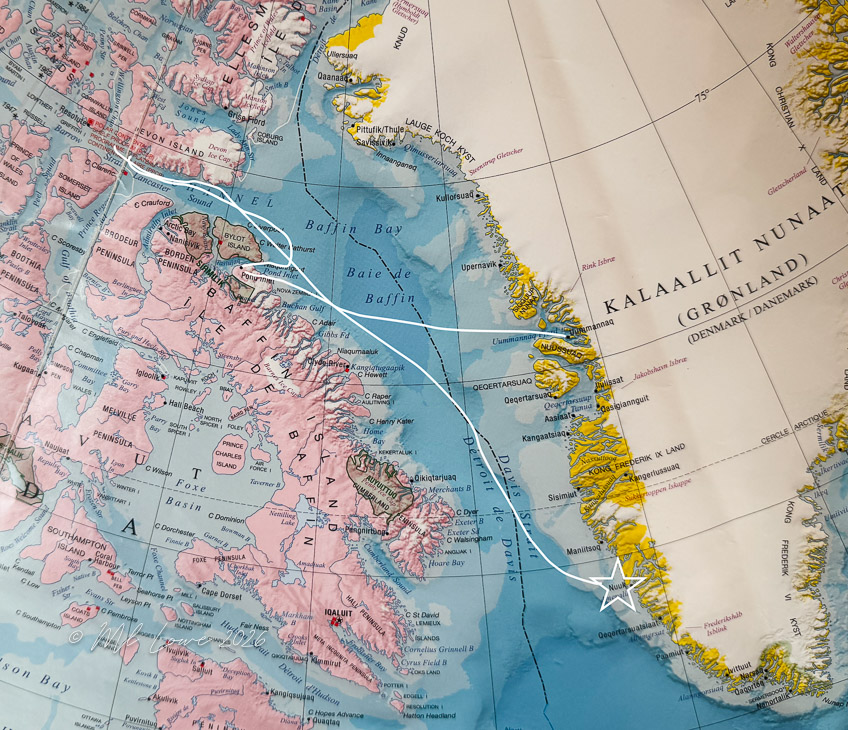
This segment of the trip, often regarded as the northernmost part of Canada, captured our imagination. It encompasses sections of the Northwest Territories, Yukon and Nunavut. The Northwest Passage, a historic sea route, winds through this stunning Arctic terrain. Known for its breathtaking natural beauty, the Canadian High Arctic has always drawn explorers seeking the elusive Northwest Passage. On our expedition cruise we explored four remote locations: Pond Inlet, Beechey Island, Crocker Bay, and Dundas Harbor – all in Nunavut, Canada.
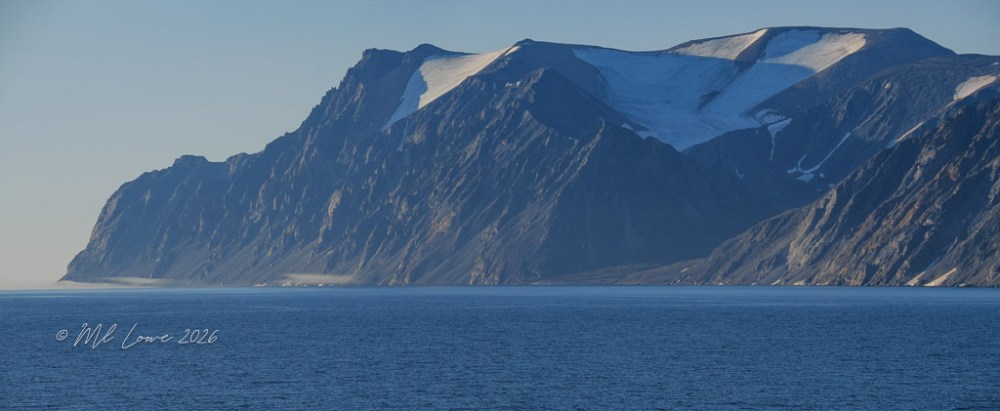
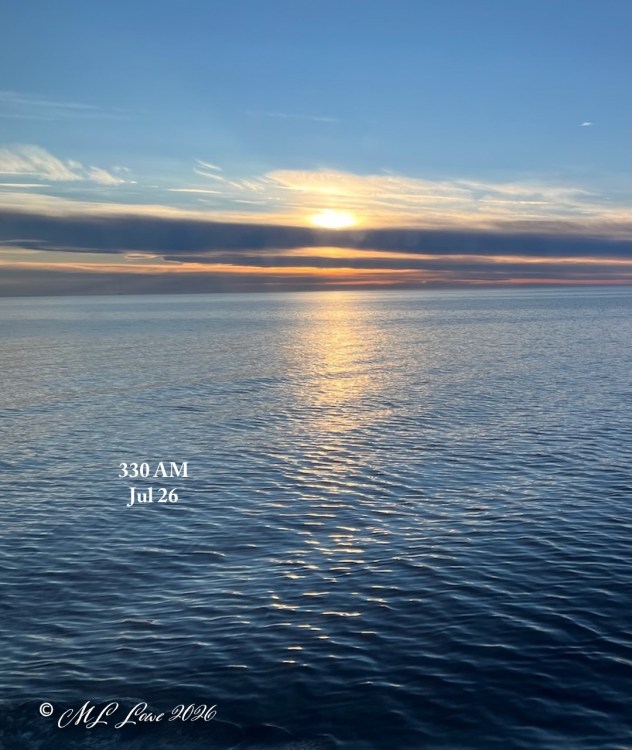
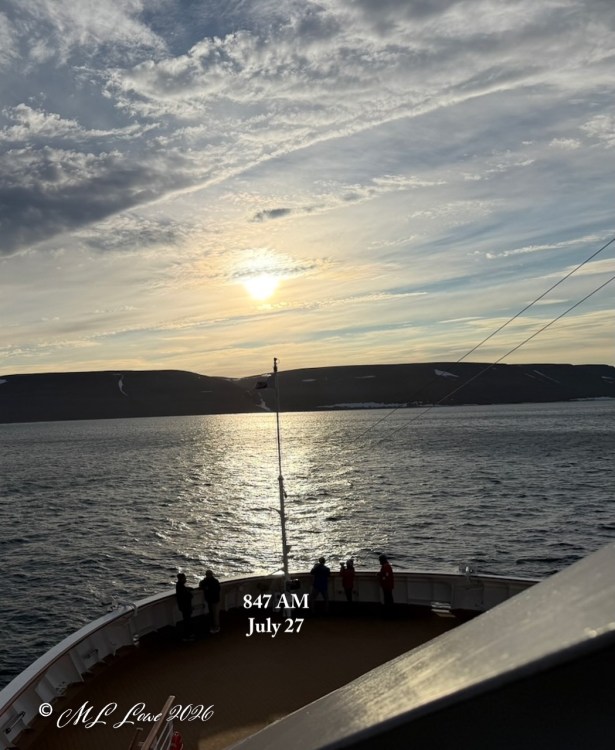
The further north we went, the more we experienced the magical “midnight sun”, which occurs in latitudes far above the Arctic Circle. Basically, during summer here the sun remains up and doesn’t set. It stays just above the horizon constantly and does not go overhead. That’s because the earth is tilted about 23.5 degrees, so places near the north pole end up facing the sun all the time.
It’s kind of a mixed bag — great if you want more daylight to actually do stuff, but rough because your body has no idea when it’s supposed to wind down and sleep. Of course, with the sun so far north of the equator now, Antarctica and the south pole have been plunged into total darkness for months at -50º or more. Wouldn’t want to be there right now!
Just so I could see it for myself, I took these pictures on three different days and different times, noticing that the sun stayed just above the horizon. Isn’t that wild?

Among the many lectures/talks about the Arctic that we attended, one of them was this reminder which made us aware of how unique the Arctic people are:

Pond Inlet, Nunavut, Canada
Our first stop was at Pond Inlet on the northern shores of Baffin Island, perfectly situated at the eastern entrance to the legendary Northwest Passage. It is 400 miles above the Arctic Circle and receives 24 hours of sunshine from May 5th to Aug 7. This small Inuit community, often called the “Jewel of the North”, is surrounded by a stunning Arctic landscape filled with glaciers, icebergs, and rugged mountains:
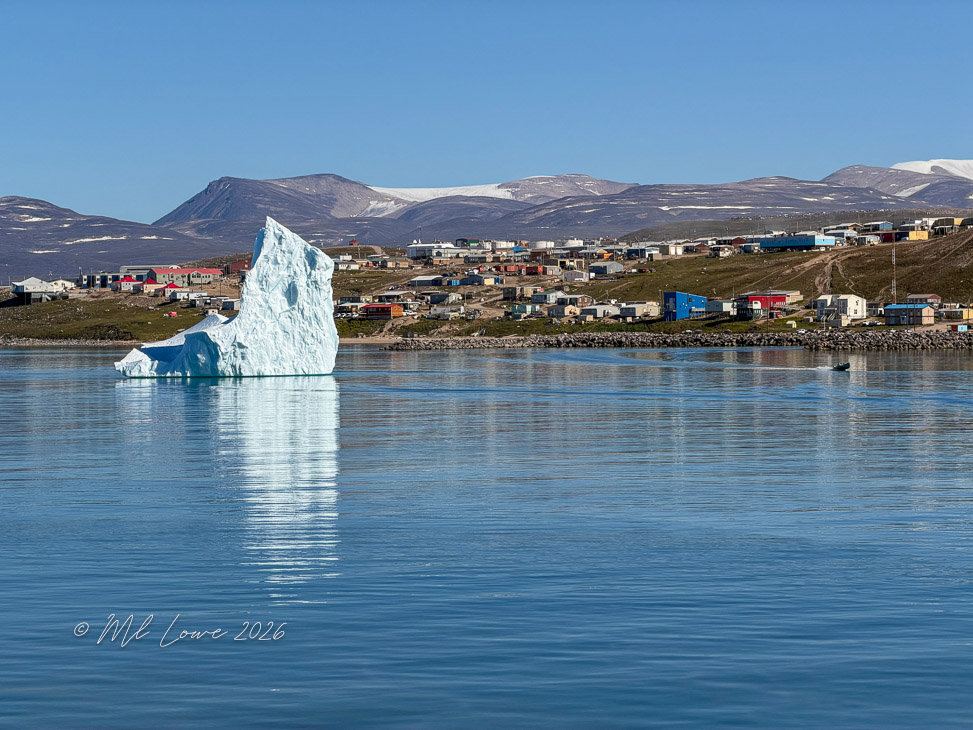
We opted to explore the hamlet on our own and walked around town. This predominantly Inuit community (about 95% of residents) has a population of 1,555, with a rich culture and deep-rooted traditions:

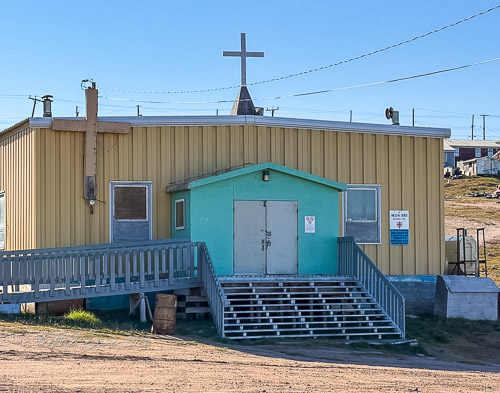


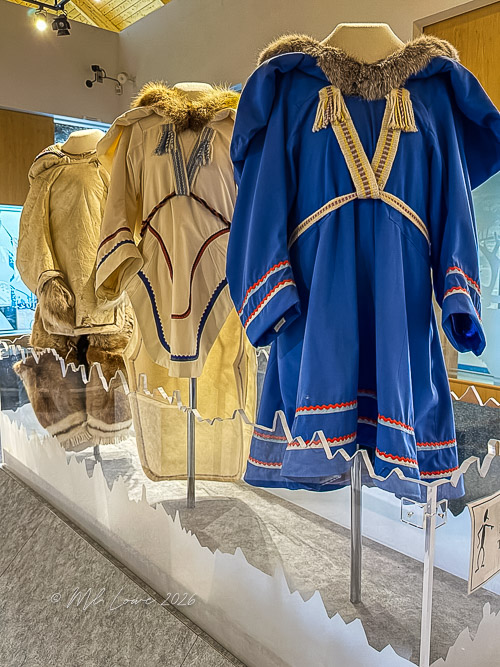
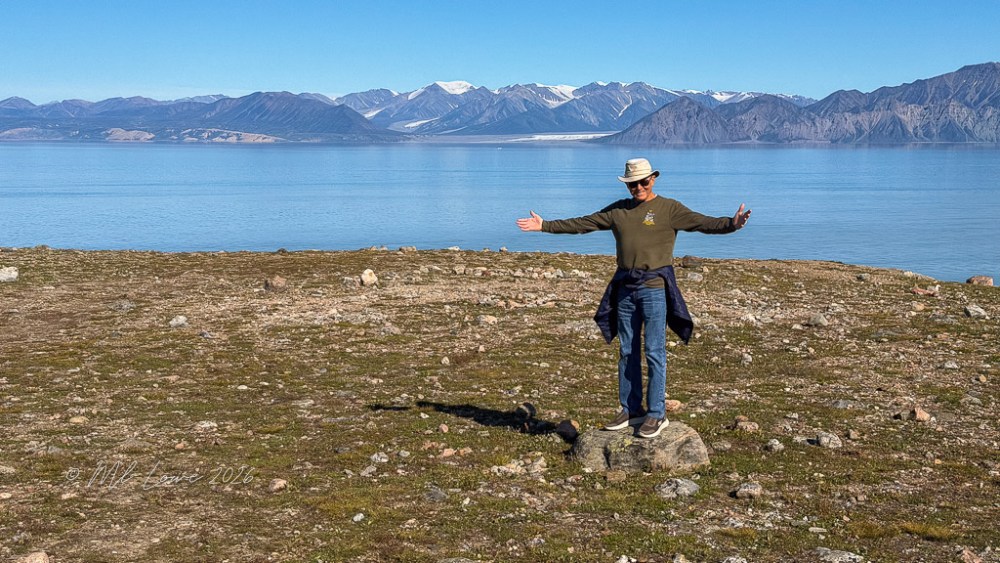
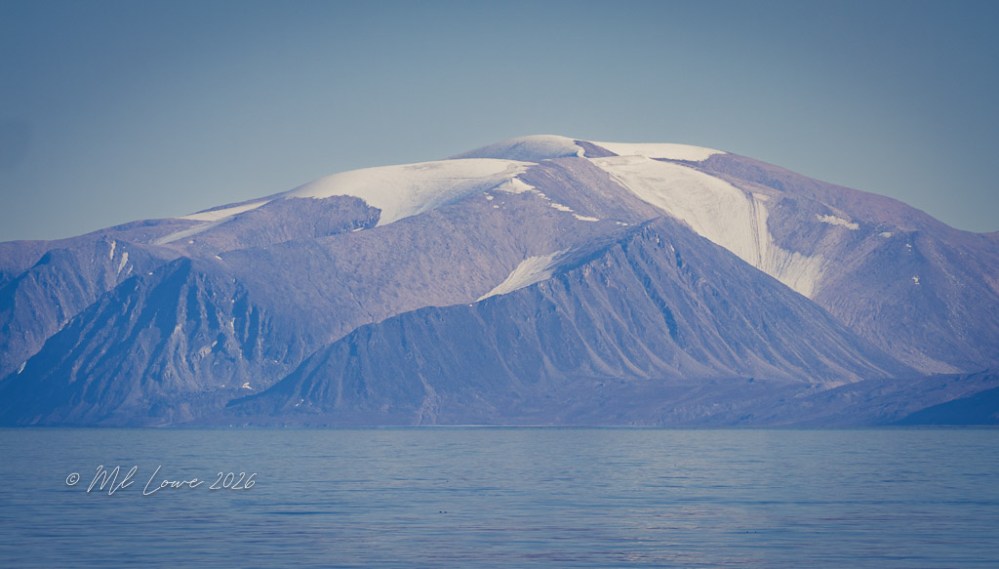
We walked to a view point up on a hill, and from there we recognized that this hamlet has views nothing short of breathtaking. It is surrounded by striking snow-capped mountains across the strait, which is the Sirmilik National Park and the Byam Martin Mountains:


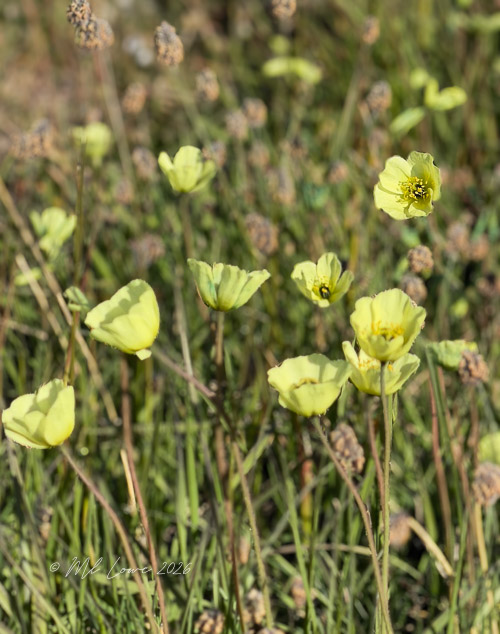
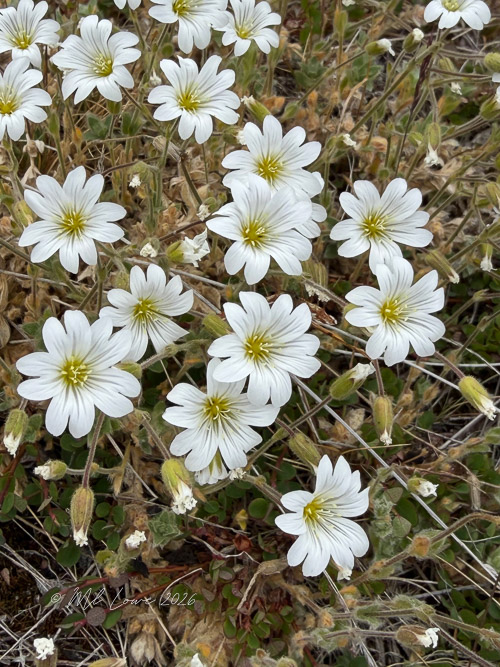
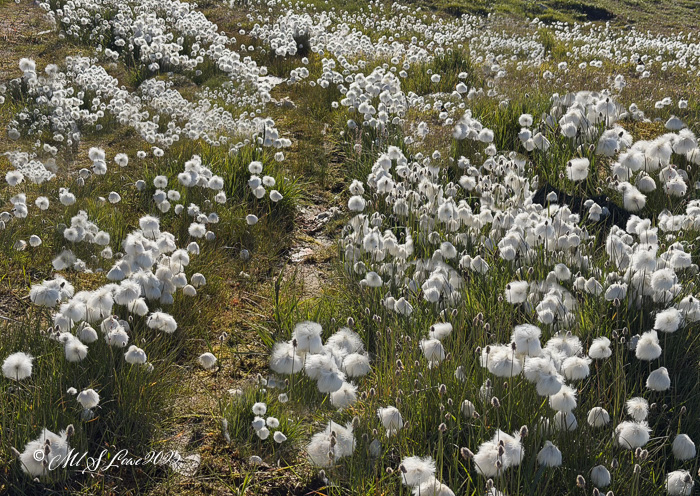
The Arctic flowers were beckoning me to capture their delicate beauty as well:

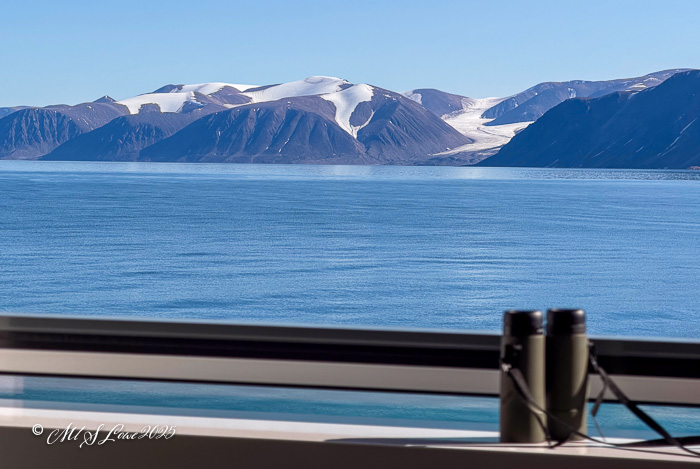
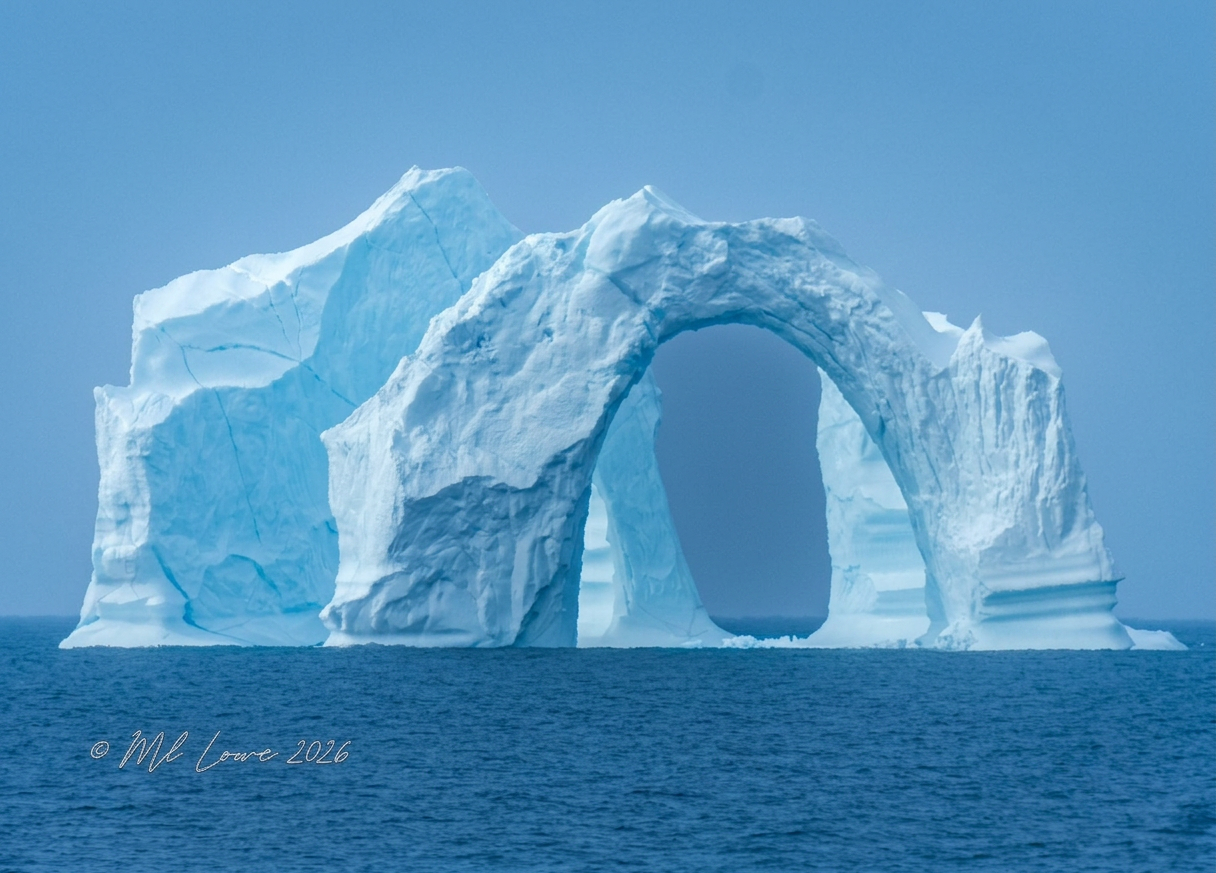
Once in while we saw unusual iceberg formation just floating by:
And birds following the ship:

Crocker Bay
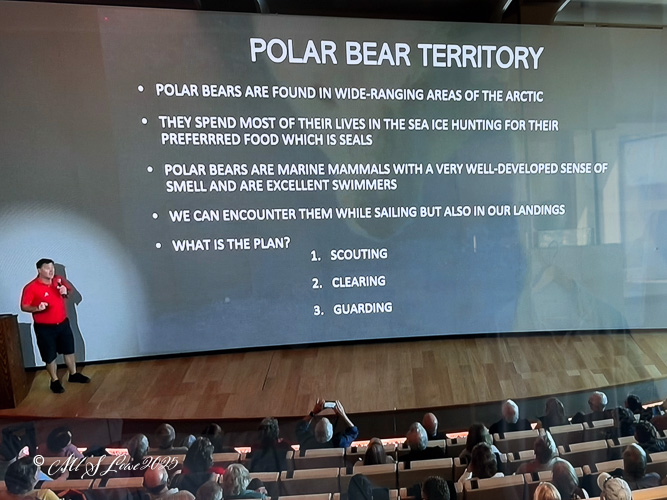
We were now in Polar Bear territory so it was time for a briefing about them, and what the Expedition Team’s plan was to provide safety during our expedition:
Croker Bay is an untamed wilderness surrounded by flat-topped mountains and plateau landscapes. It is a fjord situated on the southern coast of Devon Island in the Qikiqtaaluk Region of Nunavut, Canada.
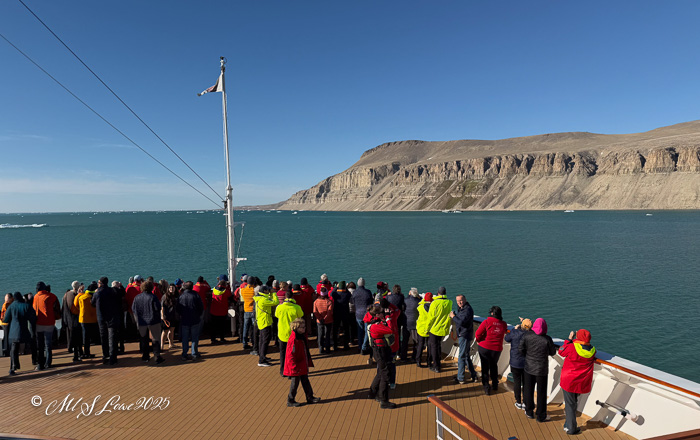
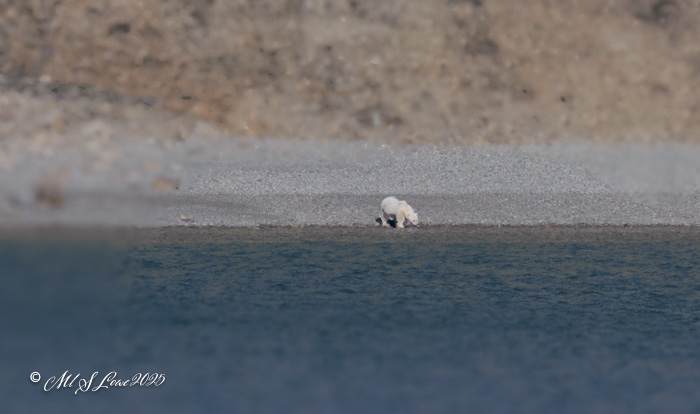
As soon as an Expedition Leader announced that they had spotted polar bears on the cliffside, naturally everyone pulled out their binoculars, cameras, and phones. We were all super excited because seeing one in the wild was definitely something we wanted to check off our wildlife bucket list while here in the Arctic!
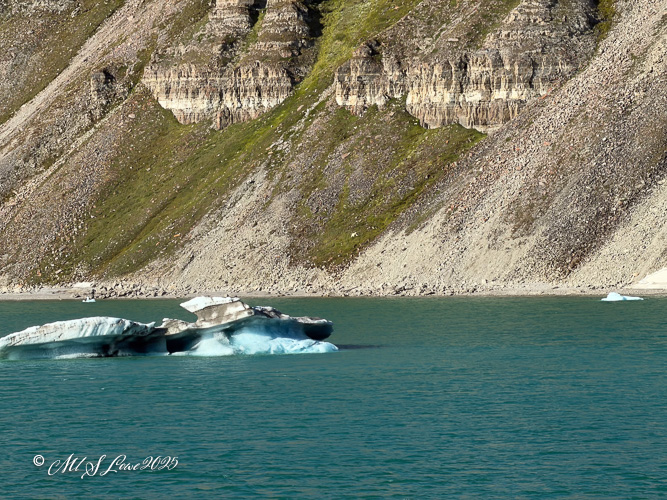
Here’s the best my camera could capture at full zoom:

Here’s another one on the beach:
After the excitement of our wildlife sighting we took our scheduled zodiac cruise on the fjord to get closer to the glacier and admire the dramatic cliffs while listening to a Naturalist narrating.


It was a short expedition, with the Polar Bears as the highlight of the day.
Beechey Island
Next our ship anchored just offshore from Beechey Island, a small desolate island located off the southwestern coast of Devon Island in the high Arctic. It holds great historic importance in the story of the Northwest Passage.

Notable was that of Sir John Franklin’s ill-fated expedition in 1845 which disappeared into the icy vastness. Their goal was to complete, for the first time, the entirety of the Northwest Passage in the hope of finding an easier trade route to Asia across the North American continent. But they all vanished and it was a mystery until three years later when three graves were found here on Beechey Island.

If you are interested, click here for a fascinating read about the greatest exploration mysteries. I think history buffs would be thrilled to read it and to see this location we visited.
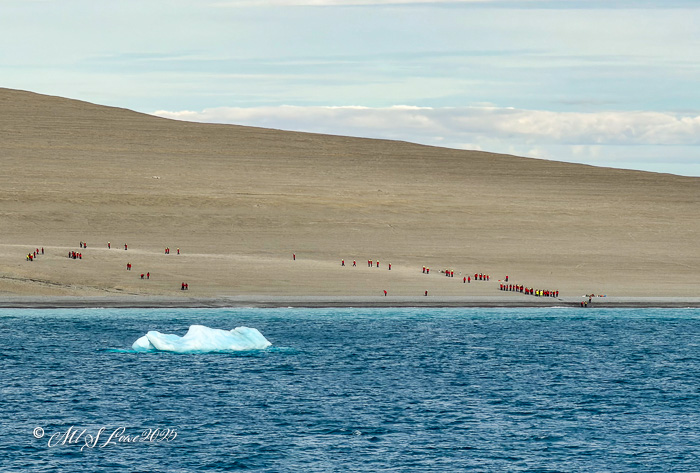
This was a brief stop and a zodiac trip to visit grave markers on a remote beach. While we explored, armed Expedition Team members acted as lookouts for polar bears that occasionally wander here.
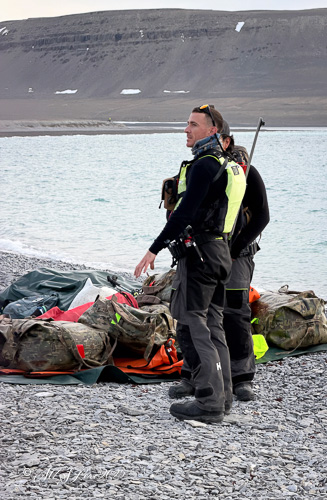
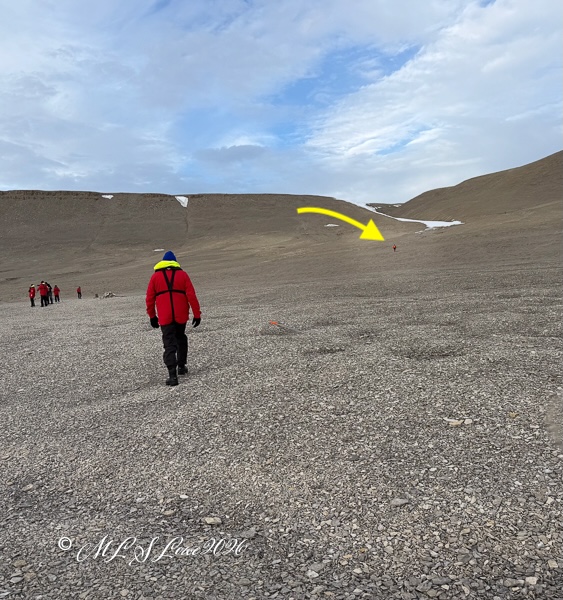
The small cemetery on Beechey Island held three graves from the Franklin expedition, and a fourth from one of the search expeditions. Today, the island is a protected historic site managed by Parks Canada and forms part of the UNESCO-designated Northwest Passage landscape.

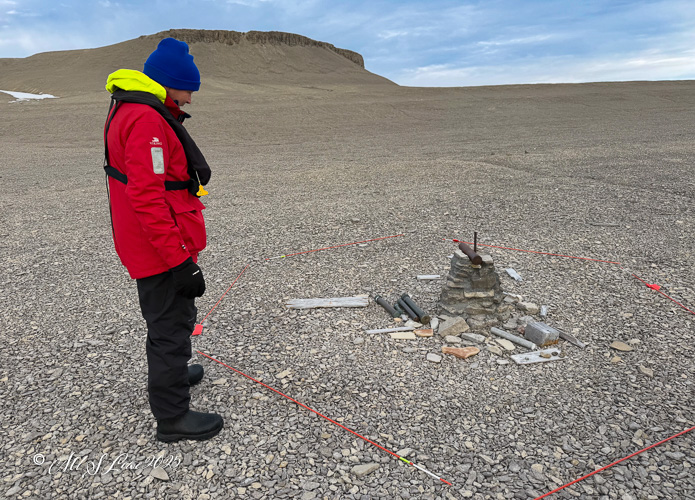
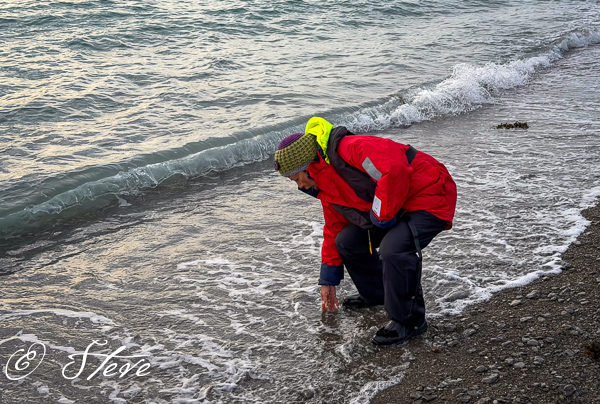


The headlands at Beechey Island are strikingly dramatic, characterized by their towering cliffs and rugged terrain which rise sharply from the icy waters surrounding them. While the scenery looked desolate, it offers wonderful views and serves as a historical landmark:

Dundas Harbor
Dundas Harbour was once a remote outpost for the Royal Canadian Mounted Police, and became a base for various Arctic expeditions. When we arrived it was fogged in and I did not feel like riding on a zodiac with nothing but white in front of me.

When the fog finally lifted Steve was game and joined a zodiac cruise. When he came back he reported that they saw a whale while out there and he got a picture of this lone iceberg:

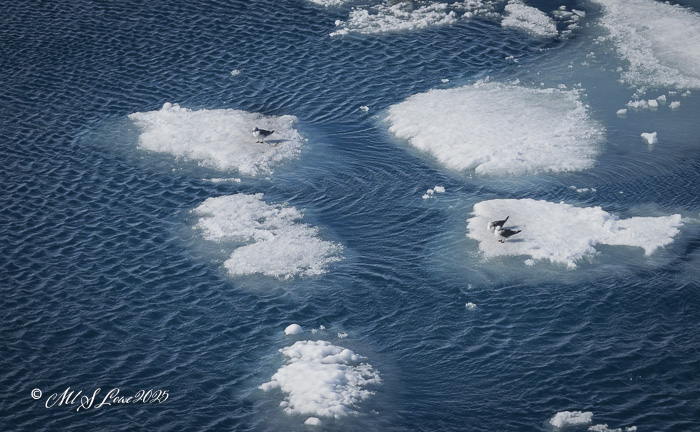
From here the Captain pointed the ship east headed back to Greenland. As we sailed along the coast of Devon Island we encountered a blanket of sea ice. To prove to us that the Viking Polaris has a Polar Class 6 hull rating, the Captain navigated the ship to cut straight through the ice. The ship’s strengthened hull allows navigation through one year old sea ice and even some multi-year sea ice – up to several feet thick!
Here is a short video of the exciting event:
While it was exciting and dramatic, it paled in comparison to our experience in Antartica when Viking Octantis rammed into 6′ thick ice and we then disembarked to walk on the ice. I know, just saying 🙂 To read all about that experience in Antartica read my post here.

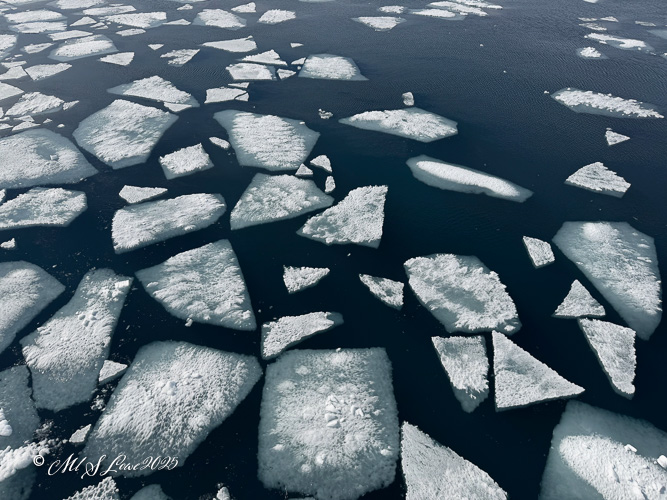
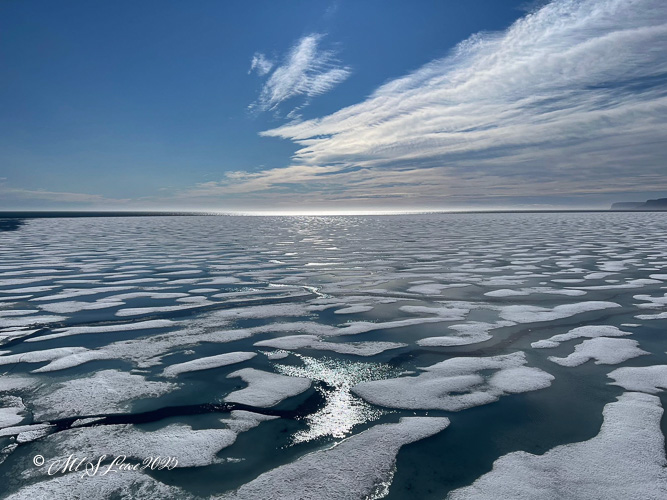
After the excitement our Executive Chef provided a cake extravaganza. I was busy taking a video and forgot to have some because another area held a huge fruit display. It was a sugar rush day!
As the ship sailed back to Greenland we had time to reflect on the dramatic scenery of this pristine Arctic wilderness. We tried not to compare this trip with the one we did in Antarctica because there was a wide difference in experiences. While the wonderful landscapes with their vast stretches of ice and dramatic mountains provided a humbling backdrop, close encounters with wildlife was minimal on this trip.

We did see 4 polar bears which was one of our trip highlights, but much of the Arctic wildlife we were hoping to see were AWOL (walrus, narwhal, puffin). This expedition trip was much more about history and culture and less nature and a lot less wildlife. In retrospect it might have been better to come here first and visit Antarctica after. But we’re very happy with this experience, nevertheless!

Nuuk, Greenland
And then we found ourselves back in Greenland, where we would catch a Viking chartered flight in Nuuk, excited to fly home to the USA back to the heat in Arizona. In the meantime we had time to explore the city.
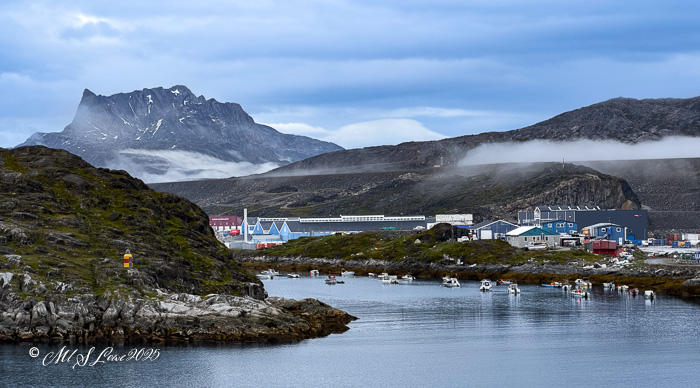
Nuuk is the capital city of Greenland. Despite being the largest city on the island, it remains one of the smallest capital cities in the world by population. More than a third of Greenland’s total population lives in Nuuk, about 20,298 people.


We had a day to explore the city. To my surprise, when we boarded the shuttle bus the driver greeted me in Tagalog and we had a delightful chat. He shared that he has been living in Nuuk for 14 years and mentioned that there are around 1,200 Filipinos throughout Greenland. It’s inspiring to hear how resilient Filipinos travel this far in search of better lives and opportunities, braving the perpetual darkness and enduring harsh Arctic conditions.
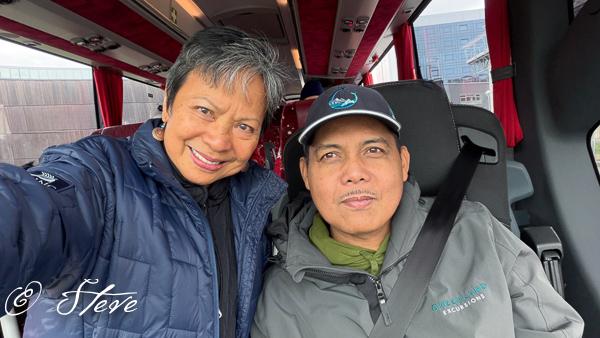
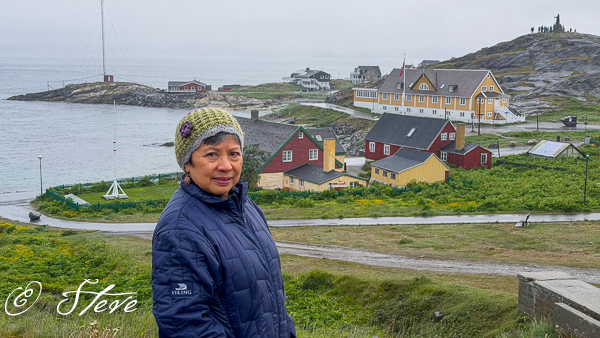
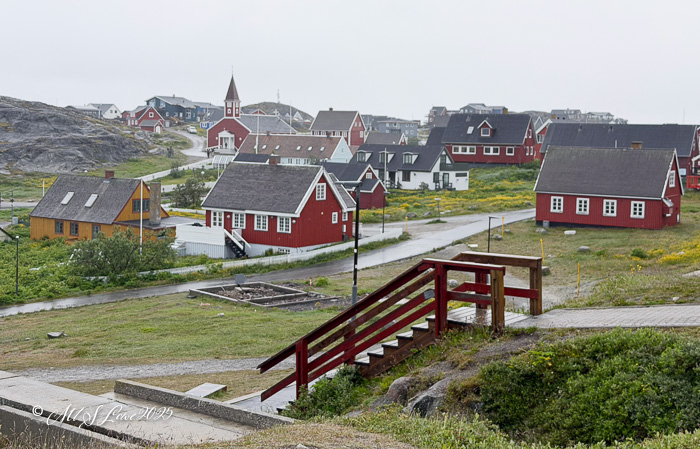
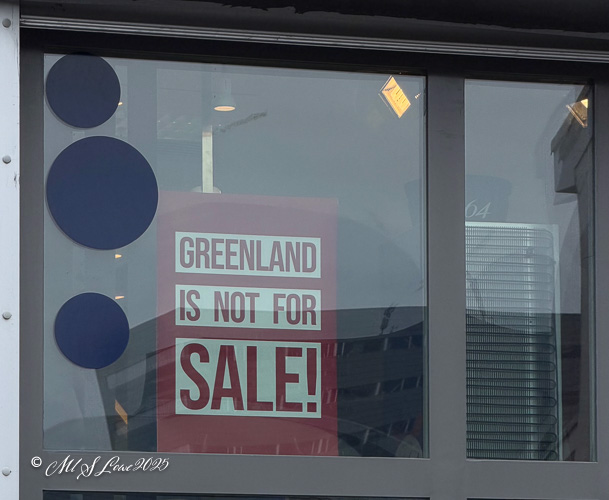
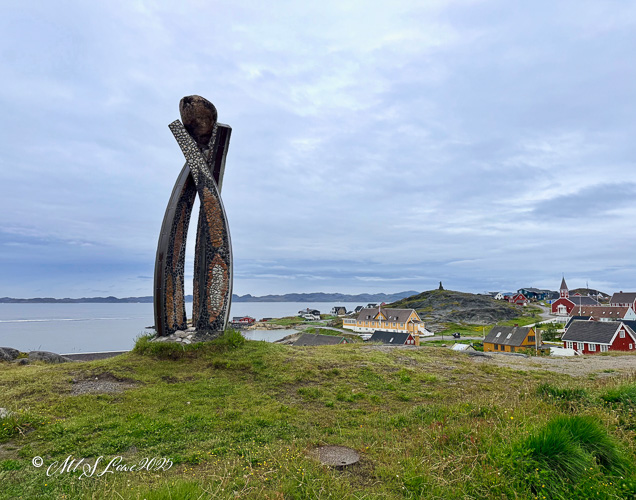
He dropped us off at the city center and from there we strolled around the area, walked to the colonial harbor and visited the National Museum of Greenland:



The Greenland National Museum has a large collection that chronicles the lives of the island’s earliest inhabitants through to modern times. Inside were impressive exhibits and displays that helped us understand the island’s rich archaeological and cultural history, displaying relics from the Saqqaq culture dating back over 4,500 years:

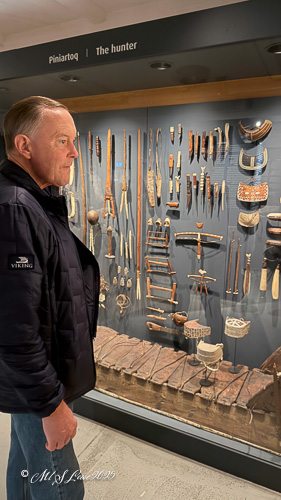

But what stood out the most of all the exhibits were four incredibly preserved mummies—including the famous six-month-old baby discovered in 1972 near the Uummannaq fjord. Dated to approximately 1475 AD during the Thule period, they represent the largest and best-preserved collection of human remains ever found in the Arctic.
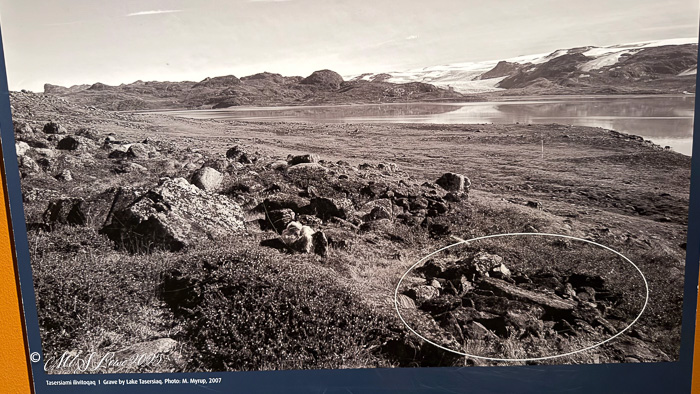


But the most astonishing moment while in Nuuk was when someone got our attention and excitedly asked if we were “Steve and Mona Liza of LowesTravels”! To our amazement, she is a follower of this blog site from since our RV full-timing adventures. How incredible is it that we crossed paths with a blog follower while aboard the Viking Polaris! It is always exciting to meet your blog readers/followers in unexpected places.

And for one of our final meals the Executive Chef offered an over-the-top Greenland seafood chowder:

All good things must come to an end, so it was time to pack up and say goodbye to our beautiful Viking Polaris:
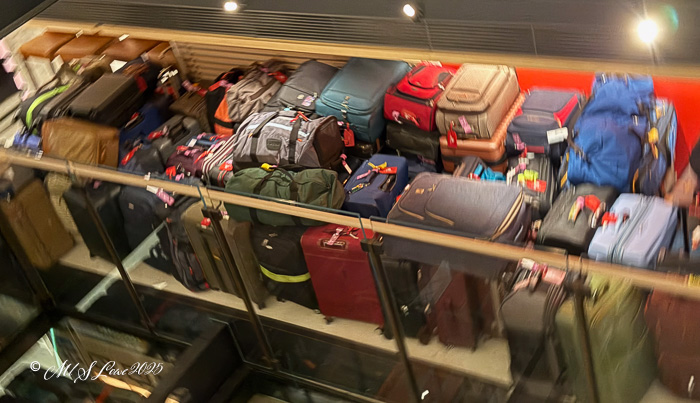
All in all, we had a blast on our trip to the Arctic and Greenland! Even though we were a bit bummed about not seeing much wildlife, every moment in that stunning wilderness really made us appreciate the incredible beauty of the Arctic region.

Goodbye Greenland!
Next up: Revisiting Alaska in a new way!
We’d love to hear from you—drop us a line!