Jul 19-23
This is the third installment of our Arctic expedition on Viking Polaris. If you missed the first two, click here and here to see this great month-long trip so far.
Greenland’s west coast is a beautiful route in the Arctic and a popular travel path for its people. Iceberg-filled waters glide by varied landscapes, recalling the journeys of brave explorers from the past as we attempt to follow their routes.
We visited these towns on Greenland’s west coast, all located above the Arctic Circle:

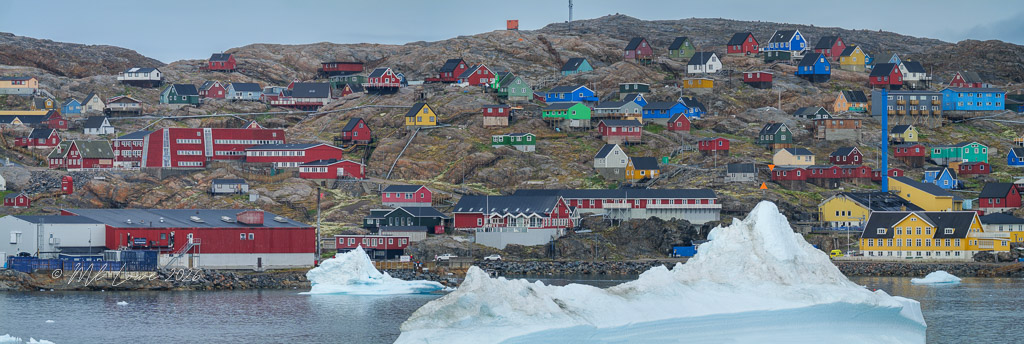
Perhaps by now you are wondering if there is a backstory for those eye-catching multi-colored buildings in Greenland. Is it to add brightness to a landscape that lacks color, or was there specific meaning to them? Well, it turns out that sometime in the 18th century a historical color-coding system was established to help residents easily identify public and commercial facilities. There were no house numbers or street names then, so all buildings were one of five base colors – red, black, yellow, green and blue – and each color had a specific meaning.

So, red was for churches and schools, police stations were black, green was for telecommunications and radio buildings, and blue was reserved for fish processing plants. Finally, yellow was used for hospitals, doctors, and other health care personnel. Today, with the advent of street names and house numbers, residents can paint their homes any color they choose. But many public buildings still honor their traditional assignments – especially churches and fish factories.
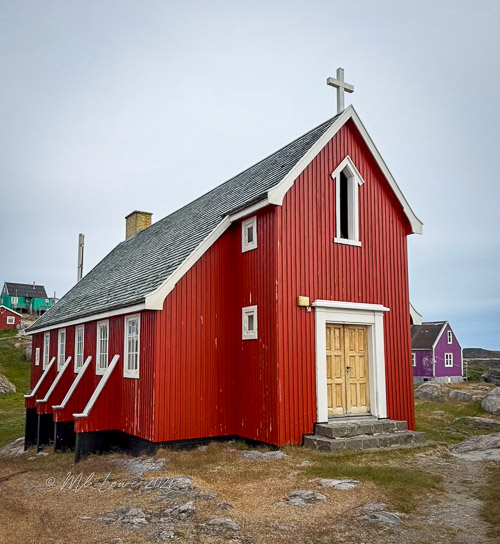
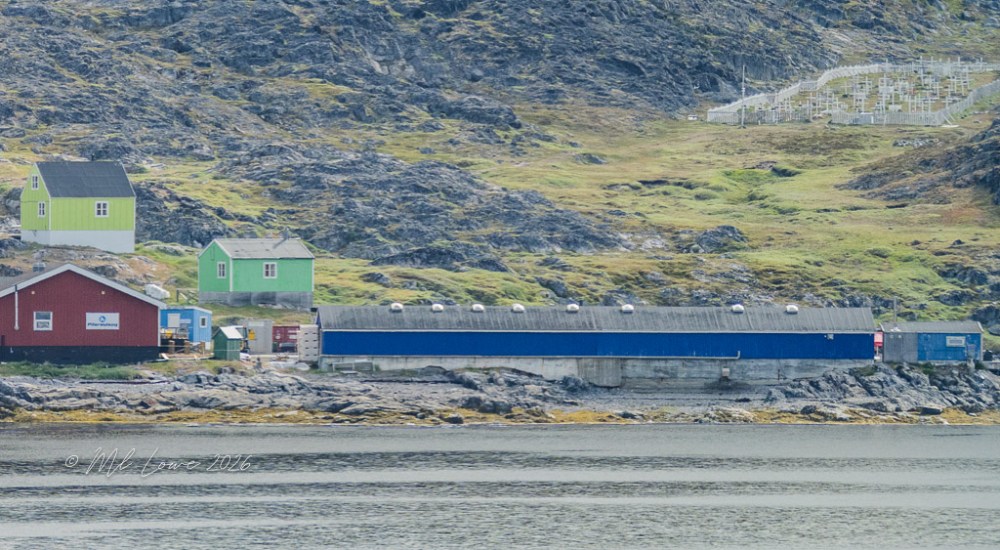
Itilleq-a tiny village with a big Arctic spirit
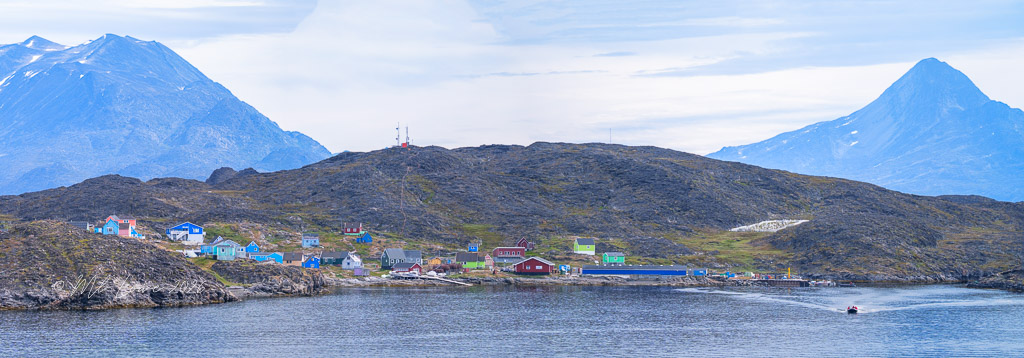
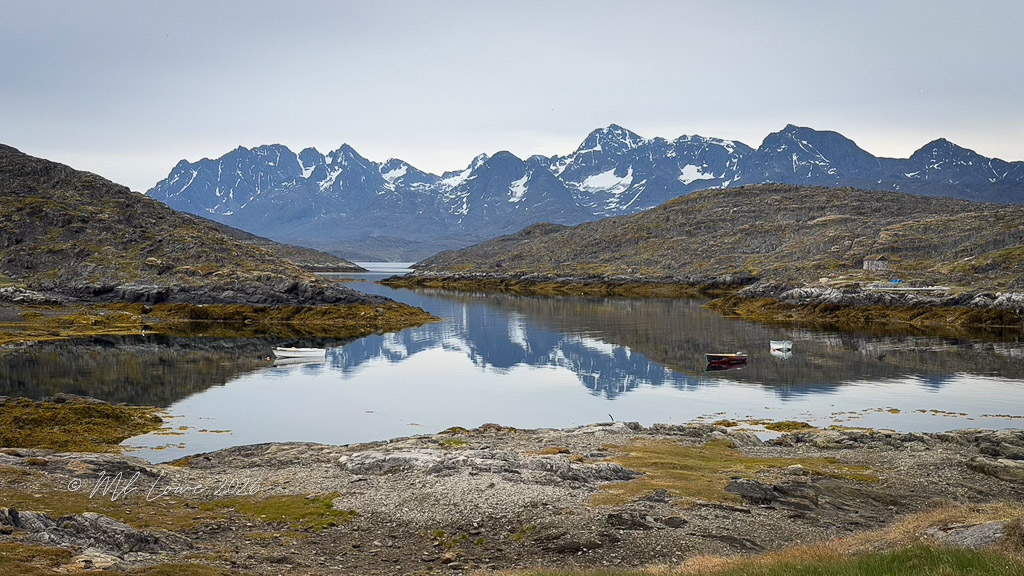
Just 1.5 miles north of the Arctic circle lies Itilleq, a small settlement of only 100 residents as of Jan 2026. There are no formal ferry services, no roads, no healthcare, no restaurants, no fresh water. But these hardy locals are very welcoming and they love living here. It is a community that thrives primarily on fishing and hunting amidst a stunning backdrop of rugged mountains and the vast expanse of the Davis Strait:
It was here that we participated in an authentic kaffemik, a cherished cultural tradition that shows the warmth and hospitality of Greenlandic folks. We were welcomed to one of the private homes where they offered tea/coffee and home made cakes. After only a few minutes of conversing with them we gained insight into their daily lives and the customs that shape the small village:
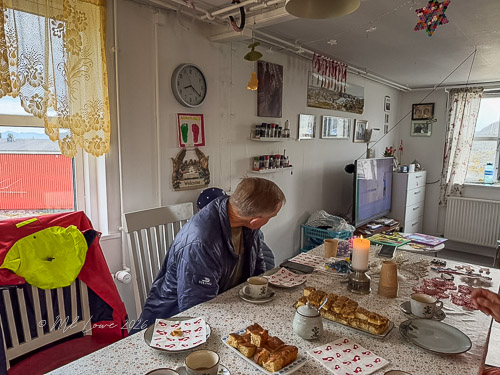

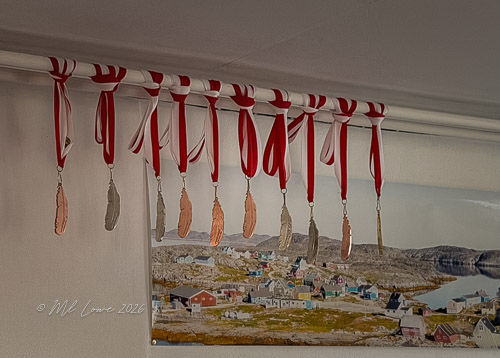
Our host and hostesses showed us medals the husband won during Arctic Winter Games, where he excelled in a traditional arctic sport. We watched the video of the games that are so unique. It looked like a feat of pure athleticism rooted in Inuit culture, including the two-foot high kick, kneel jump, one-hand reach, and knuckle hop. Watch here in youtube how these Arctic Games are played.

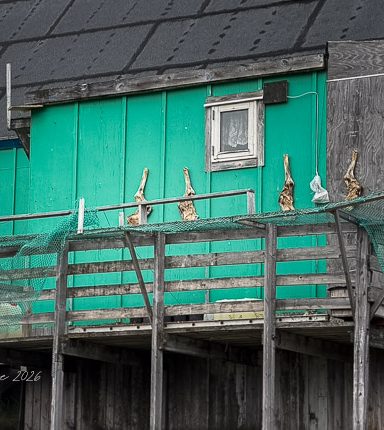
Unique to this settlement is that they depend on a seawater desalination plant for their drinking water, since the island has no natural freshwater source.
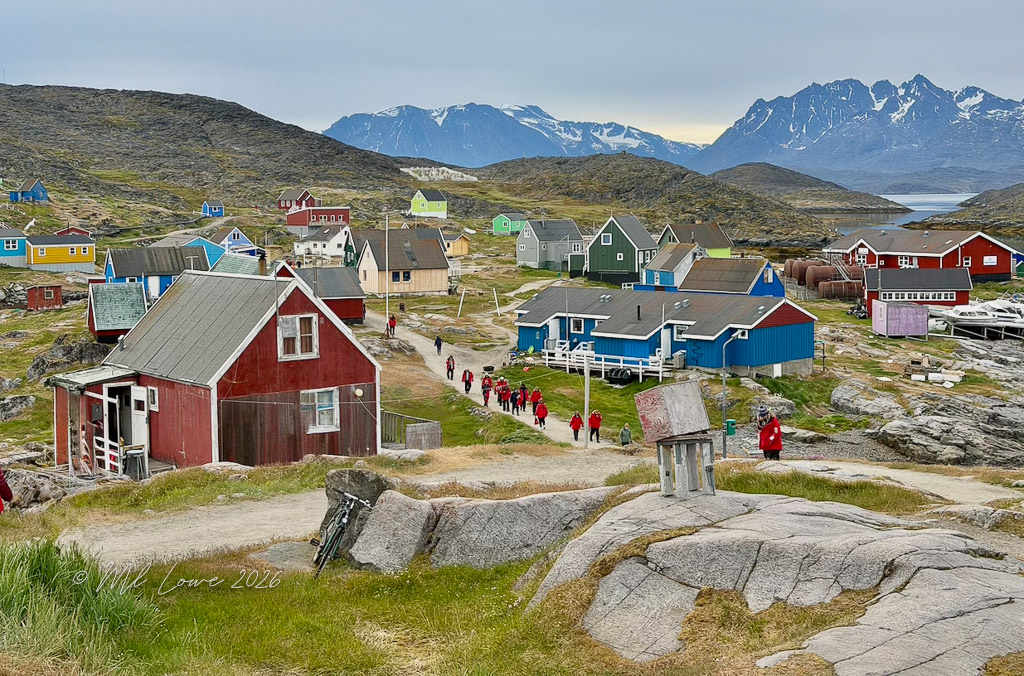
This small village was the birthplace of Hans Enoksen, the Prime Minister of Greenland from 2002-2009. Our Viking excursion probably doubled the population of the town while we were there 😉
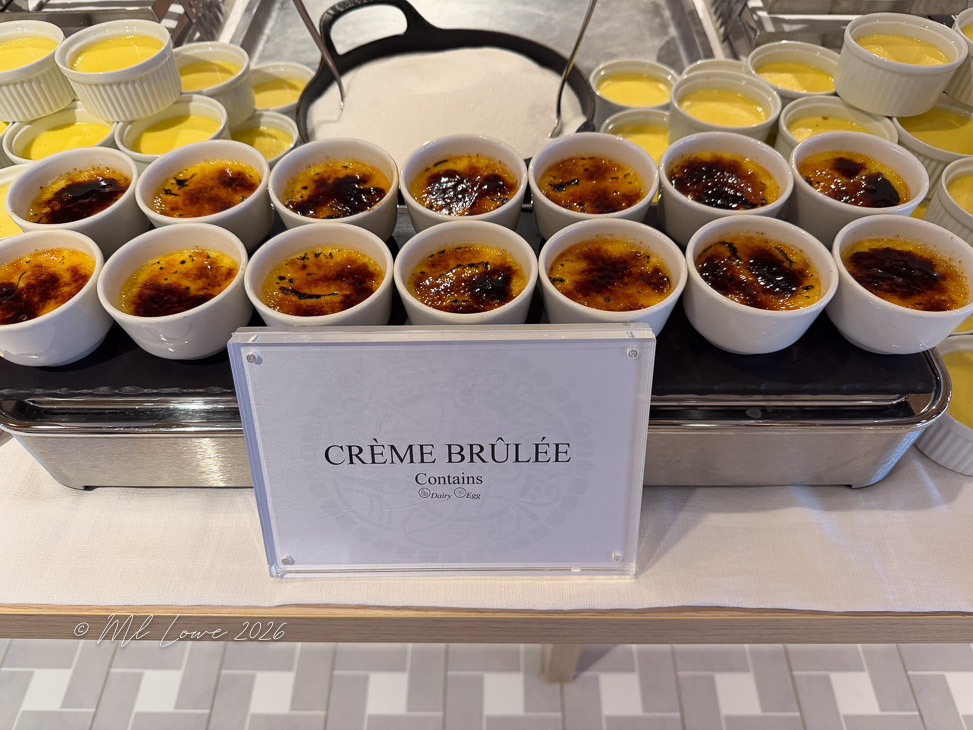
Back at the ship a special dessert was offered. Creme Brûlée just happens to be one of my favorites!

Sisimiut – an outdoor adventure-travel hub
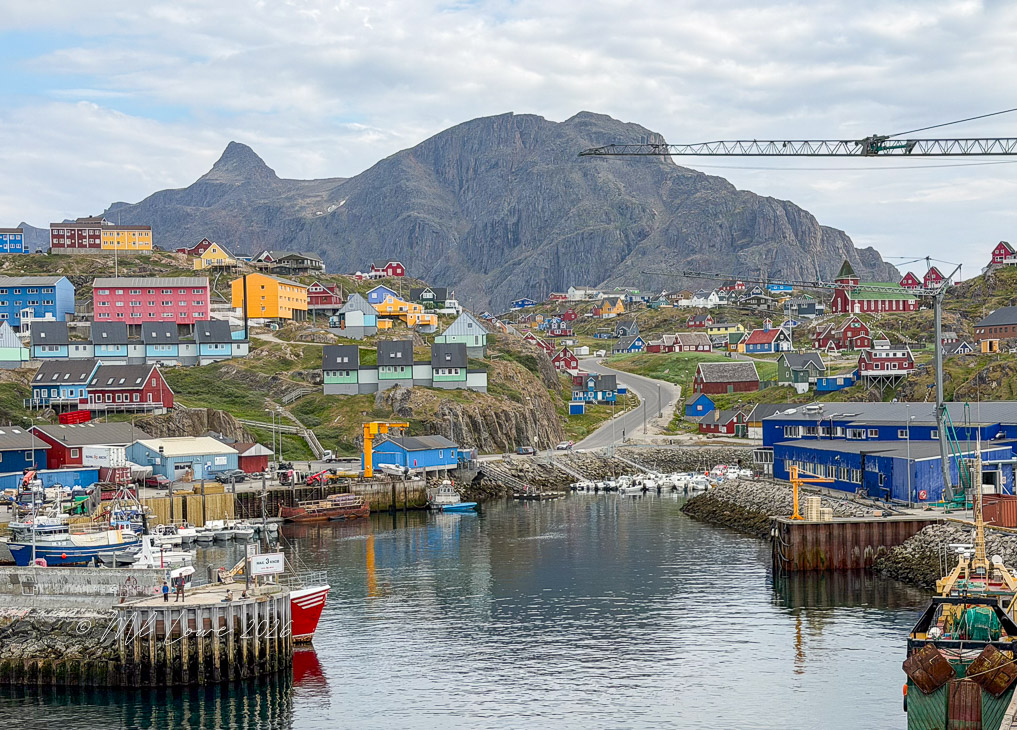
With a population of 5,509 (2019), Sisimiut is the 2nd largest city in Greenland. Like most settlements, their homes are nestled amidst a rugged landscape of mountains and pristine vast expanses of wilderness:

The old town center, now Sisimiut Museum, is a very well-preserved cultural history museum that maintains a historical atmosphere. It’s a collection of old colonial buildings, several of which are from the 18th century:
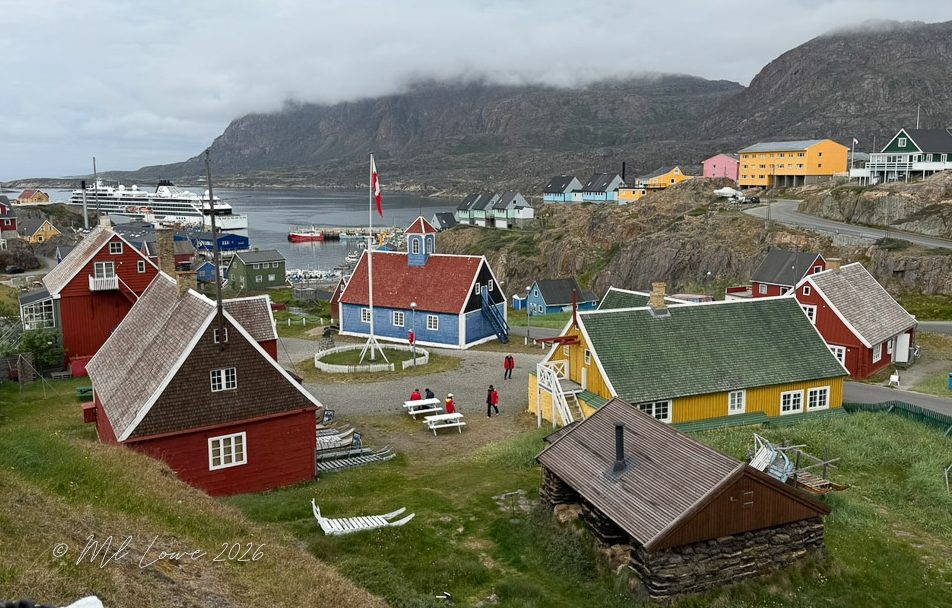
Each building tells a story of the first immigrants and Inuit culture. There was loads of info and many buildings to explore to get an in-depth understanding of how the people lived, hunted and travelled in the landscape between ice and sea for more than 4,500 years.


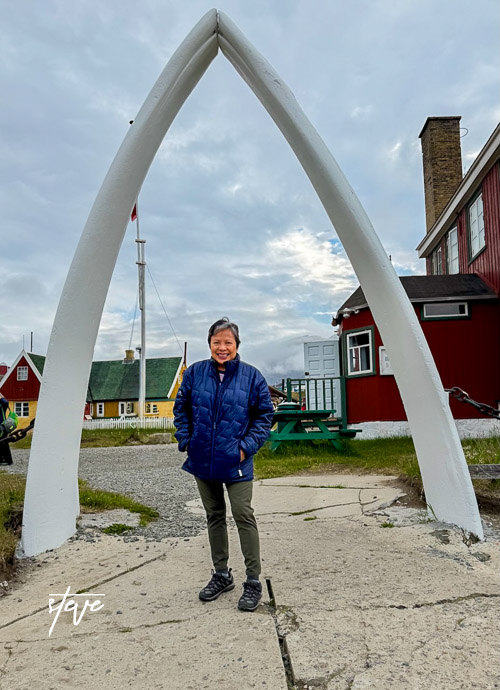
each measuring 22′
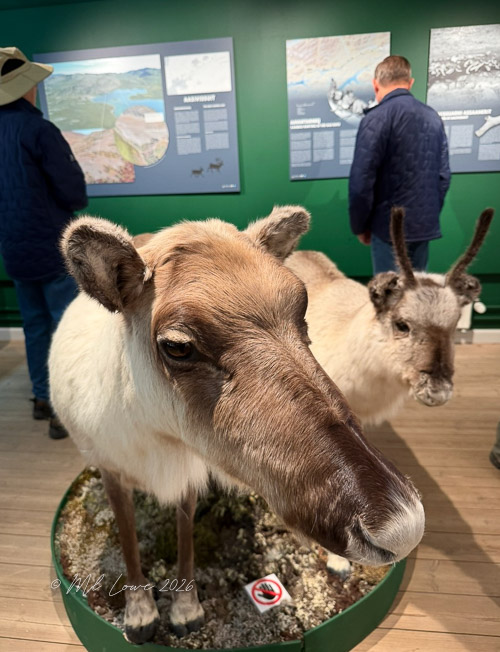

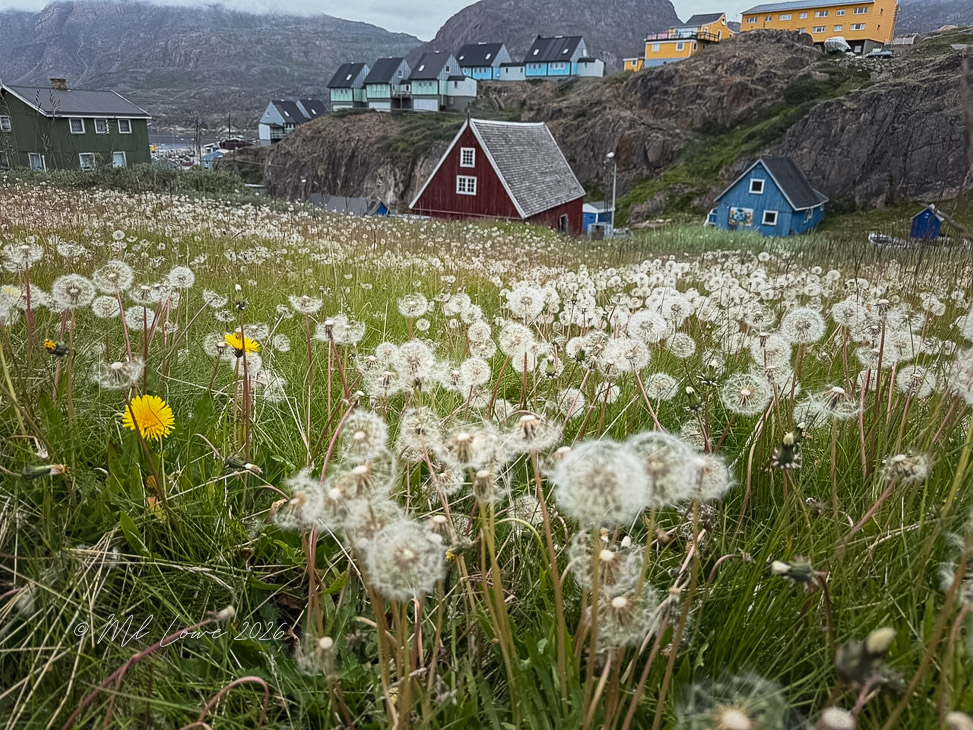
Did you know that kayaks were created by indigenous Arctic people? The Greenlandic Inuit invented kayaks thousands of years ago for hunting and survival. The word kayak comes from the Inuktitut word qayaq, meaning “man’s boat.” For Greenlanders, the kayak is not just a sport; it symbolizes the connection between Inuit heritage and modern culture.
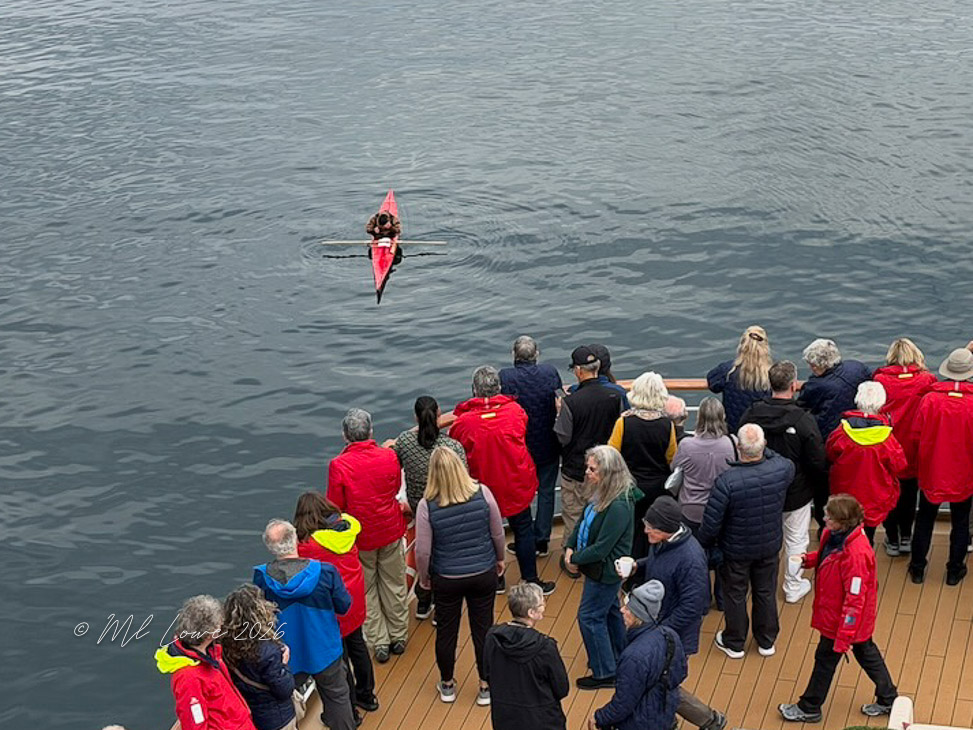
Before the ship departed from Sisimuit, a demonstration of a Greenland kayak rolling was presented to us. Kalaallit rolling, or Greenland kayak rolling is an ancient Inuit self-rescue discipline rooted in Arctic hunting survival.
Play this short video (there was a narration but I could barely hear it) to see how they effortlessly right a capsized kayak. And believe me, that water is COLD!
Ilulissat – the iceberg capital of the world
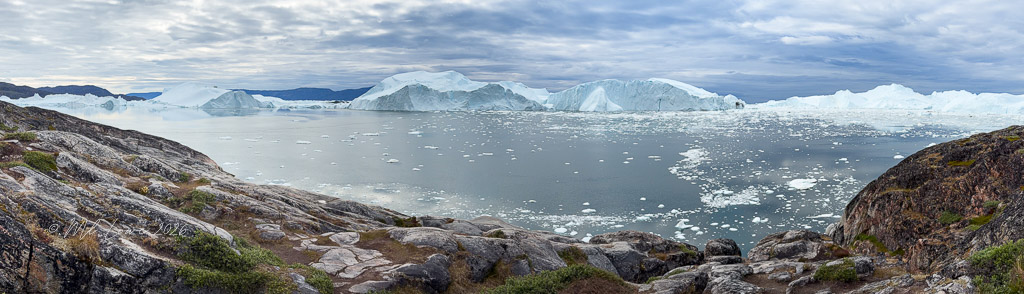
It is all about the ice when visiting Ilulissat, which lies 220 miles north of the Arctic Circle. Ilulissat sits along pristine waters at the mouth of its namesake ice fjord. It is globally famous for the Ilulissat Icefjord, a UNESCO World Heritage Site, which is the calving ground of Sermeq Kujalleq (Jakobshavn Glacier). It’s one of the most active glaciers in the world.
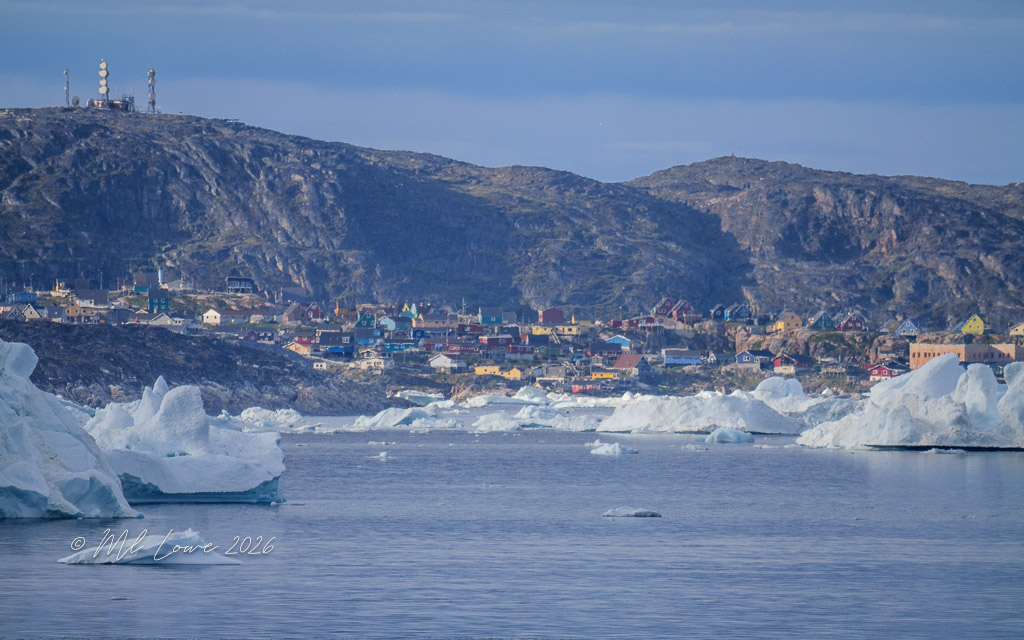
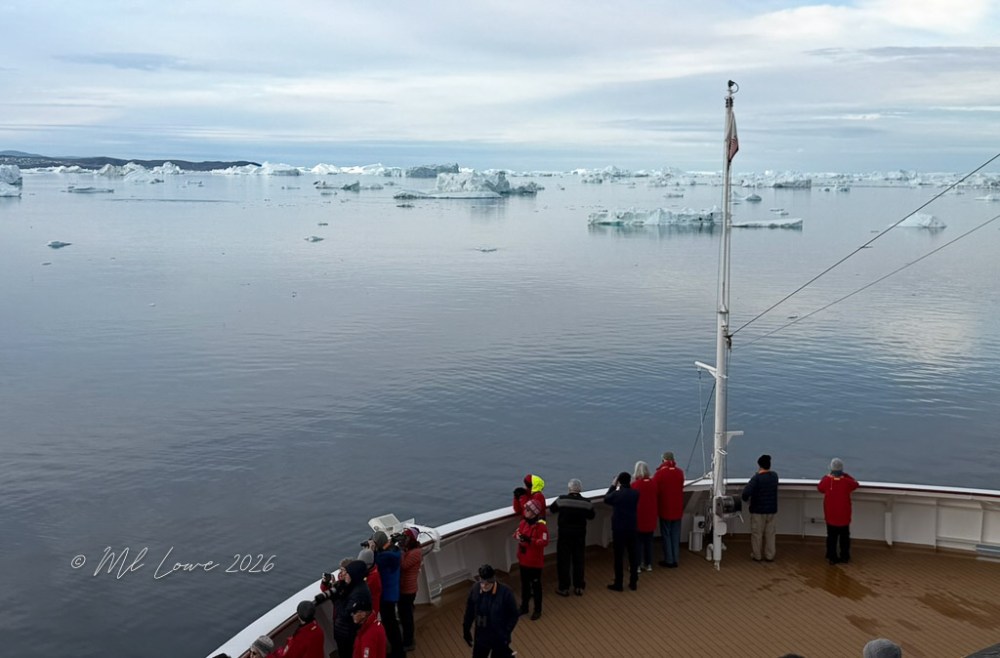
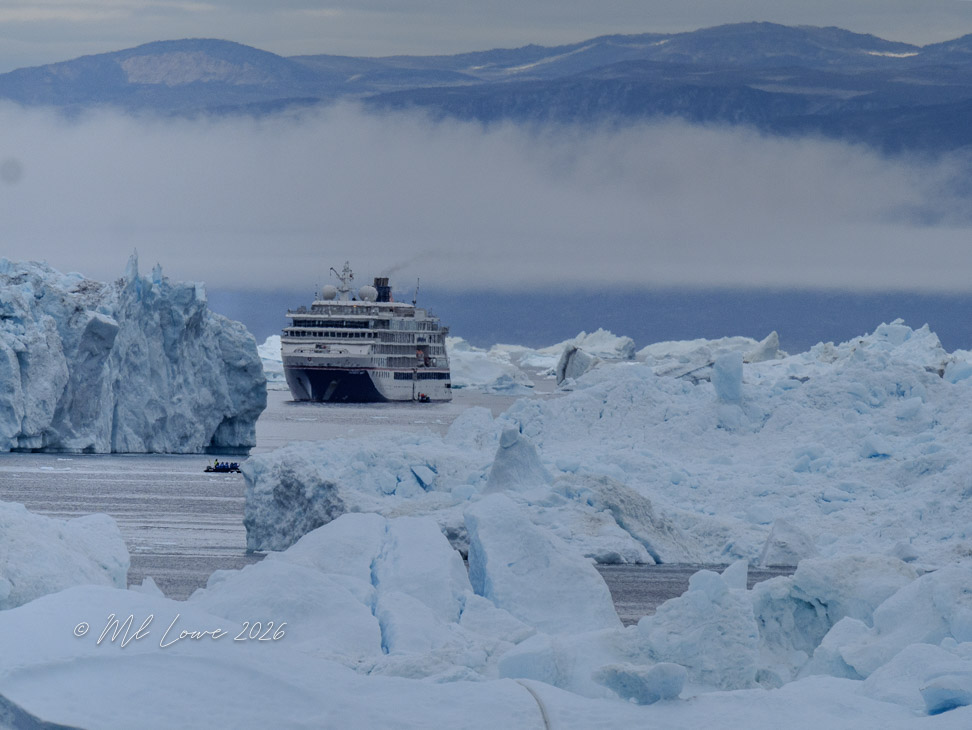
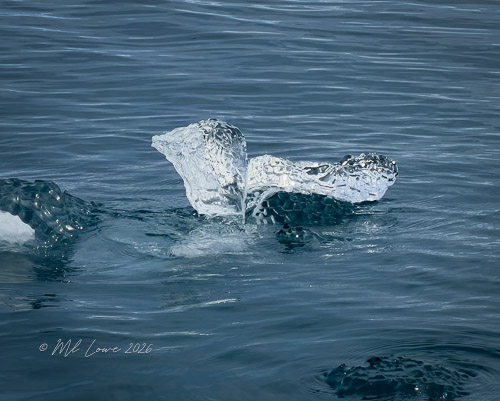
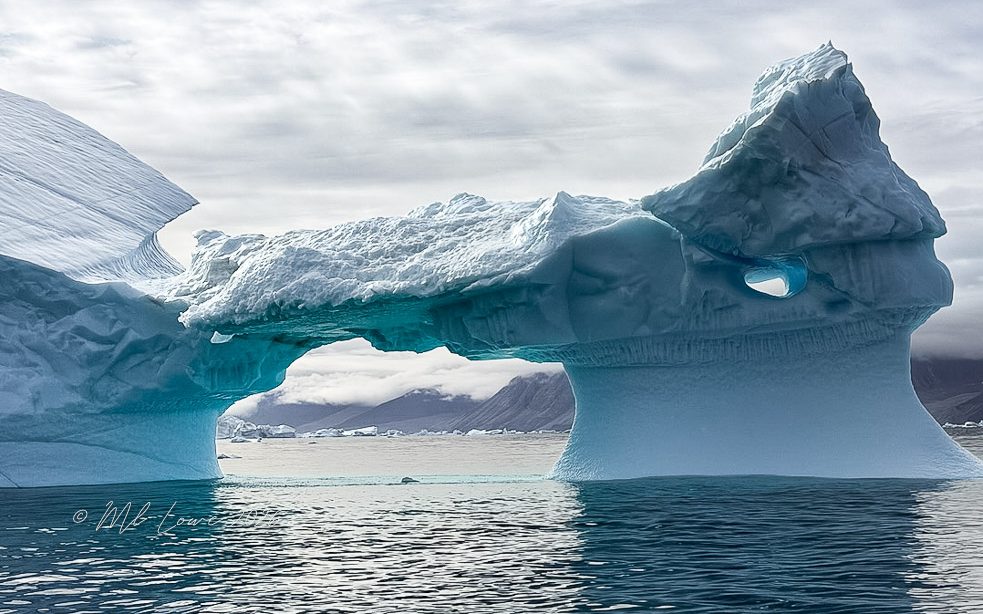
This endless parade of white floating “islands”, long studied by glaciologists, has earned the ice fjord status as a UNESCO World Heritage Site. The fjord is fed by the Sermeg Kujalleq— one of the fastest moving glaciers in the world that produces massive icebergs visible as they drift out to sea:
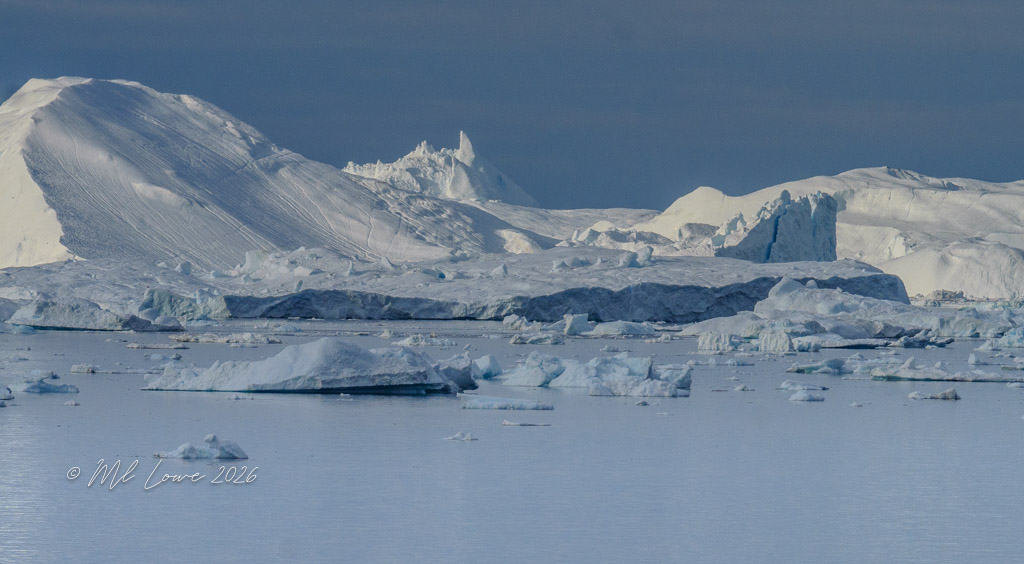


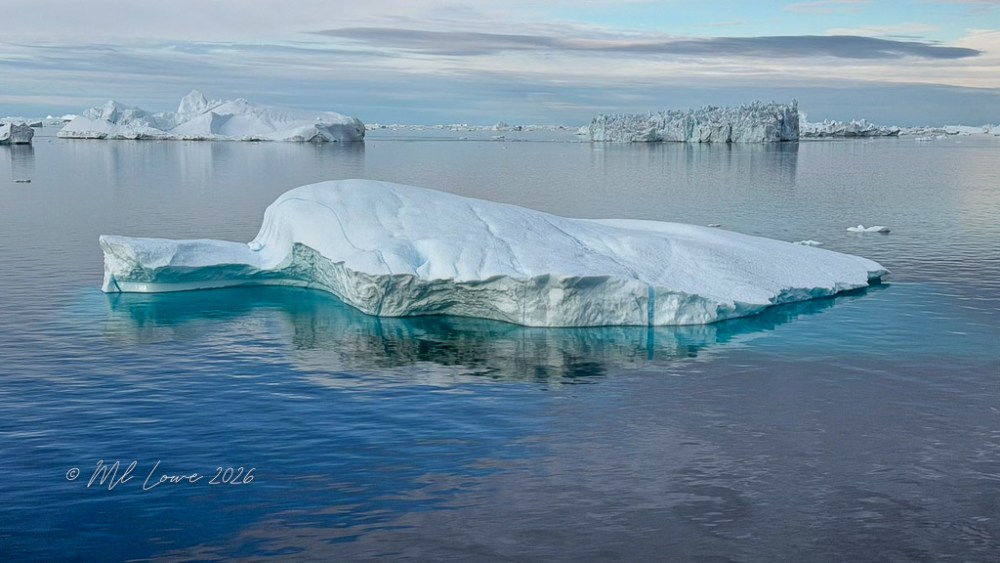
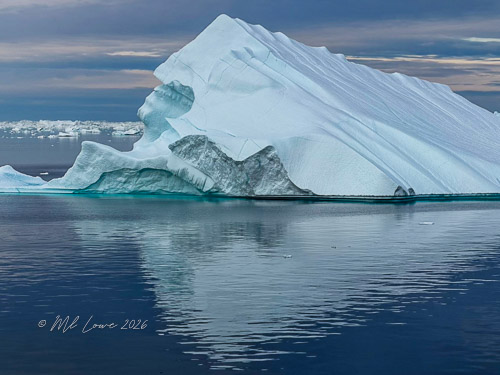
We learned that the largest Greenlandic icebergs take three to four years to melt. They can drift as far south as off the coast of New York City before melting entirely. The infamous iceberg that the Titanic hit came from Greenland, and it is thought that it calved from here in Sermeg, Kujalleq.
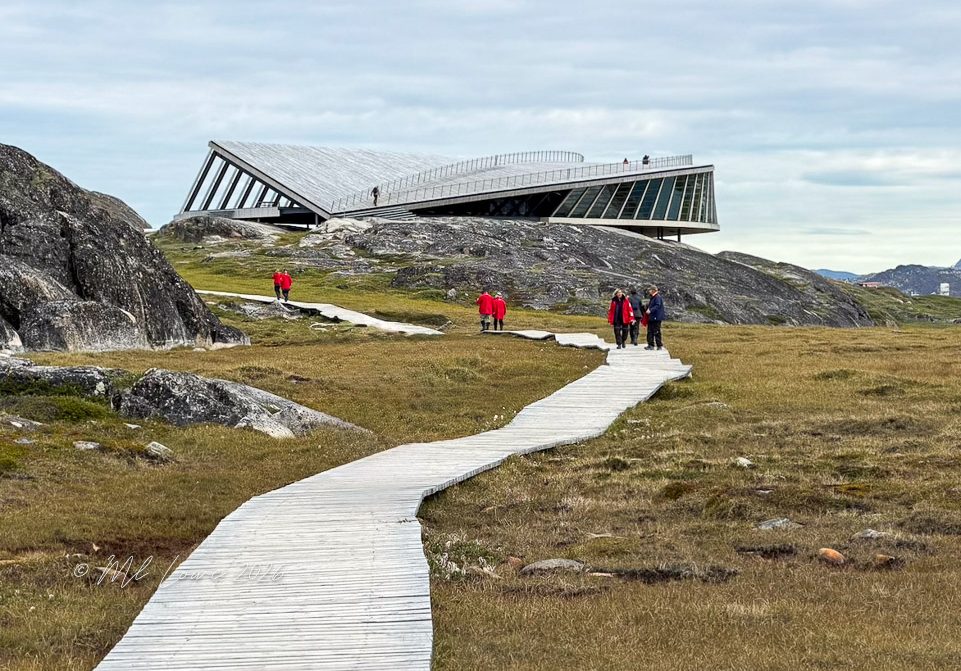
We visited the Icefjord Center, a striking modern architectural structure that features deeply educational exhibits on climate change, ice core science, and regional history:
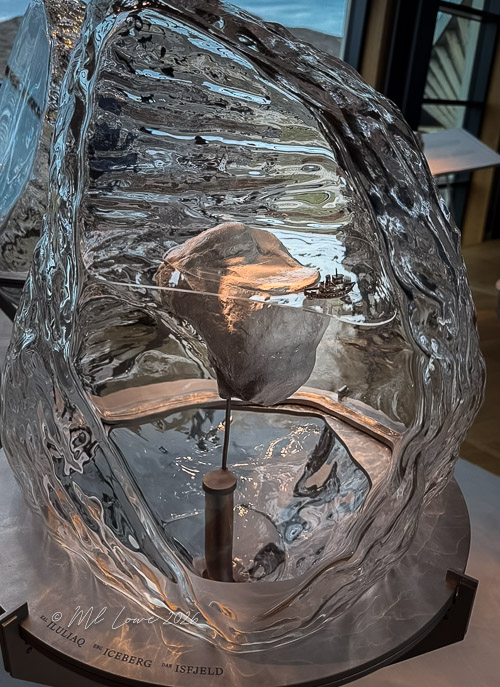
Inside, we passed through a landscape of snowflakes where archeological artifacts are presented in prisms of glass. It was an unusual but interesting museum. Displays of cores from the ice sheet told stories about culture and climate from today and back to 124,000 years B.C. We thought it was a unique presentation of an icy age:
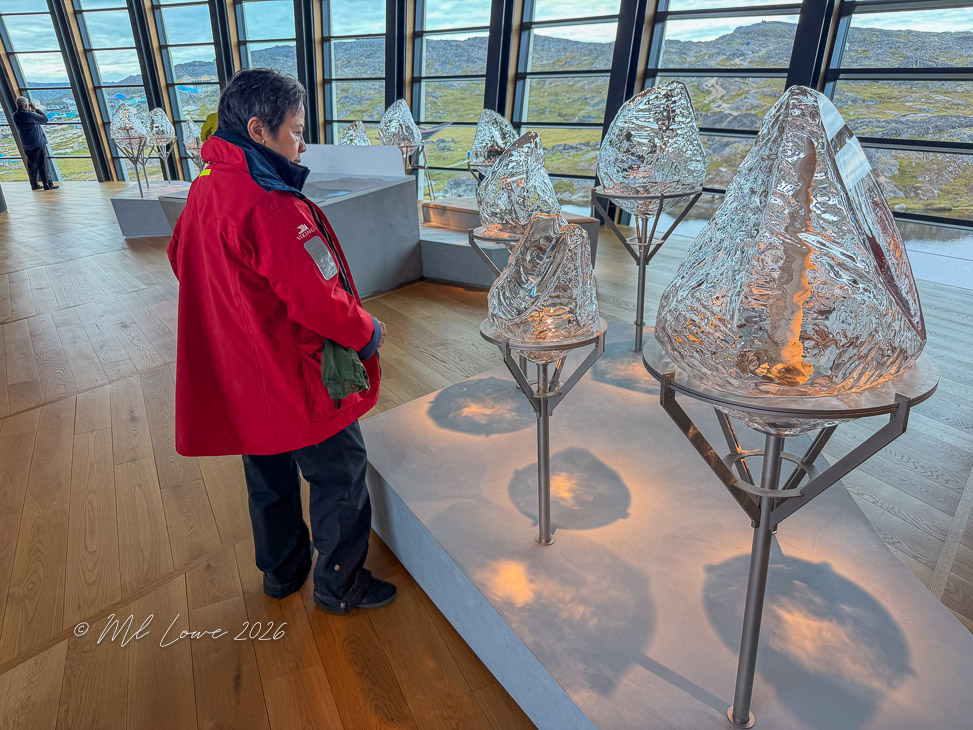
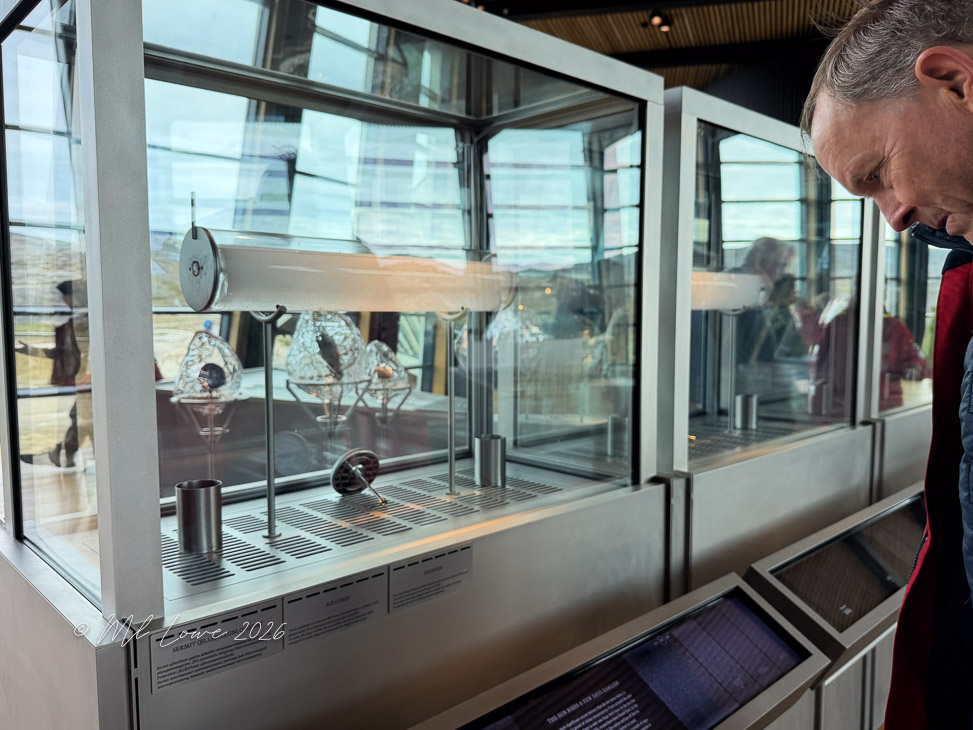
Take a closer look of what is displayed inside a prism. The left shows how 90% of an iceberg mass stays hidden beneath the ocean water and only 10% shows above, giving the expression “tip of an iceberg.” On the right side is the tusk of a Walrus.

We followed a 1.5 mile scenic boardwalk trail from the center that led to an overlook where we viewed a jaw-dropping graveyard of massive stranded icebergs. They were as big as mountains! This glacier is one of the most productive on the planet, the one thought to have calved the iceberg that doomed the Titanic.


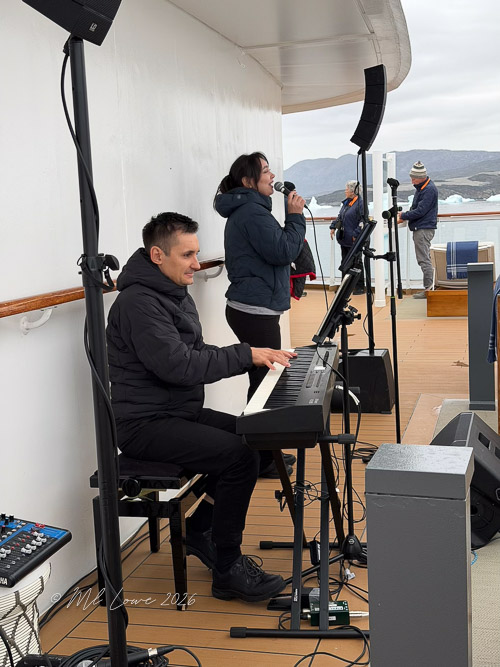
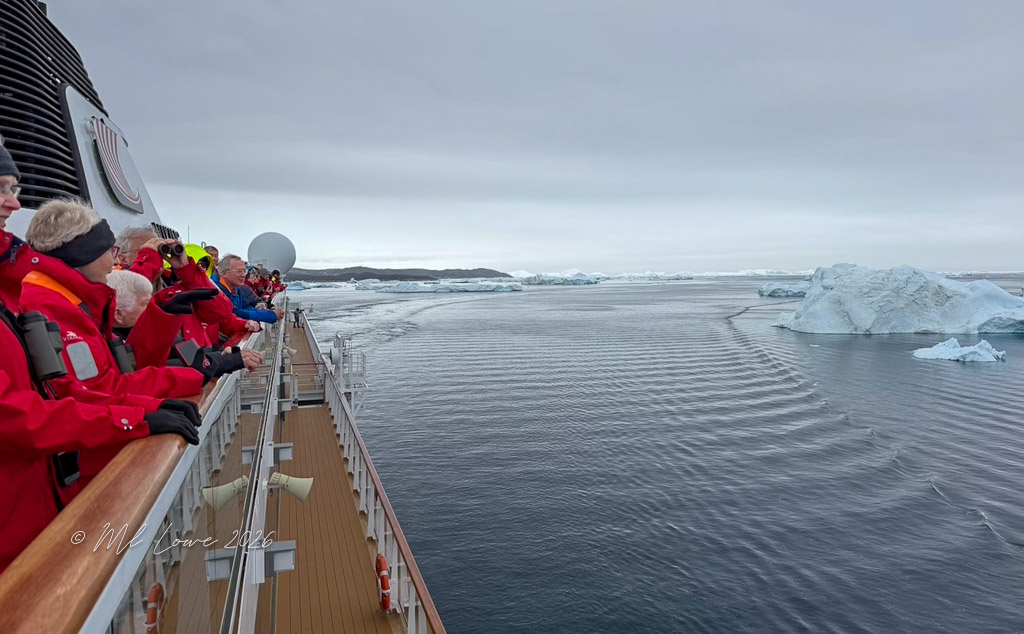
In classic Viking style, as the ship sailed through the sea of ice we had a lively deck party where we gathered on deck 6 to bask in the breathtaking views of a vast sea of icebergs. With warm drinks in hand the ship glided gracefully past these magnificent ice formations, making it an exciting event:

Uummannaq – the heart of Greenland
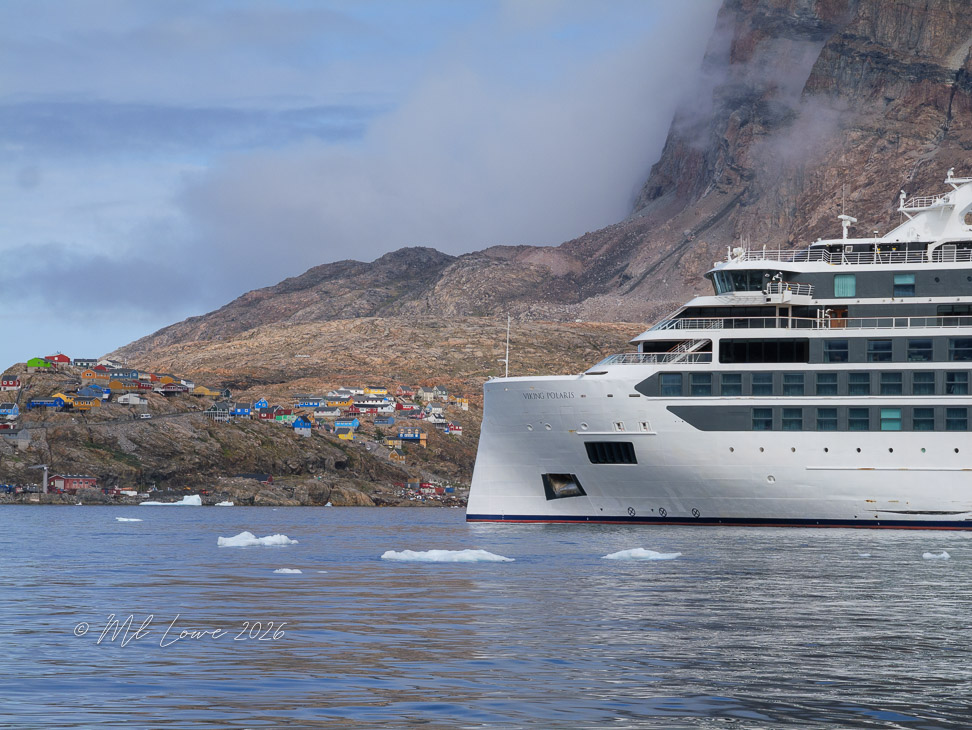
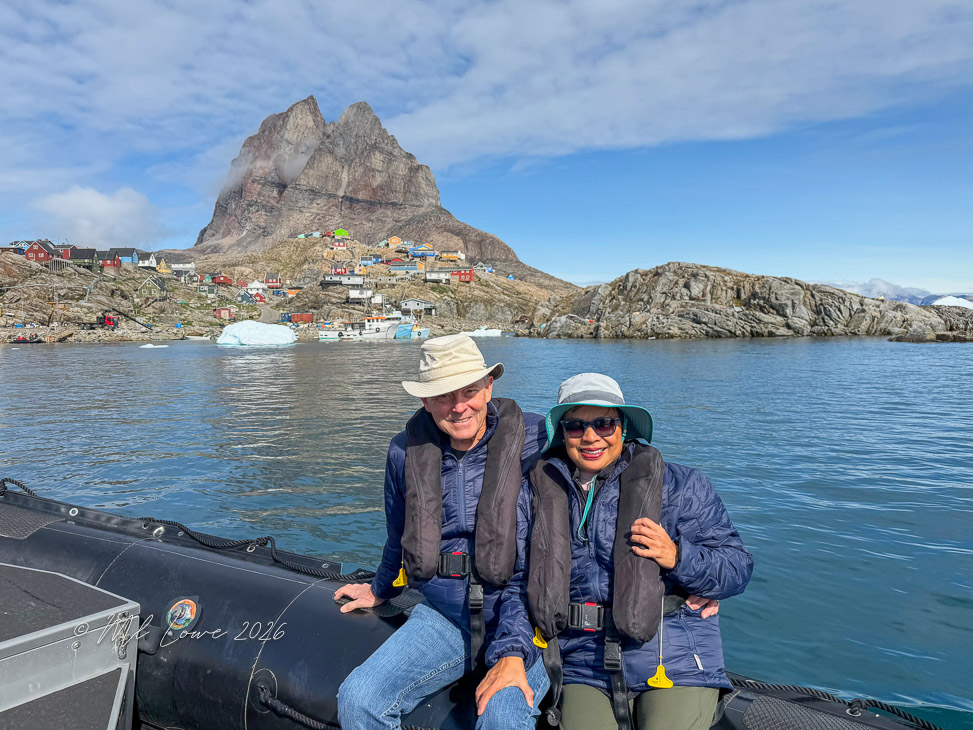
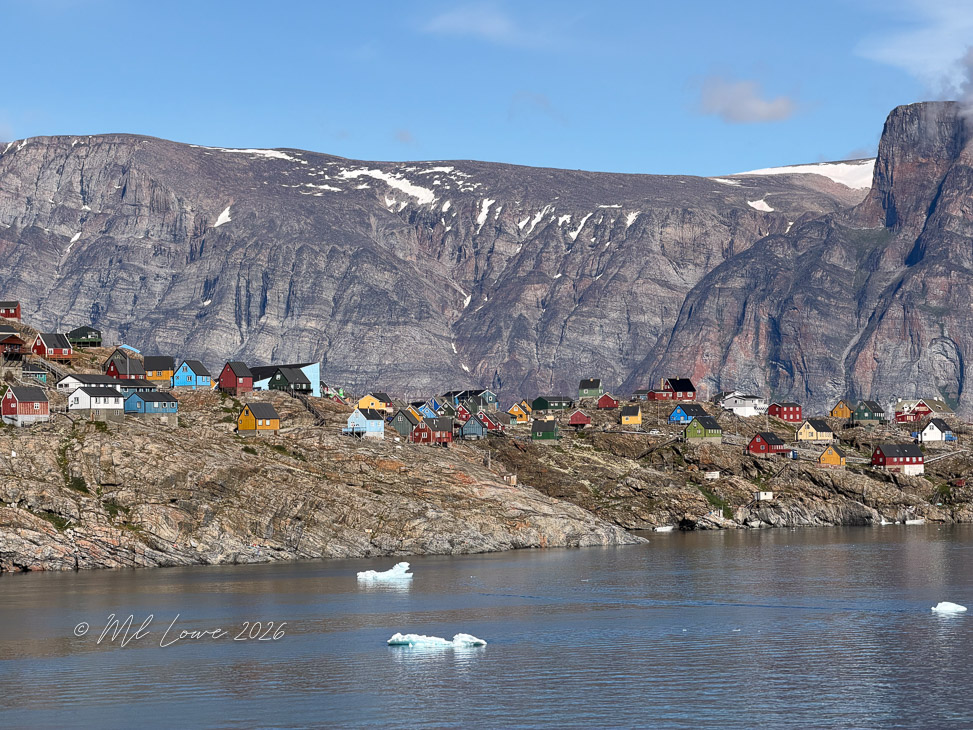
300 miles north of the arctic circle is the remote town of Uummannaq. It is named after its namesake heart-shaped mountain backdrop, dubbed the heart of Greenland. Uummannaq the mountain, is 3,854 feet tall overlooking the town. It was fogged in when we arrived, but thankfully our activities were scheduled in the afternoon and when the fog lifted a picturesque town was revealed with a tall heart-shaped mountain behind it!
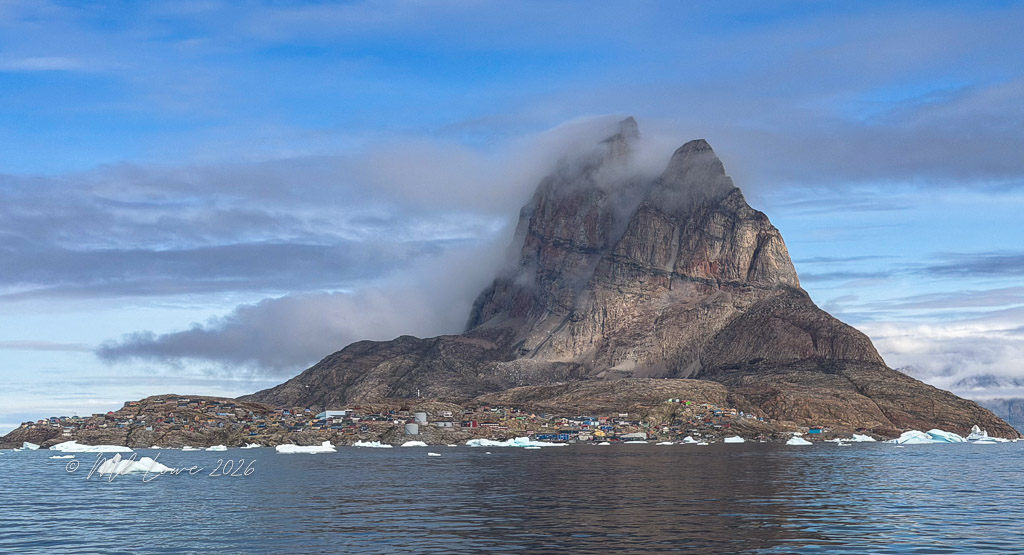
Colorful houses clung to the precarious slopes of a heart-shaped mountain rising out of the ocean:
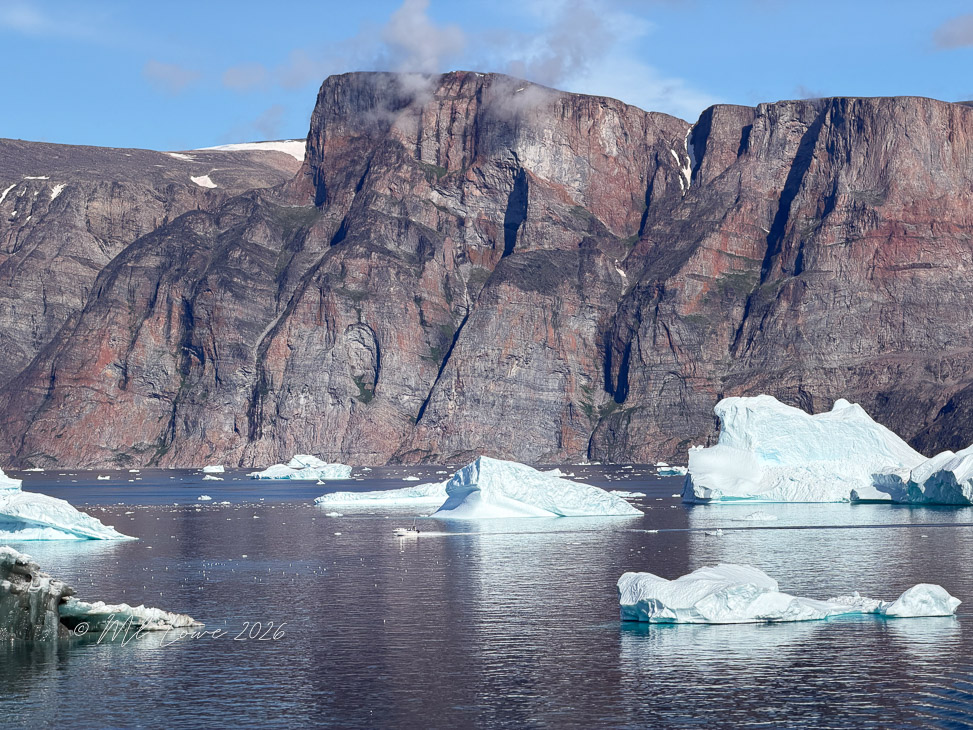
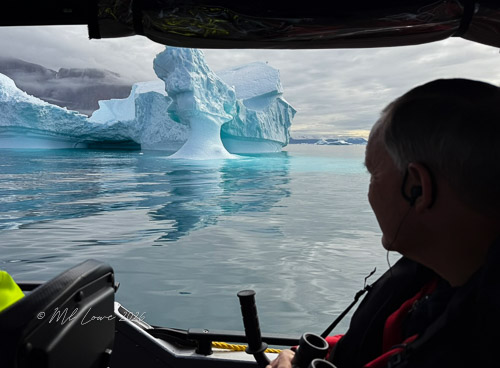
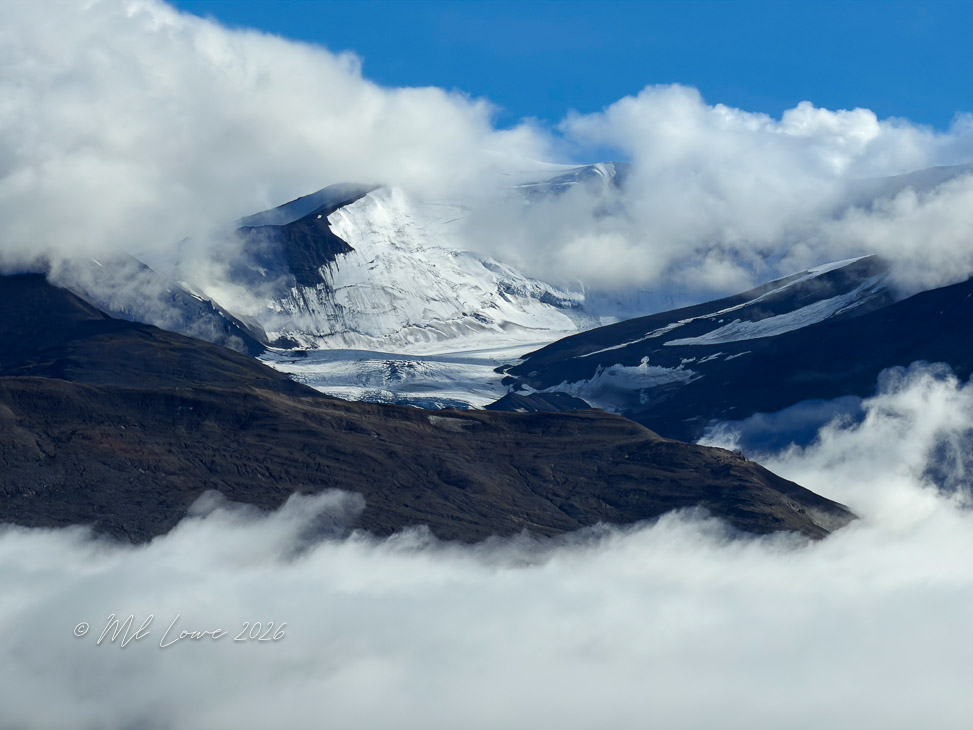
In the afternoon we enjoyed a SOB (Special Operations Boat) cruise on the dramatic fjord systems. We saw steep mountains and active glaciers while imagining winter activities on the frozen fjord:

Later on we took a zodiac shuttle to walk around town and meet a sled dog driver/trainer:
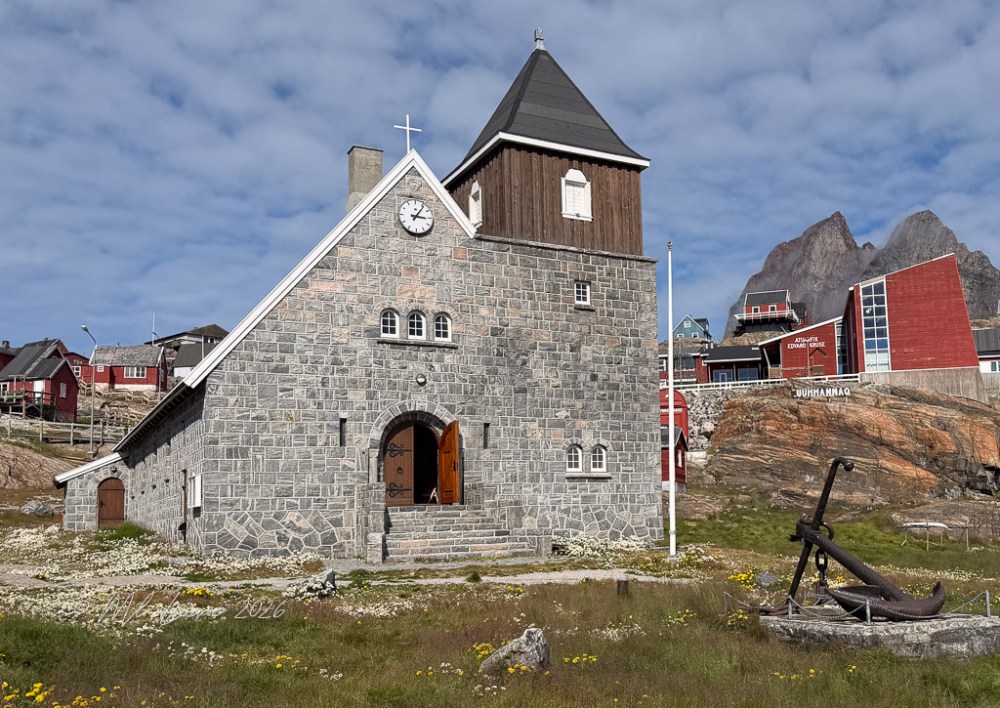
built out of granite cut from the hillside behind it


The sled dog driver/trainer/musher explained to us that Greenlandic sled dogs (a type of husky) is a national icon and an important part of the Greenlandic identity. Brought to the island almost 5,000 years ago, they were instrumental in enabling the Inuit to explore and survive in the harsh Arctic environment and then continue to play a vital role in everyday life. These sled dogs can only be found north of the Arctic Circle. He explained how the dogs pull the sleds across the ocean when it freezes in a few months – hard to imagine when we were there on such a nice day!
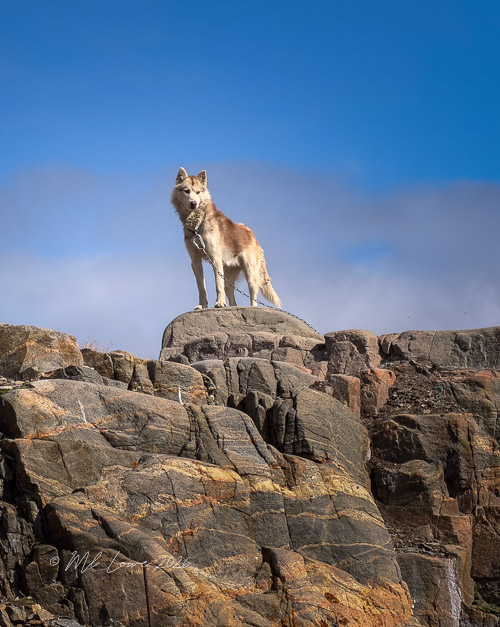

He also said that it is prohibited to bring another breed of dog into these areas, and if a Greenlandic sled dog leaves this restricted zone it is not allowed to return. Nobody can approach a Greenlandic sled dog unless given permission by the owner. Although dogs older than 6 months must be chained by law, puppies are allowed to roam freely.

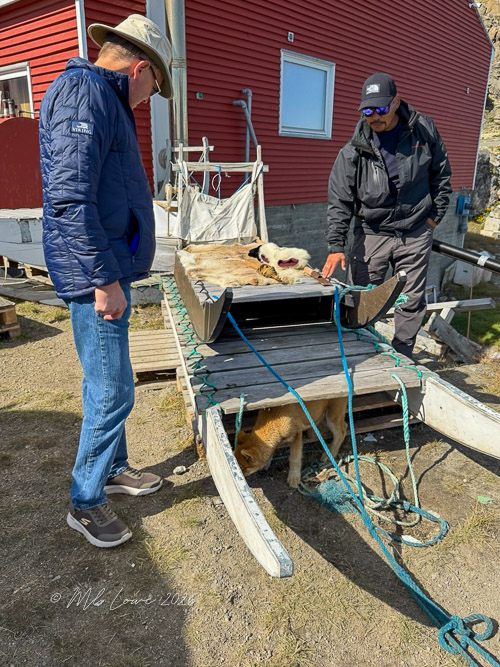
Steve was impressed by the technology of the sled
The scenery along the rocky coastline as we left the island were stunning:

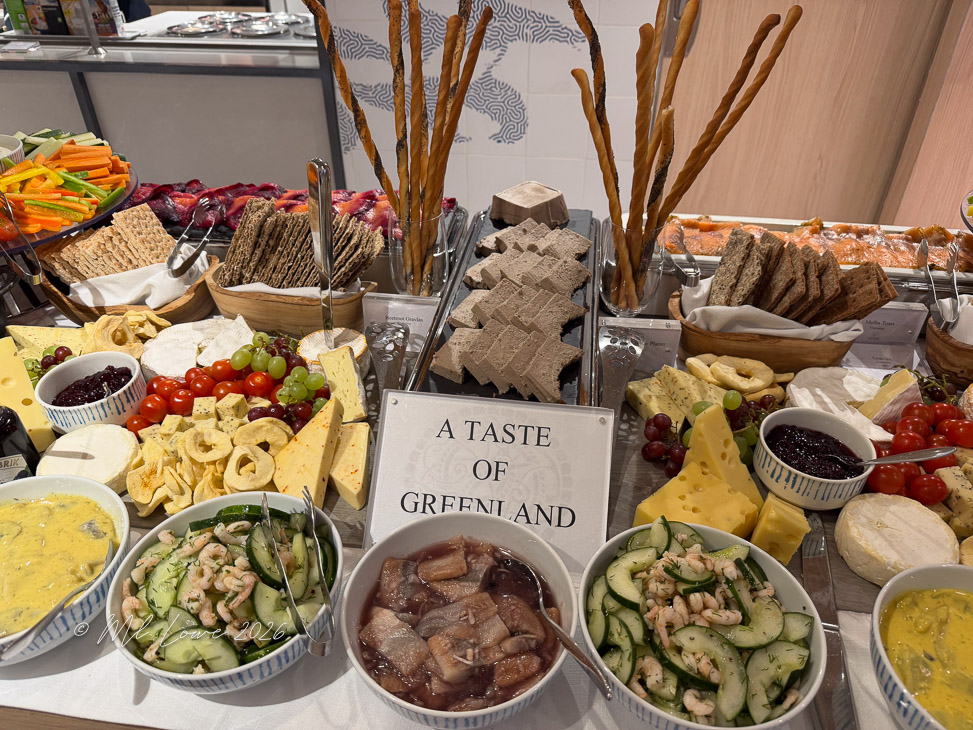
Back on the ship, our executive chef prepared a taste of Greenland spread – yum!

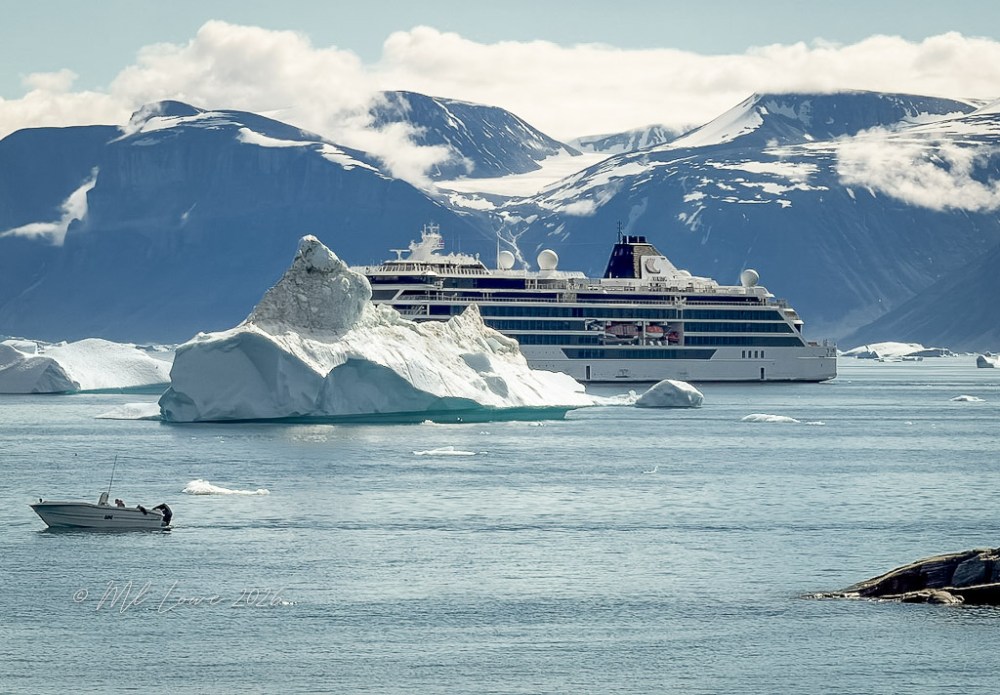
Greenland’s west coast completely surprised us. Glaciers towering over fjords so huge our ship looked tiny, and every turn showed off something even more insane than the last. We met only a few of the 56,945 people living on this massive island. We admired the tough and resilient indigenous Inuit residents, who thrive in their colorful homes perched on rocky cliffs, each telling a story of their ancestors’ rich history. Their deep connection to the land and the sea, coupled with their vibrant traditions and craftsmanship, offered us an incredible insight into their daily lives. What an amazing place and people!
Next up: Into the Canadian High Arctic


We’d love to hear from you—drop us a line!