May 7-9, 2025
My postings are slowing down as I get further behind. Why, you may ask? It’s because we’ve been traveling the past few weeks, causing me to pause my blogging as we enjoy many wonderful moments while traveling with friends in Canada. But that’s for a future post 🙂
Let me pick up where I left off – departing after our nice visit to Taipei, Taiwan. We then headed for Japan with seven planned port stops. That Viking cruise seems ages ago now, and only my photos can help me recall everything we did there. This part-1 will be highlights of our first three stops; Nagasaki, Kagoshima and Beppu.
Nagasaki
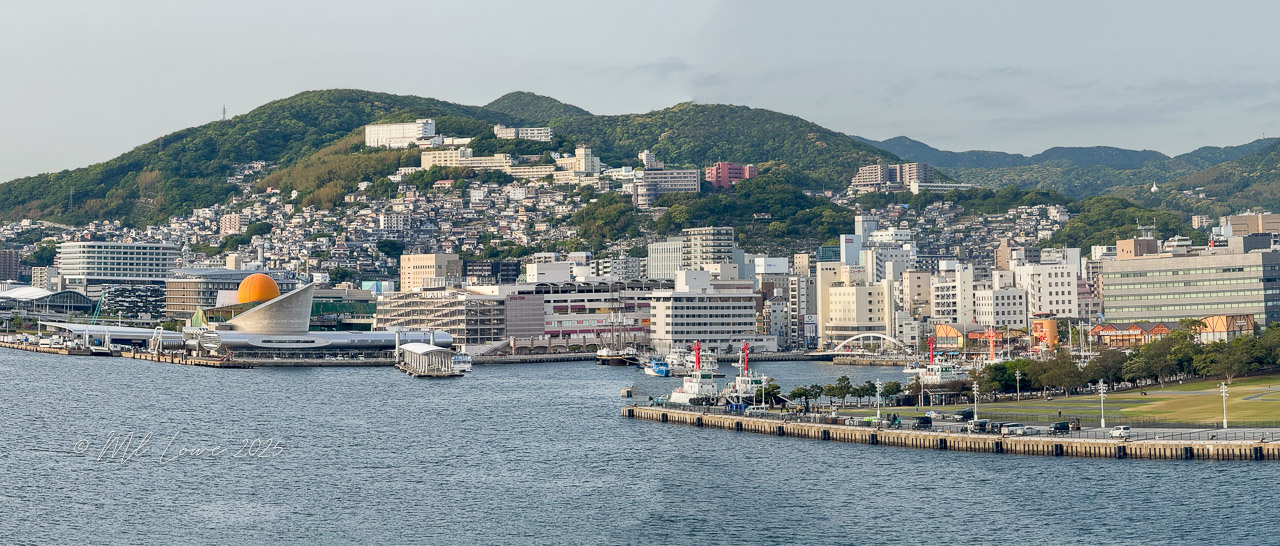
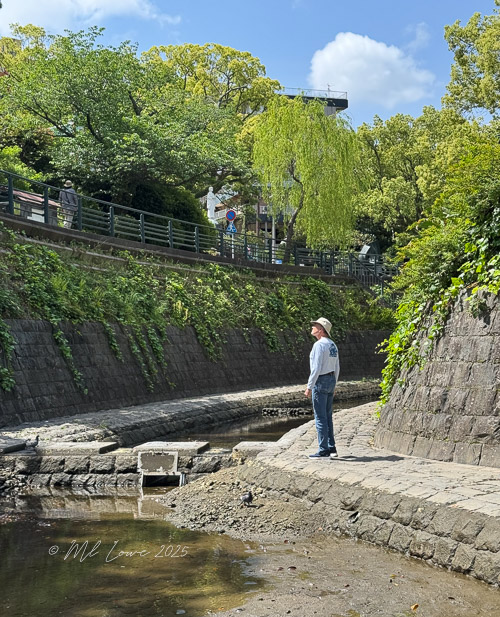
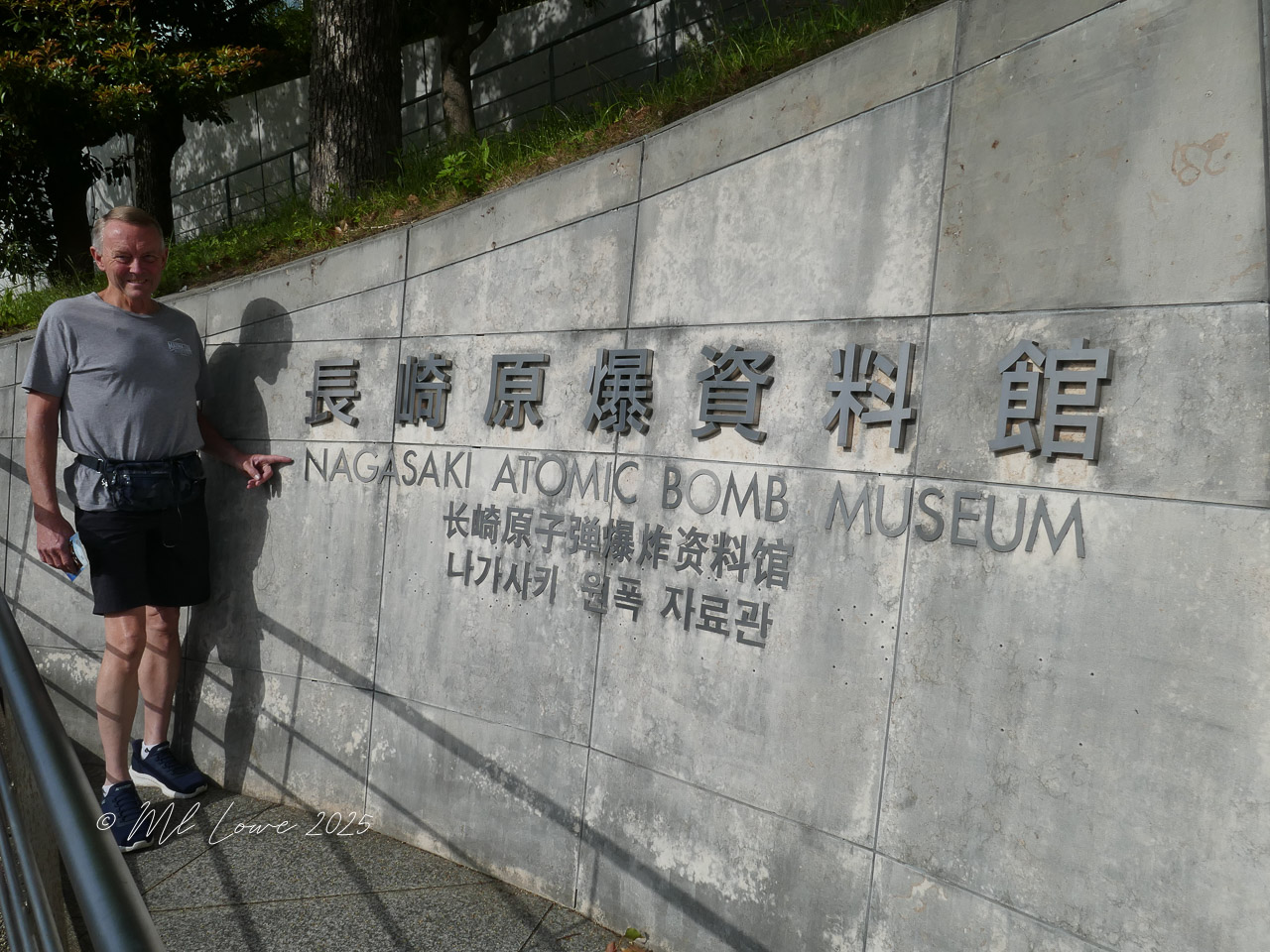
Visiting in May, we were surprised Nagasaki wasn’t overrun with tourists. Perhaps because this place isn’t for everyone? It may not be the Japan that many first-time visitors expect to find, which was fine with us. Having said that, Nagasaki is a unique destination that’s different from most cities in Japan.
Our excursions explored the city’s unique cultural heritage while reflecting on its profound past. We completed three must-do excursions: the Peace Park, the Hypocenter Park and the Atomic Bomb Museum. All displayed one main theme: peace after a terrible event.
On a side note, this year Japan marked 80th commemorations of the atomic bombings of Hiroshima (August 6) and Nagasaki (August 9), as well as ceremonies honoring those who died in the war. Ceremonies and memorial events were being held in both cities to commemorate the anniversary and reflect on the devastating consequences of nuclear weapons.
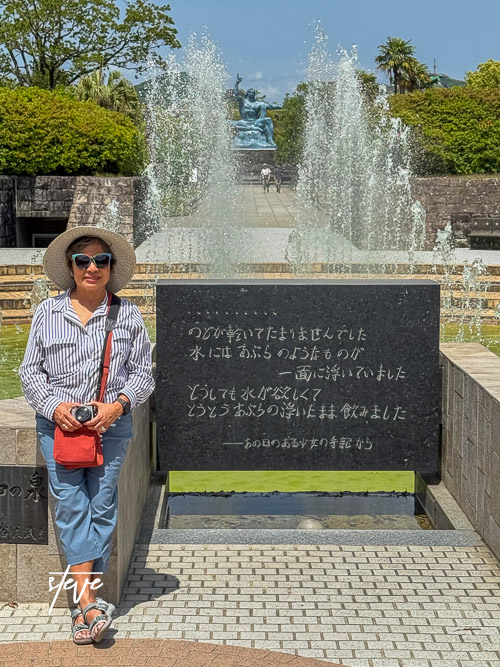
Back to our excursions, the Peace Park is a serene and symbolic space dedicated to promoting world peace and commemorating the victims of the nuclear bombing:
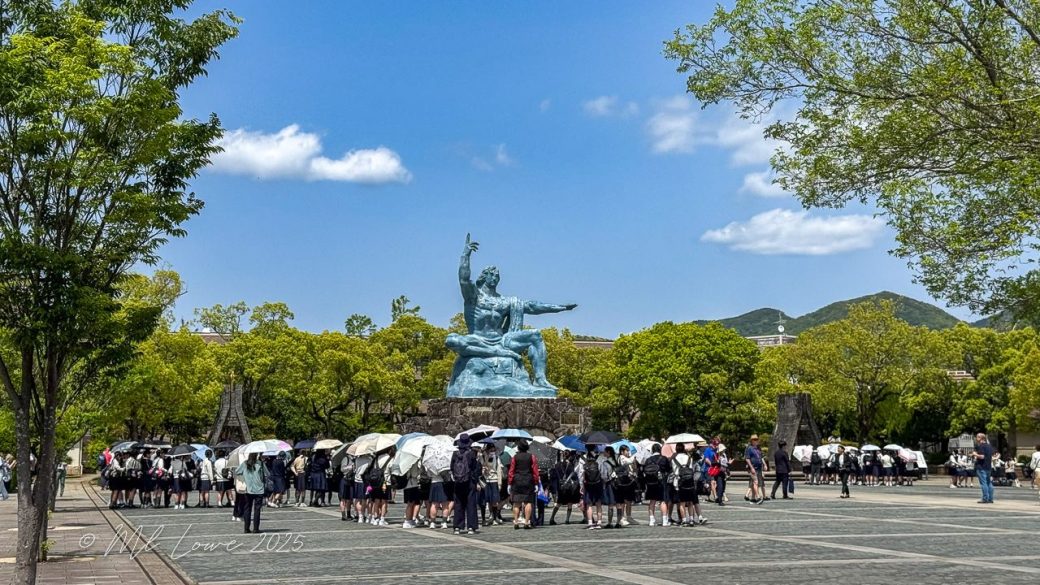
The vast Peace Park contains sculptures donated after the bombing by countries and artists from around the world, each dedicated to world harmony and optimism for a peaceful future:
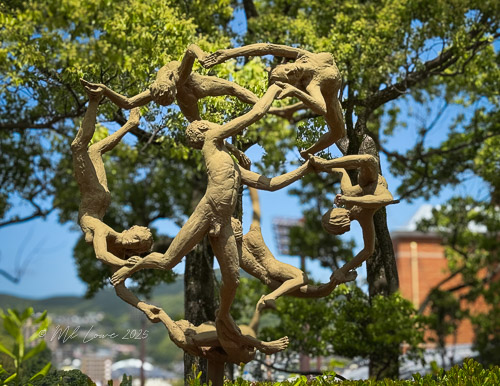
The seven human figures represent the continents, and the interdependence
symbolizes global peace and solidarity
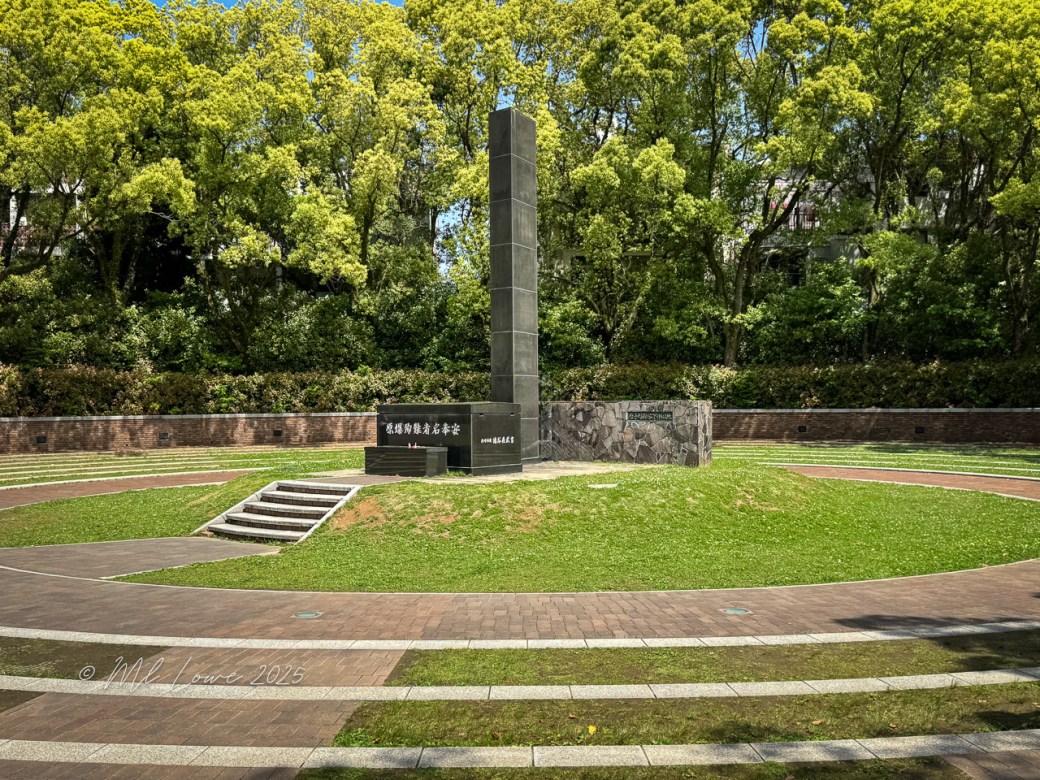
At the Hypocenter Park is a memorial stone located at the exact spot beneath where the atomic bomb detonated in 1945. Concentric circles set into the ground around the central memorial symbolize the shock wave of the blast:
Next we revisited history at the Atomic Bomb Museum, which is likely the number one attraction here. As students many moons ago, we had learned much about WWII and the atomic bomb, but all that information was confined to books. Actually being here where it happened put a face on the tragedy.
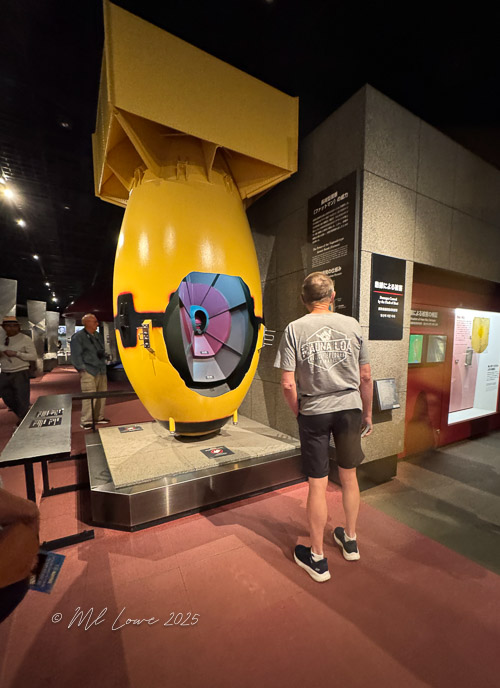
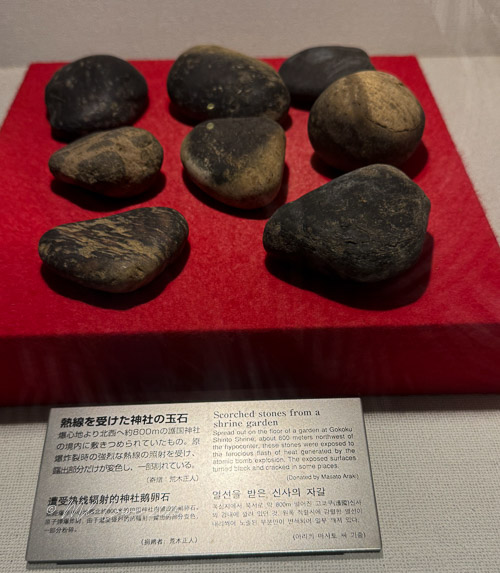
The museum displays relics and artifacts, as well as many photographs taken soon after the bombing. Looking at them depicting the raw devastation was gut-wrenching and sad:
Visiting the museum felt like entering a crypt. Everyone was so quiet you could hear a pin drop (it reminded us of our visit to the Oklahoma City bombing site). Being here gave us a better understanding of the history of Nagasaki before and after the dropping of the “Fat Man” atomic weapon. We did not leave this museum with the most joyous of feelings, but you can’t visit Nagasaki without spending time here.

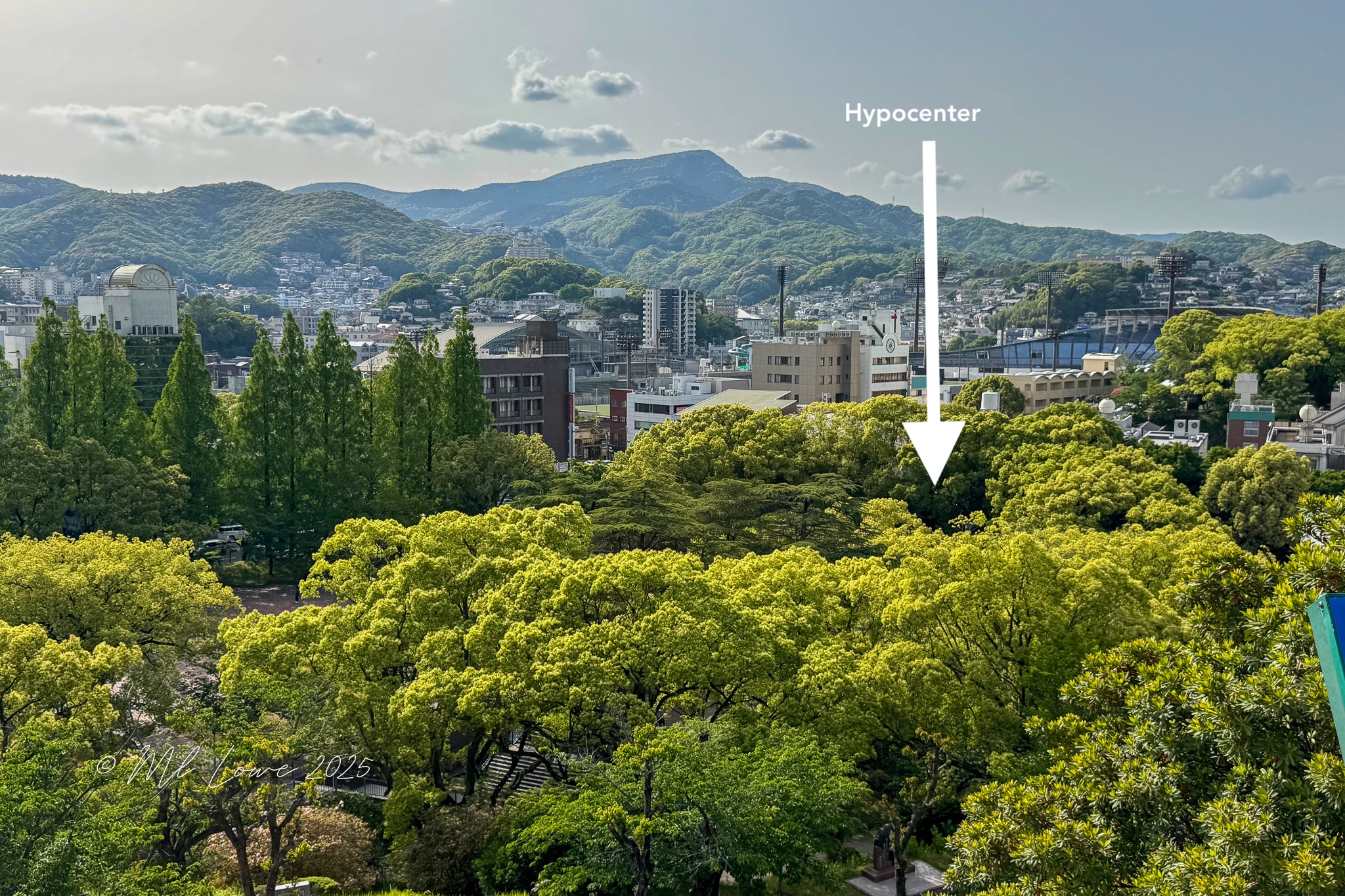
Outside the museum was a little hill from where we could view the city, and a display showing the before and after.
Slide the arrows left to right to see the city shortly after the bombing and then today, 80 years later:

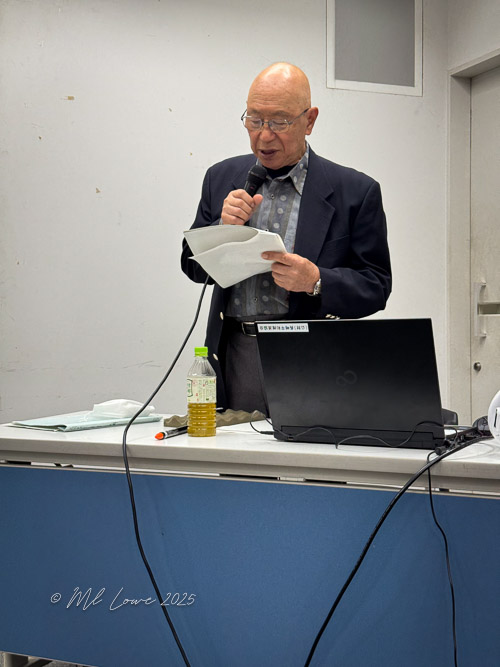
The most enduring evidence of the 1945 nuclear explosions in Hiroshima and Nagasaki is the testimonials of survivors and their well-documented health effects due to the blasts. We had the privilege of listening to the first-hand account of a survivor’s story.
With the help of interpreters, this man recounted in vivid detail what happened to him and his family that fateful day, and the profound impact it has had on his life in the years since. We could feel his emotional journey and the hardship he endured, as he recalled the event and how he has viewed the world around him. It was difficult to grasp the gravity of his experiences and the resilience he has displayed.
Later that day as the ship prepared to sail, local children serenaded us with a warm send-off:
Kagoshima
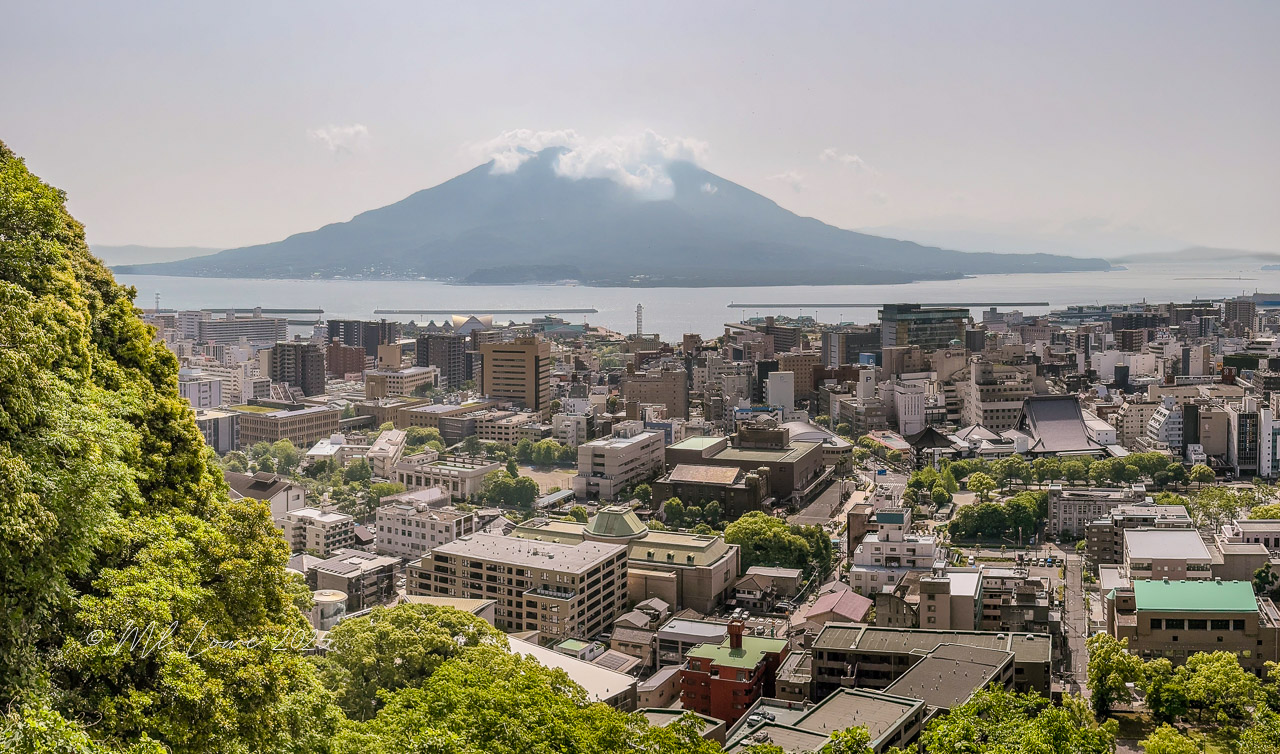
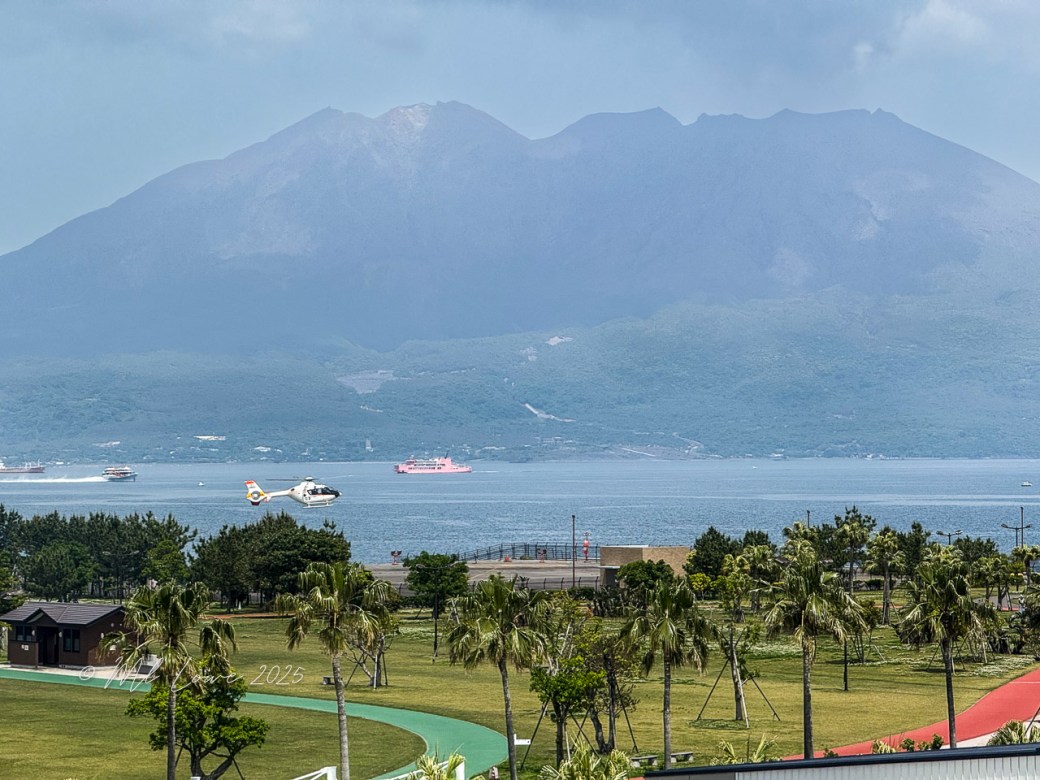
Japan is subdivided into 47 prefectures, similar to states and provinces in North America. Kagoshima is the southernmost prefecture of mainland Japan. It is famous for its active volcano, Mt. Sakurajima, which is a major landmark and tourist attraction.
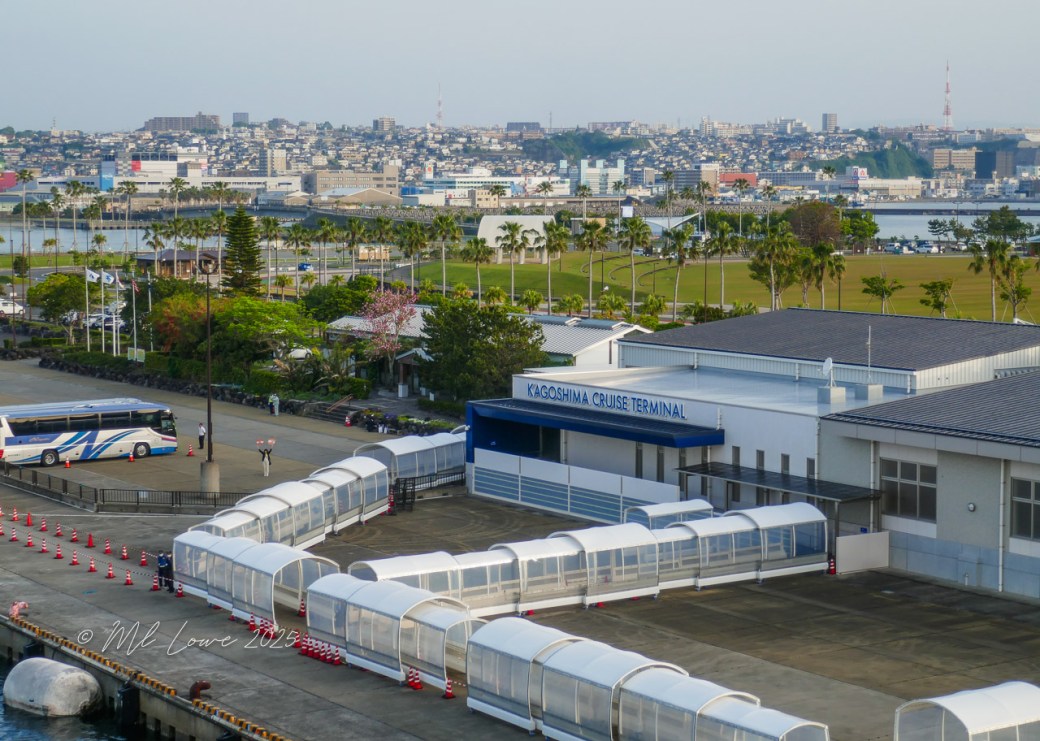
Our first excursion was a bus trip uphill from Shiroyama Park. There we enjoyed a panoramic view of the city, the volcano and Kinko Bay, which is actually a sunken caldera formed 22,000 years ago. The hill we were on is a part of the Aira Caldera, which centers on Mt. Sakurajima, and consists almost entirely of volcanic Shirasu deposits.
This hill holds another of Shiroyama’s many attractions – its rare collection of fauna and flora. The walks up to an observation post lead through preservation order woodland with species of temperate and subtropical flora, including groups of giant camphor trees 400 years old. There are also Shiroyama ferns and Shiroyama osmunds, which provide a home for many varieties of birds and rare insects.


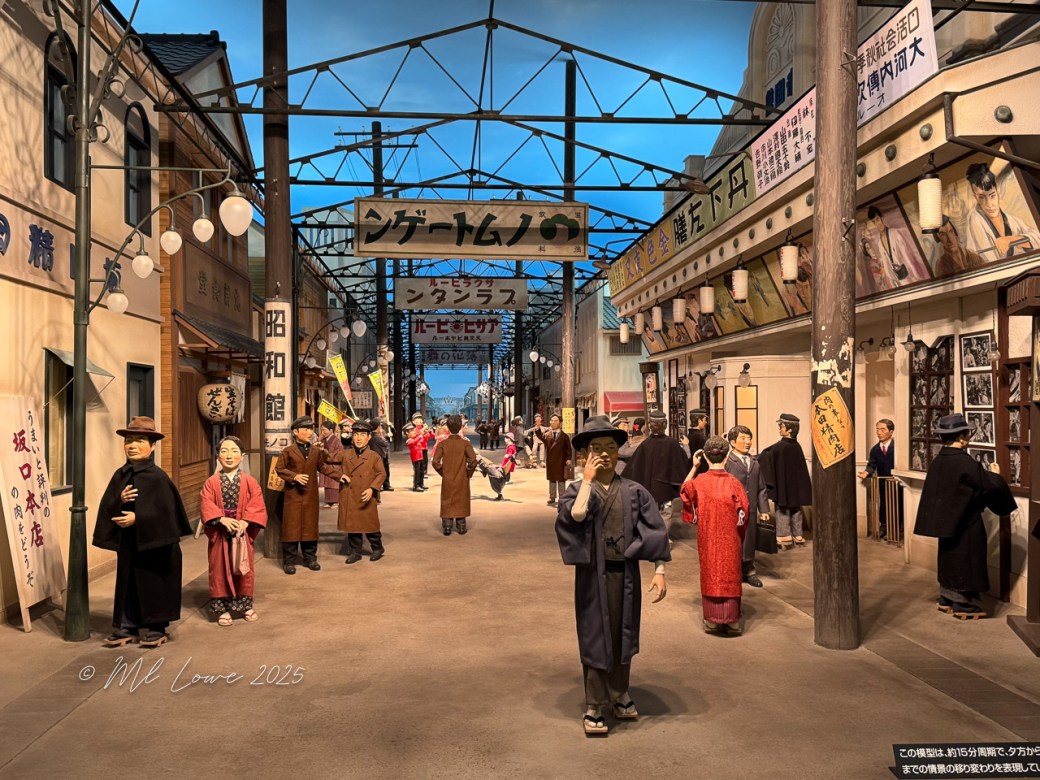
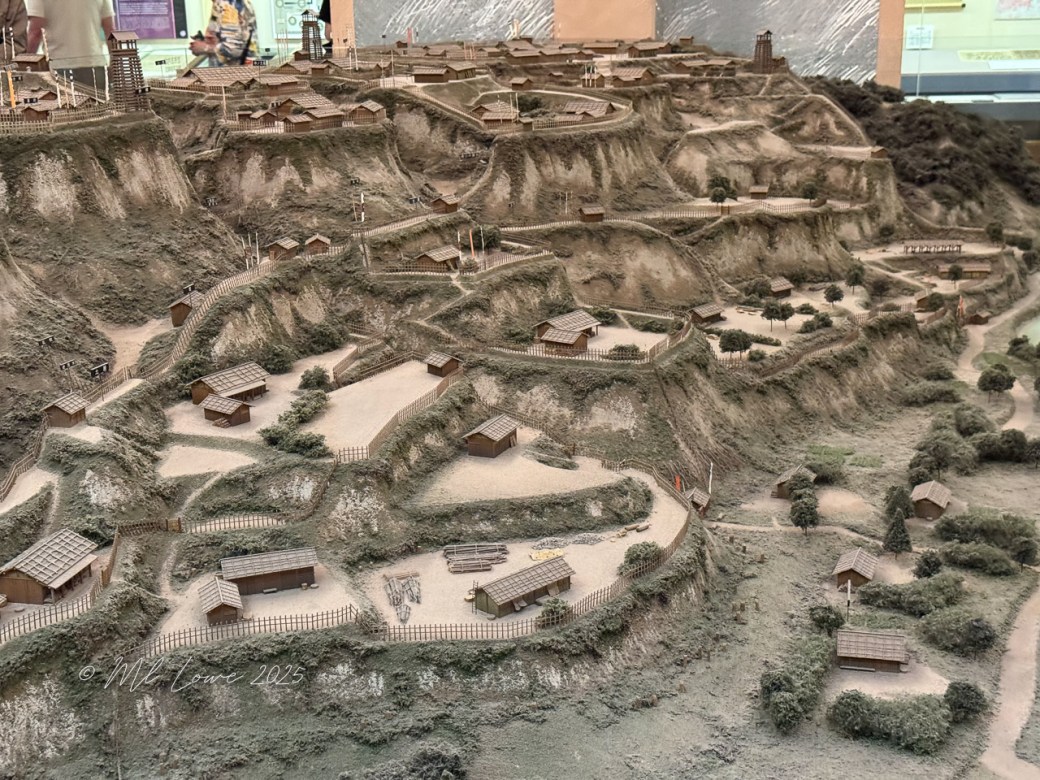
Our other excursion consisted of a visit to the Reimeikan Museum, which chronicles the city’s past with engaging exhibits. There were many interesting dioramas on display, but photography was not permitted. On three spacious floors it presents a wide variety of exhibits that cover the span of Kagoshima’s history from ancient to modern times. The display models below caught my eye and thankfully they were just a couple of a few that allowed photography:
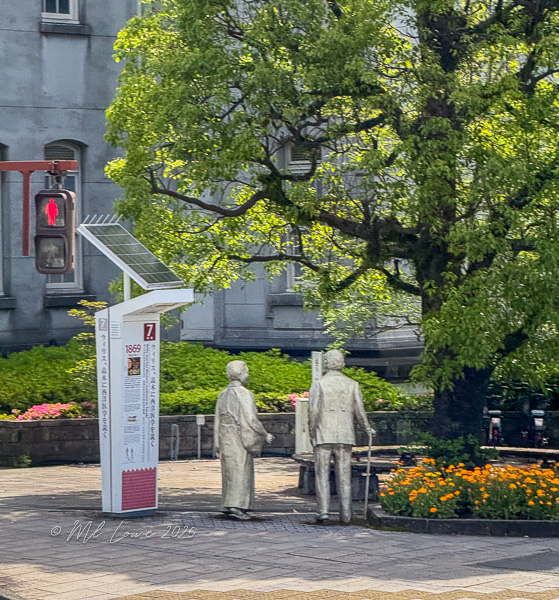
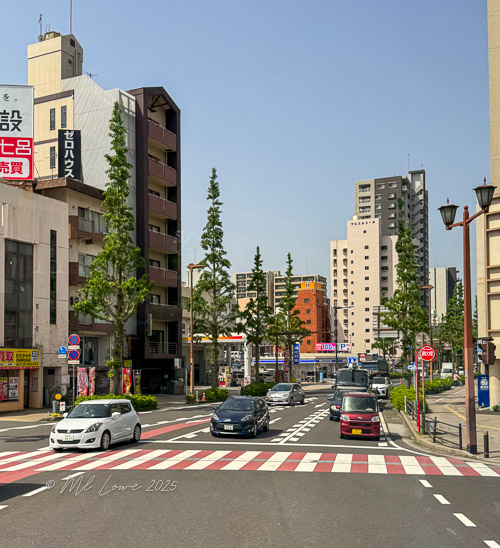
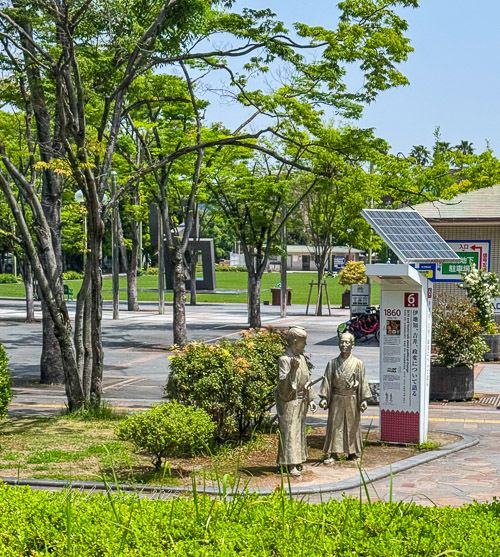
Kagoshima city is spic & span wherever you look, and feels peaceful and orderly without a hint of urgency:
Our ship, Viking Orion was docked by Kinko Bay, with Mt. Sakurajima seemingly very nearby. We noticed many fun activities revolving around the volcano. At least for now it isn’t spewing steam or ash 😉
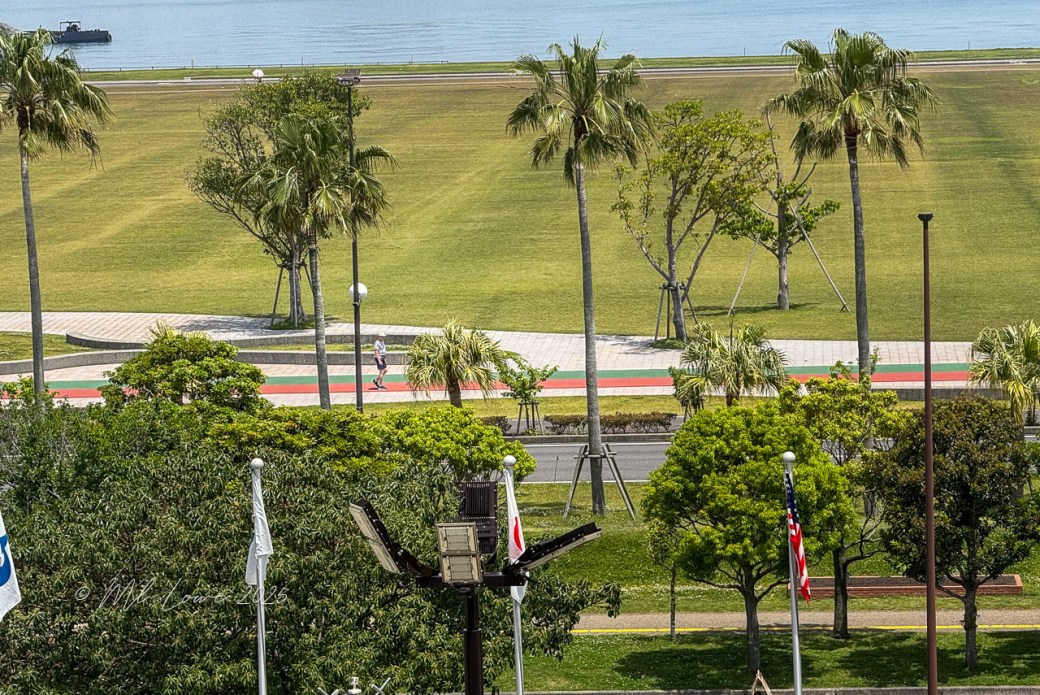
Steve never misses his daily laps around the ship, but on this beautiful day he couldn’t resist a walk around the clean and green park where we were docked, reveling in the joy of walking on solid ground:
For our send off this time, local Kagoshima drummers showed off their talents to bid us sayonara.
Beppu


Beppu is renowned for its hot springs. It is one of Japan’s most famous hot spring resorts, producing more hot spring water than any other resort in the country. The tour guide told us that there are nine steaming hot springs, each unique in color and composition, and looking strikingly different from your average natural spring. We visited one meant only for viewing:
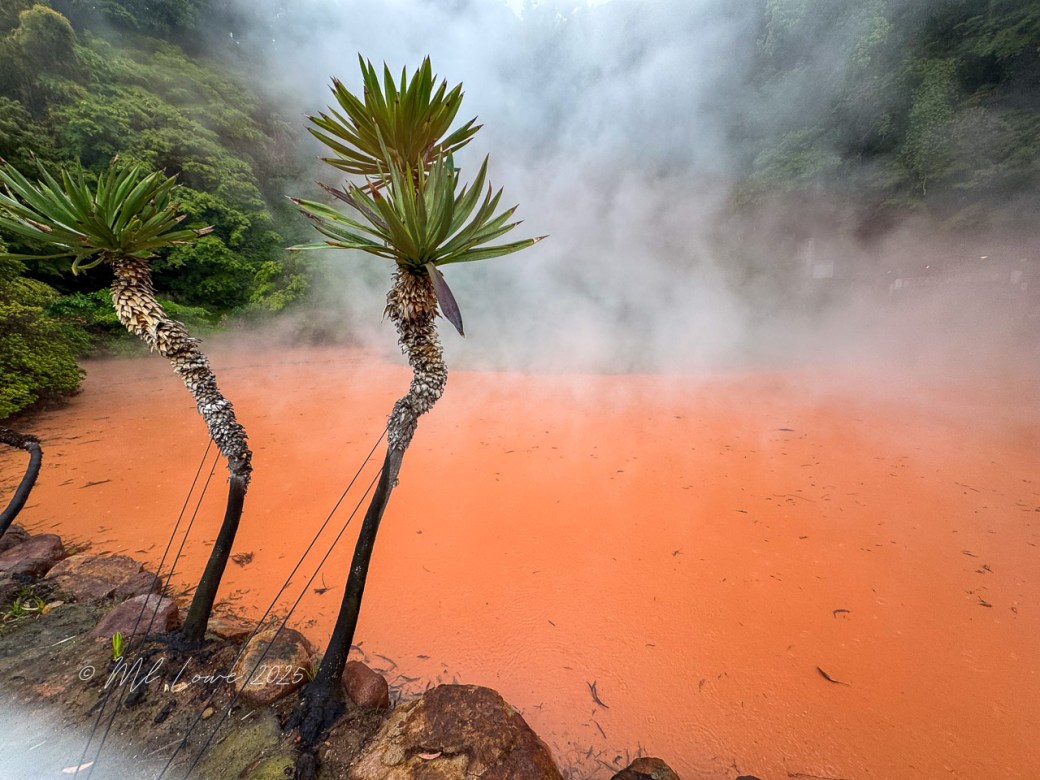
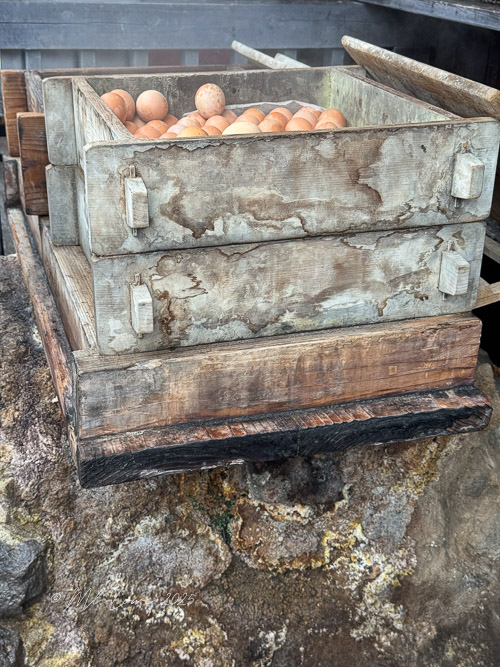
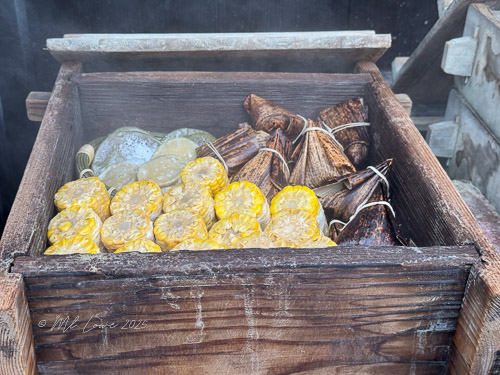
It’s only a small pool, and the Japanese name translates to Bloody Hell Pond. At 176º it is better used for cooking than as a spa treatment, as shown below:
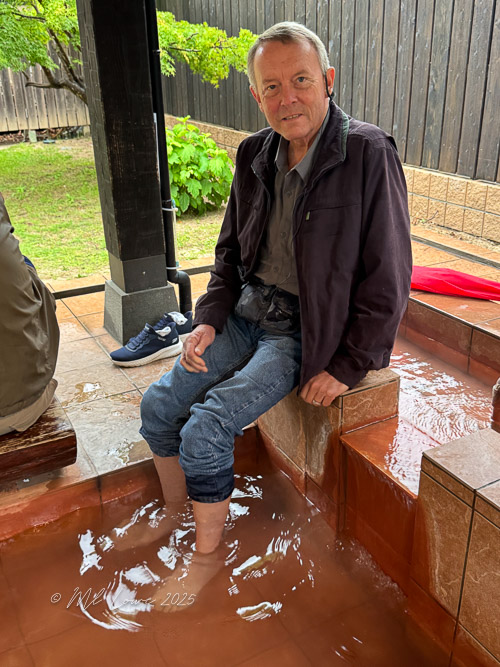
At least there was a small area where visitors could dip their feet for quick relief:

Because of the rain, there was no send off from the locals at this stop 🙁
Back at the ship we enjoyed build-your-own soup at a noodle soup bar, served by the executive chef and several officers:


After dinner we relaxed in the atrium to classical sounds delivered by a talented duo:
And finally it was “movie under the stars” night and we watched “Memoirs of a Geisha”, a fitting preview for things to come:

Next up: Japan part 2