Mar 14-21
Once settled into our suite, we picked up the provided expedition outfits: mandatory life vests to be worn each time we get on the zodiac, and a snorkeling kit (short wet suit, mask, snorkel, and fins). We were also given a mesh bag to contain all of those. After fitting them we felt ready for the upcoming wet adventures (spoiler alert – neither one of us wore the wet suit because the water was warm enough).


Every evening before dinner the Expedition Team presented a very informative lecture about the geology of the islands, the flora and fauna, how the wildlife arrived and ongoing conservation efforts. Then they talked about plans for the next day, including practical information like the type of landing (dry landing for hiking or wet for snorkeling), what to wear, the weather, difficulty of the hikes and what to see and expect:

Our typical day-to-day structure included an early morning walk/hike, then in the afternoon either a nature hike, a zodiac nature trip, deep sea snorkeling or just lounging on a beach. At the end of the day we were tired from having so much fun and being with nature under the sun. This is an active expedition cruise!


What makes the plants and animals in the Galapagos Islands special and unique is that their isolation (600 miles from the nearest land) and the landscape have kept many species pretty much the same since prehistoric days. They arrived in various ways and never left, surviving by evolving specific traits to suit a certain niche in the environment. That lead to some super-cool iconic species that you won’t find anywhere else on earth. We obviously did not see all of them, but were happy to have sighted many of the most popular ones.

Being here during the warm and wet season (December to June), we learned that each month brings unique natural wonders to discover. We thought all of the islands must be similar, but after visiting each one we saw that they vary with significant variations in their age, geology, and wildlife. This directly inspired Charles Darwin’s theory of evolution.

If you’re a wildlife lover you’re gonna want to read on! The Galapagos Islands are packed with the amazing species that helped Darwin come up with his evolution theory. So grab your favorite drink and let’s dive into the adventure together!
Genovesa Island
Our first dry landing was at Genovesa Island. It began with a staircase known as the Prince Phillips steps, which were cut into the cliff face to the east of the bay by the Park Service. The trail we followed led to a huge sea bird colony on the rocky, unprotected flat top of the island:

The greeters at the top of the stairs were Red-footed Boobies, and by that I mean they did not fly away but instead were curiously observing us. They are one of three species of Boobies found in Galapagos, and their name comes from the Spanish word ‘bobo’ – meaning foolish or clown – referring to their clumsy movement on land. They are the smallest of all Booby species, and as their name implies have distinctive red legs and feet and a pale blue bill:


We had heard so much about how unafraid of humans the wildlife are here. And wow, these birds simply took a curious look at us as we strolled by! I was thrilled because usually when birding I’m used to being quiet and stealthy when approaching them. These birdies mostly ignored us:

It was funny that I had brought my telephoto lens but had to actually step back several times to photograph these guys since they were right in front of us:

The Nazca Booby does not flaunt an iconic bold color like the other two species of Boobies. They can be differentiated due to their gray feet and orange beaks. They are the largest of the three Booby species in the Galapagos.


One of the most iconic residents of this island are the Great Frigatebird, with their striking black plumage and red throat pouches which they inflate to attract the ladies. There were hundreds of them here. Frigatebirds are also known as “pirate birds” because of their proclivity to steal meals from other birds or snatch a chick from an unprotected nest:

To attract females they shake their heads, quiver their wings, and emit a drumming or clicking sound by rattling their bills against their inflated pouch. I captured a short clip below as they performed:
My camera was very busy:


Later that afternoon we opted to go with the snorkeling group at Darwin Bay for our first wet landing. And who did we meet at the beach? Some lazy beach bums, the most abundant marine mammals in the archipelago – Sea Lions! They are originally from California, but they’ve adapted to life in these remote islands and are now a different endemic species:

Unfortunately, the surf was high and creating water too murky to see anything. So after a short time we gave up on snorkeling and just wandered around on the beach:

Seymour Norte
This island is flat, formed by seismic uplift of a submarine lava formation. It’s covered with low, bushy vegetation and tiny trees called Palo Santo, an incense tree. The guide scratched the tree to let us smell the incense scent.


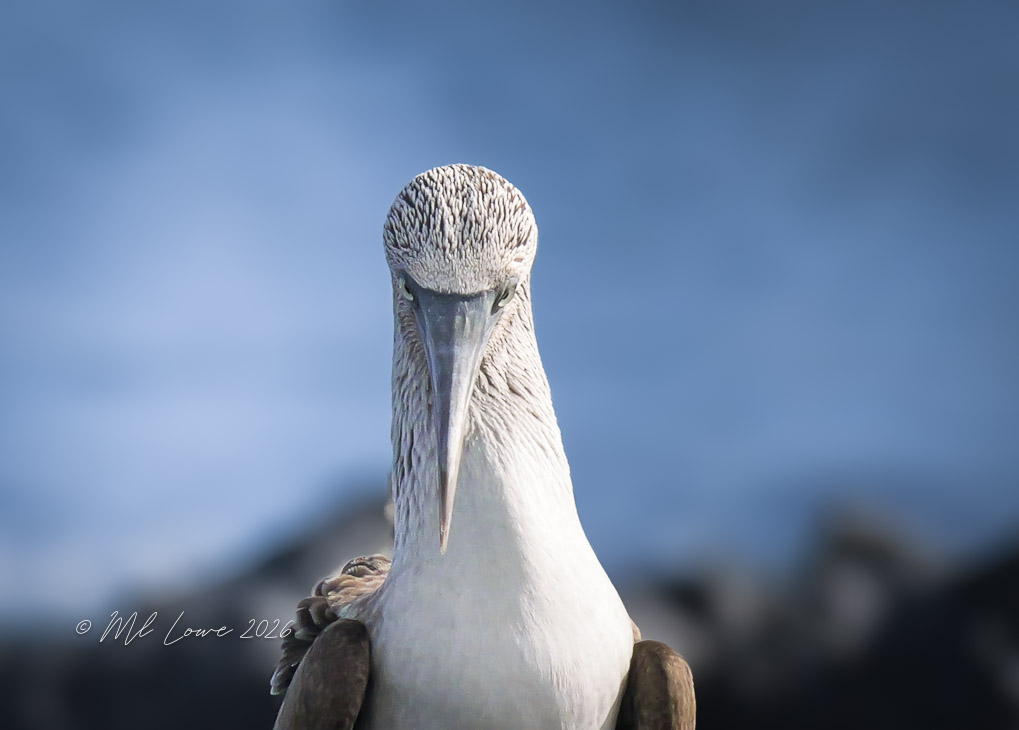
The ever-popular Blue-footed Boobies is the third specie of boobies that live here. Their most distinctive feature is large blue feet, which play an important role in courtship. The bluer the feet, the more attractive to a mate. Male birds show off their feet to prospective ladies with a high-stepping strut during mating season:


Booby feet: what’s up with the blue and the red feet? Even though both birds are of the same species, they have a bit of a different menu. They get the colors through carotenoids in their different diets. The Blue-footed guys get their color from the fish they eat. The Red-footed ones feed on a mix of fish and squid, and their vibrant red feet come from a different kind of dietary pigment. How cool is that?

Another interesting resident is the Galapagos Land Iguana, one of three species of land iguanas endemic here. These 3-foot-long lizards are plant-eaters and come in shades of yellow with blotches of black and brown. Although they have had a troubled history on the edge of extinction, they are now making a comeback through conservation efforts by the National Park:

Some other interesting critters we came across:


According to our naturalist guide, the Galapagos Finches will forever be associated with Charles Darwin, the naturalist who used them to show his Theory of Evolution. Ages ago, a single finch species somehow made its way to the Galapagos. Today there are 13 different species of finches spread across the islands, and each has adapted to its specific environment.
Santiago Island
The activities on this island were a walk on the striking black pahoehoe lava flows or snorkeling from the beach. The oldest lava flows date back some 750,000 years, and the last recorded volcanic activity occurred between 1904 and 1906:

I skipped the afternoon activity while Steve went snorkeling. Some people had go-pro cameras to capture the underwater wonders, but he didn’t have one and was happy to enjoy memorable adventures with the residents.

Punta Mangle, Fernandina Island
Fernandina is the youngest and most active island in the Archipelago. The area is surrounded by thick mangrove forests and young lava fields. We headed to the eastern side of Punta Mangle, which is a non-landing area with nowhere to dock:

We took a zodiac ride for our morning activity:
Marine Iguanas are endemic to the Galapagos Islands and are the only sea-going lizards in the world! They dive into the ocean to feed on algae and can stay underwater for up to forty-five minutes:


We spotted a “mess” of Marine Iguanas congregating in large, tightly packed piles on lava rocks. They do this to share body heat and conserve energy:


The Galapagos Penguin is one of the smallest penguins in the world and endemic to the Galapagos Islands. It is the most northerly occurring penguin species, nesting entirely in the tropics:


The wildlife was not just abundant and varied; it was truly remarkable! Each creature seemed eager to share its beauty with us, ready to capture memories in a single photo.


At midday Steve went deep-water snorkeling and was thrilled to see sharks, turtles, penguins, sea lions and huge schools of fish during his adventures:


Punta Moreno, Isabela Island
While the morning zodiac ride was exciting, our afternoon trip at Punta Moreno kicked it up a notch. More wildlife to gawk at, especially the marine animals that were visible in the clear lagoon:

It was a challenge to photograph creatures in the water because the zodiac was in motion. But this “fever” of Golden Rays were circling our zodiac for a while and I managed to take a short clip of them:


While we have seen many Cormorants during our travels, the Flightless Cormorant here is the only one in the world that has lost its ability to fly. With only 1,500 estimated individuals, it is one of the world’s rarest birds and is the subject of an active conservation program. They were flying when they arrived here, but over time with plentiful food and little competition they’ve had no need to take to the sky. Eventually their wings mutated and are used mainly for balance. Now these birdies sort of resemble penguins!

The brightly-colored Sally Lightfoot Crab is a common sight along the shores and beaches of most islands here:


There were Sea Lions, Marine Iguanas, Galapagos Penguins and crabs basking on another rocky outcropping this cool afternoon. Play the “A Little Bit Shaky” video of them enjoying their life without fear or care of us:
What a day it was! So exciting to see and learn about all of these animals. Our smiles were from ear to ear.
These animals are fearless because there are few predators and tourism is strictly controlled. They are not shy and seemed to welcome us to their paradise. It was amazing to view vast numbers of species we had never encountered before, and to observe how they have adapted and evolved on these remote islands.
If you are a wildlife lover you must visit here if you can, to see for yourself what we are gushing about!


Wow, now we understand why the Galapagos Islands and their wildlife are so special! Every landing, zodiac ride and snorkeling adventure brought a newness to each island and its own ecosystem humming with life. All topped off with new learnings from our knowledgeable naturalist guides.

But wait, what about the long-lived symbols of the archipelago? Well, this post is really long so they will be showcased next. Stay tuned!

Up Next: Our final days in the Galapagos Islands
Comments
5 responses to “Up Close With the Wildlife of the Galapagos Islands”
Such fantastic photos, and such fantastic subjects! To me, this would be the trip of a lifetime. I wish I were 10 years younger or had known about this trip years ago. The next best thing is to read about it and see it through your eyes.
Thank you, Sue Im sure you would have love to be with those amazing subjects.
Yay!!! Critters, critters, critters!!!
Oh, my, ML!! What a fantastic post!!! You’re such a wonderful photographer and every photo is awesome. Thanks for including all the videos. The mating dance of the Great Frigatebird was too funny. What a strange red “balloon.” So interesting. So many adorable photos but that closing one is too cute:)
Thank you, it was incredible to be with those fearless animals. I wished all birds were like them then I don’t have to chase them here.