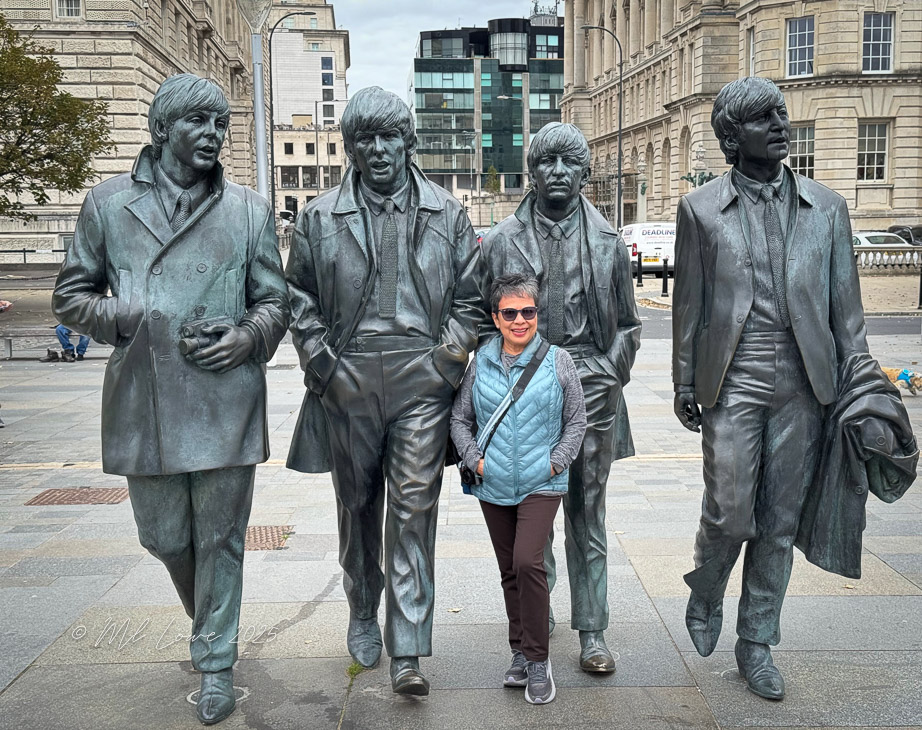
Sept 25-26
When we started our British Isles cruise itinerary, I had no idea we’d end up diving into the fascinating geography of the region. The British Isles is a collection of islands, featuring two main ones – Great Britain and Ireland – and a host of smaller ones. The archipelago is home to two sovereign states: the United Kingdom (UK) and the Republic of Ireland. The UK itself is made up of Scotland, England and Wales, all on Great Britain, and Northern Ireland which is on the island of Ireland. Meanwhile, the Republic of Ireland claims most of the rest of Ireland, so the island of Ireland is made up of two countries. Isn’t it intriguing to uncover these facts?
We had visited Scotland previously, click here to see that post. At Ireland we had two port stops; Belfast, the capital of Northern Ireland, and Dublin, the capital of the Republic of Ireland.
Belfast, Northern Ireland, UK
What do you think when you hear Belfast? For me, it was their troubled past. Belfast dominated world news during their 30-year conflict known as The Troubles. It is also known for its shipbuilding heritage, being the birthplace of the RMS Titanic and a well-known natural phenomenon, the Giant’s Causeway.


On this port stop we joined the included excursion, which took us to places of interest and gave insight into Belfast, both politically and culturally:


Our tour bus journeyed to one of the areas that is a popular tourist destination where political murals tell about the turbulent story that’s unique to Belfast. This area is known to be divisive, and where the nationalist Falls Road meets the unionist Shankill Road. These areas are often referred to as “interface areas”, where working-class Catholics and Protestants live in close proximity to each other.
Falls Road is predominantly Irish republican/nationalist:
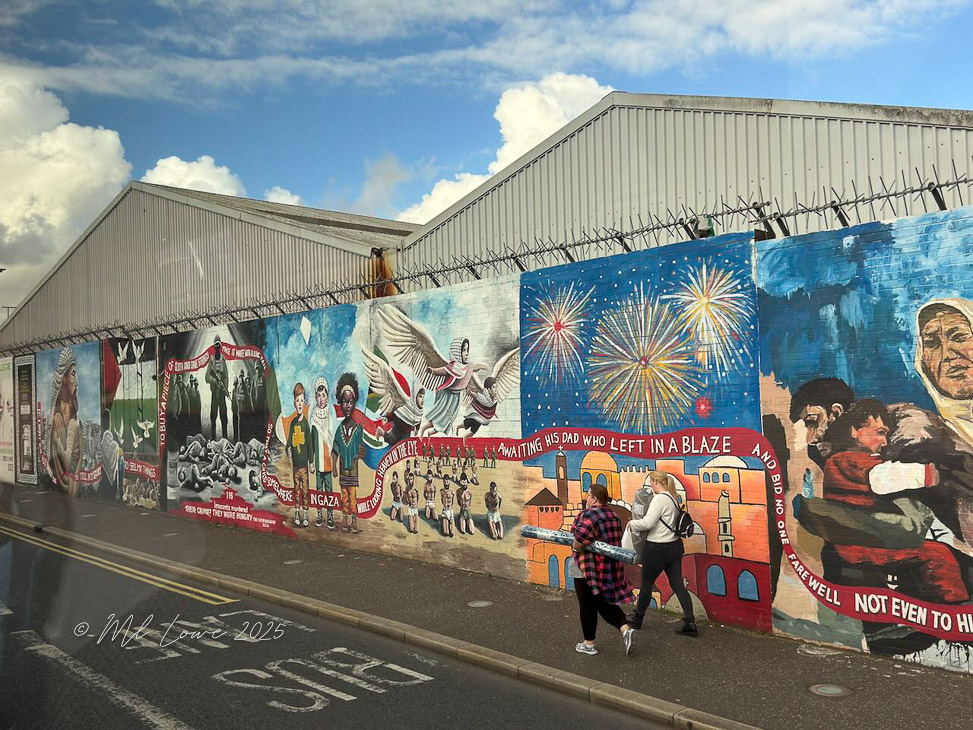

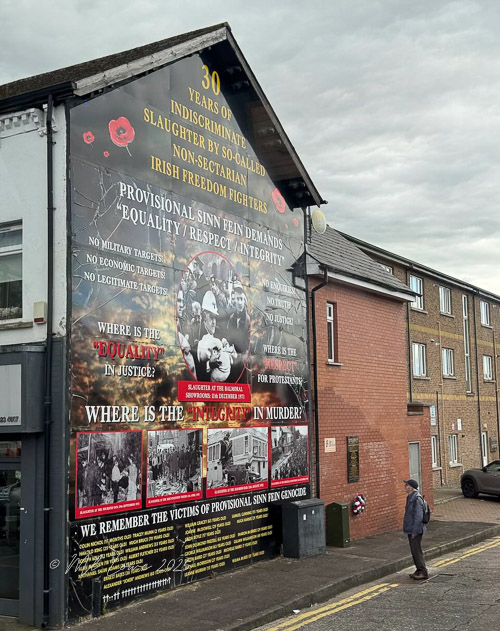
Our tour guide gave us a brief history lesson about the conflict separating residents of Belfast, between unionist Catholics who wanted to unite with the Republic of Ireland and loyalist Protestants who were loyal to the crown and wanted to remain part of the United Kingdom. For 30 years this conflict was known as The Troubles.

What struck us was the existence of actual physical walls dividing the Catholic and Protestant communities to this day. Although it is relatively safe and peaceful now after the Good Friday Agreement signed in 1998, the walls remain as a permanent reminder of those times:
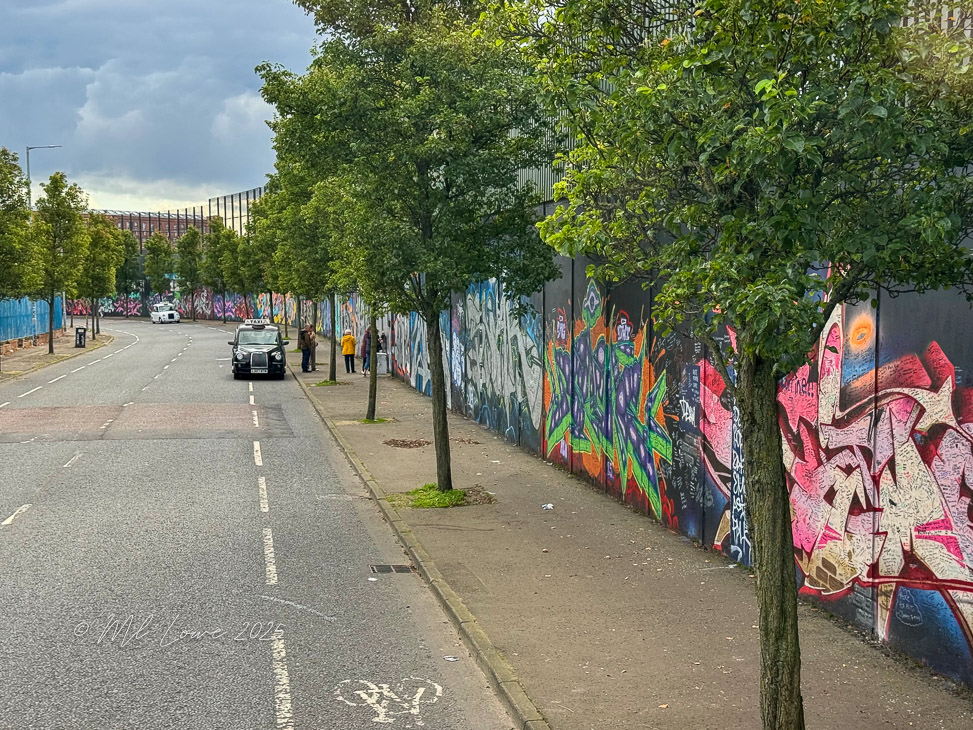
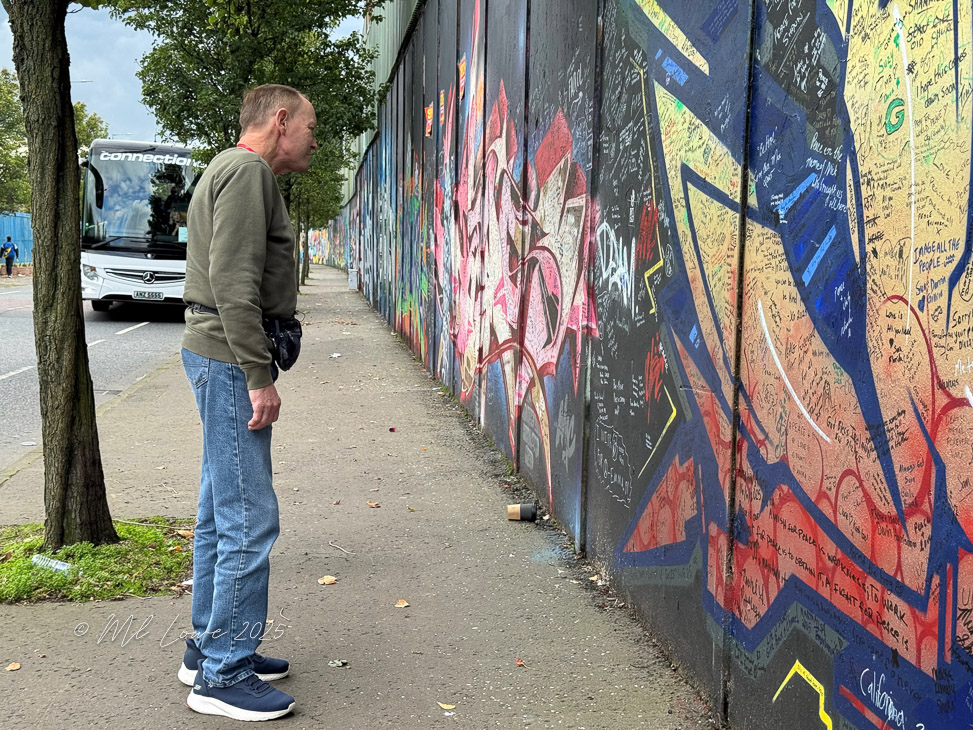

While they were originally put up as temporary structures, due to their effectiveness the walls have become permanent and upgraded. They have evolved into a canvas for public art and a way to educate visitors about the city’s history and progress toward a more peaceful future. In total there are still over 20 miles of peace walls – or peace lines – across Northern Ireland.
On Shankill Road, murals are predominantly British loyalist/unionist in messages:


Our final stop was at Belfast Castle, a Victorian-era mansion located in the Cave Hill area of northern Belfast. It was built in the 1860’s and is one of the city’s most famous landmarks to visit:


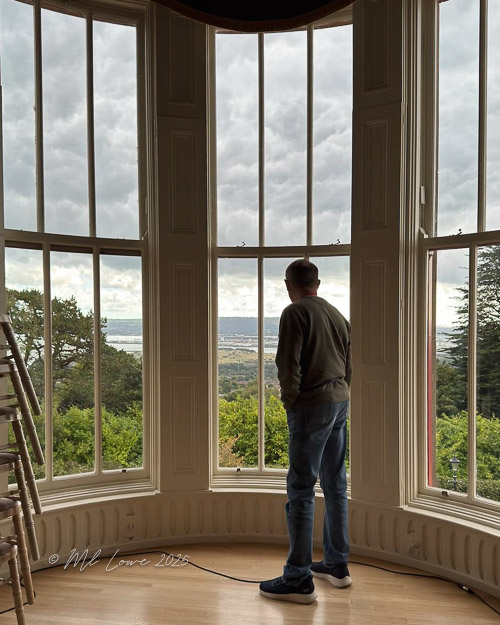
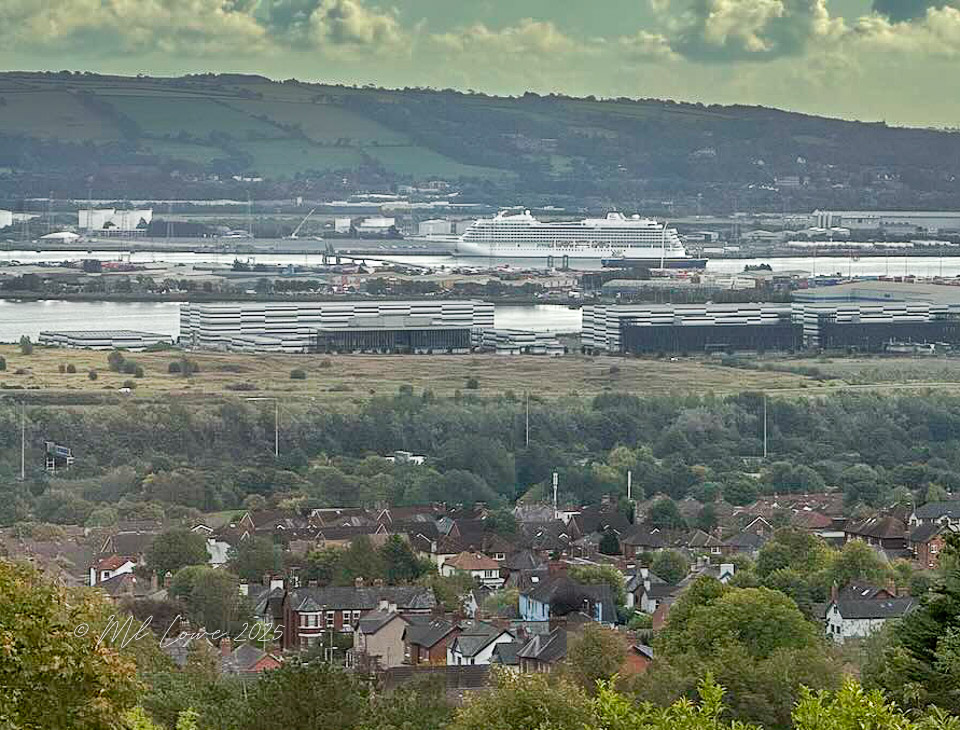
Access was limited to a few areas of the castle, but we had a good view of our ship and the city below:
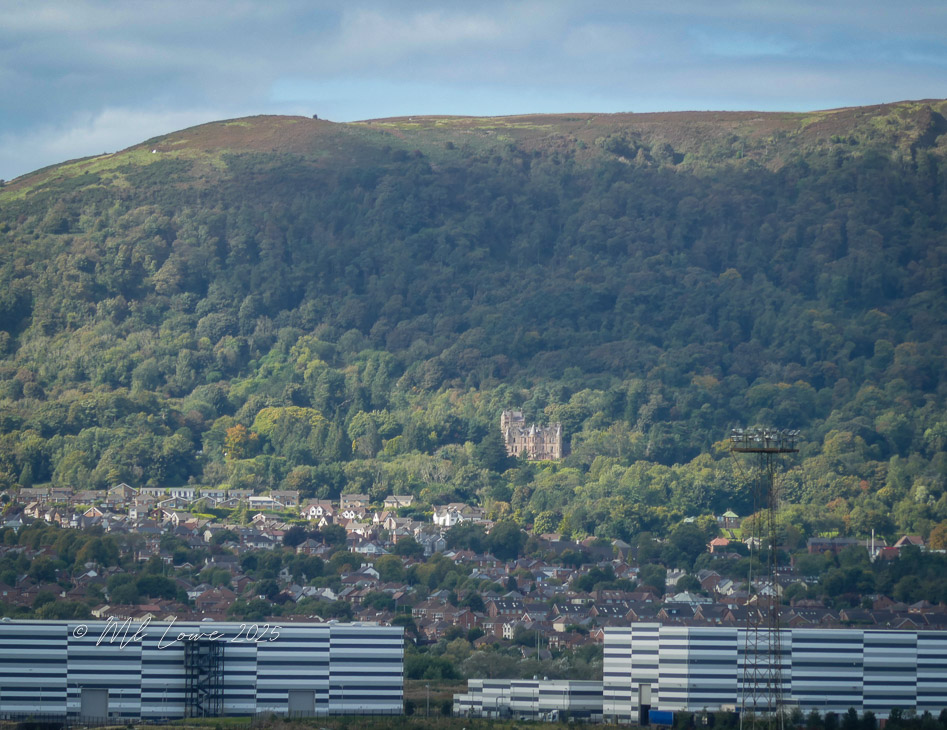
Back on the ship, we could see the castle from our balcony:
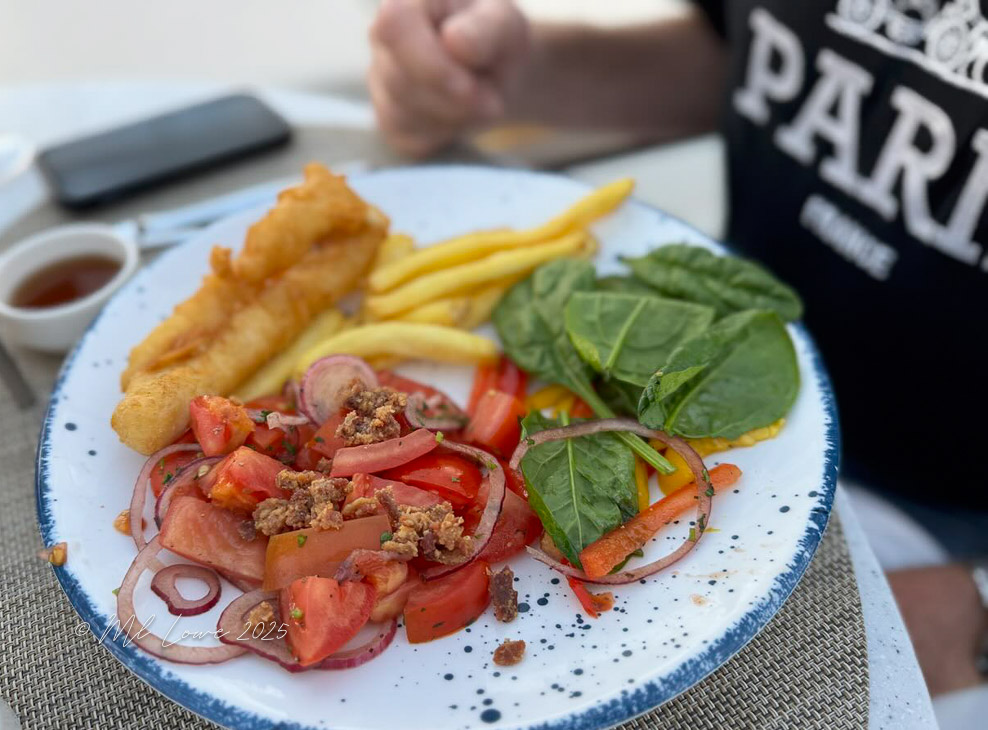
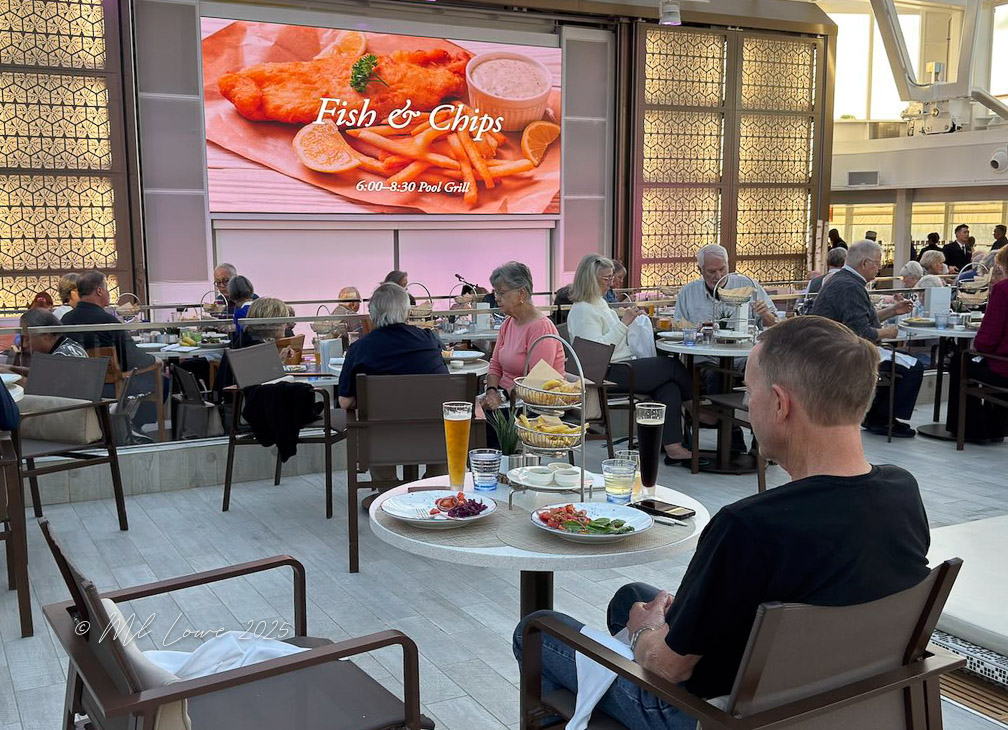
For our dinner that night, it was fish and chips by the pool:
Dublin, Republic of Ireland
Dublin is the capital of the Emerald Isle, Ireland. While it holds over a quarter of Ireland’s population and has much to offer, being there on a cruise obviously limited our time to explore. That meant we had only a few hours to get a feel for the city’s vibrant atmosphere. So again we joined a bus tour with just one stop at St Patrick’ Cathedral.
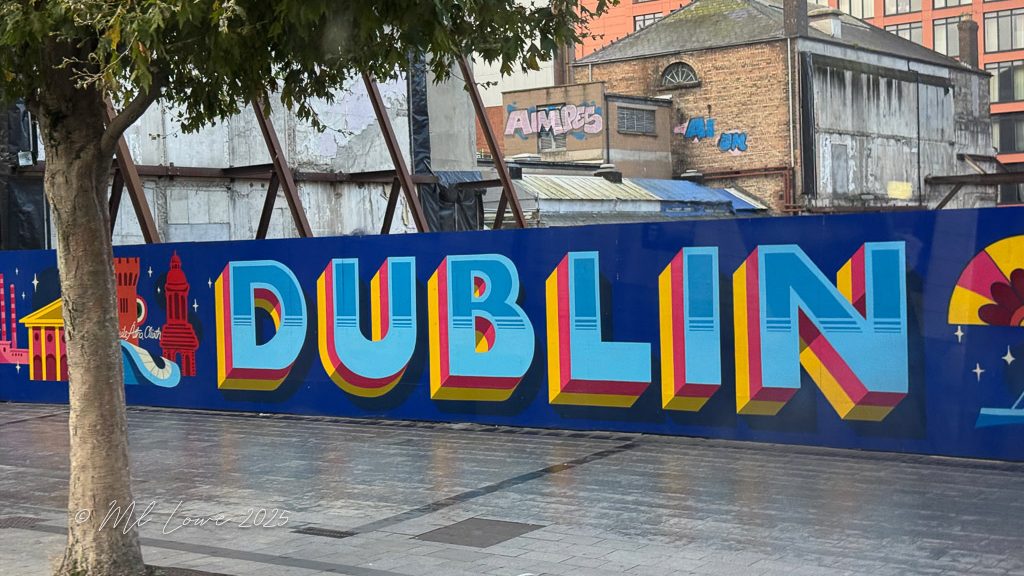
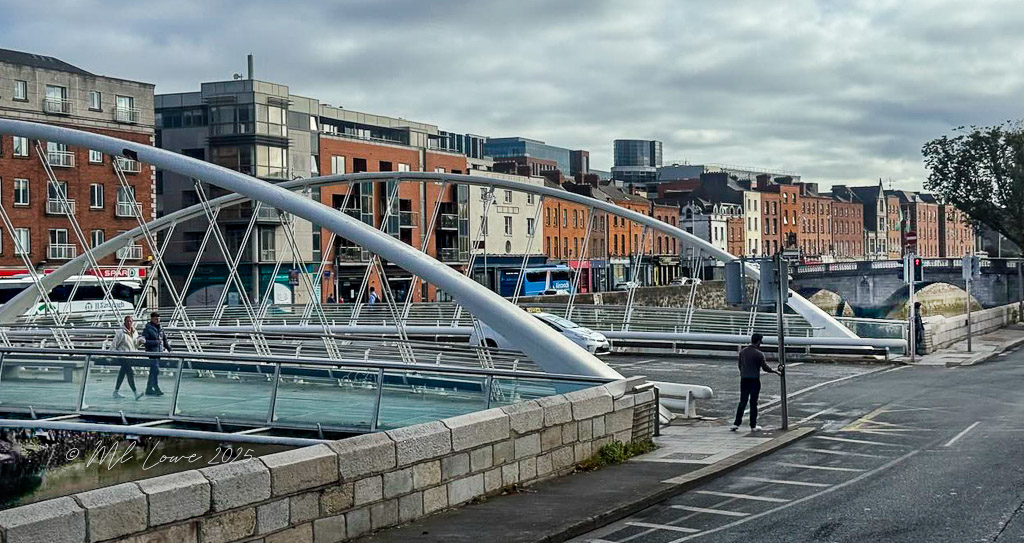
These pictures are mostly drive-by photographs capturing a glimpse of the city scene:
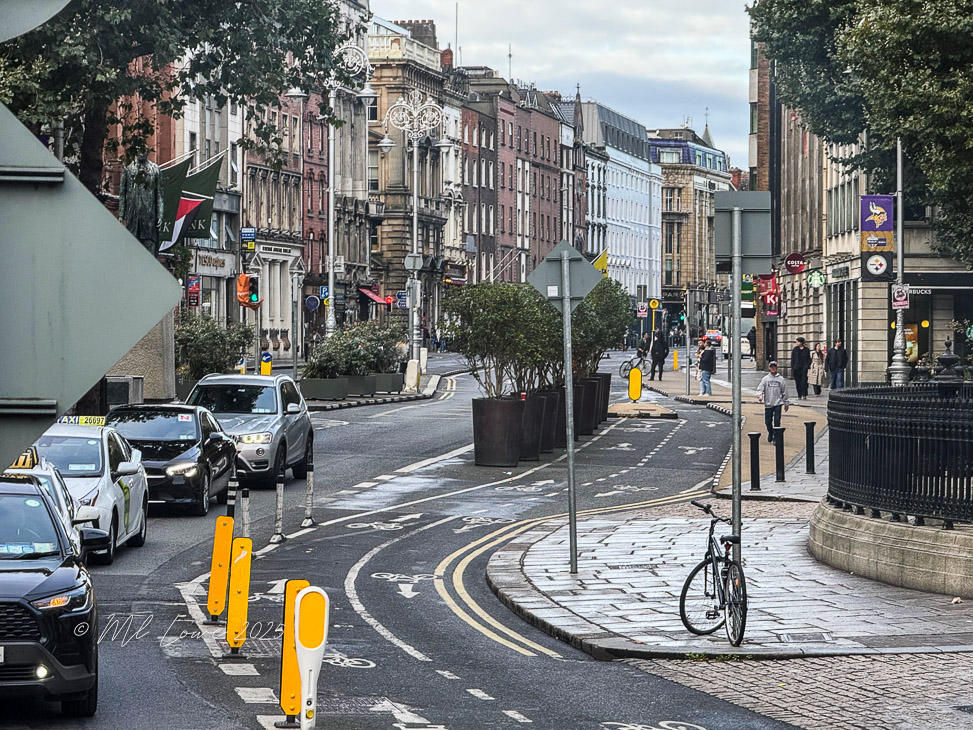
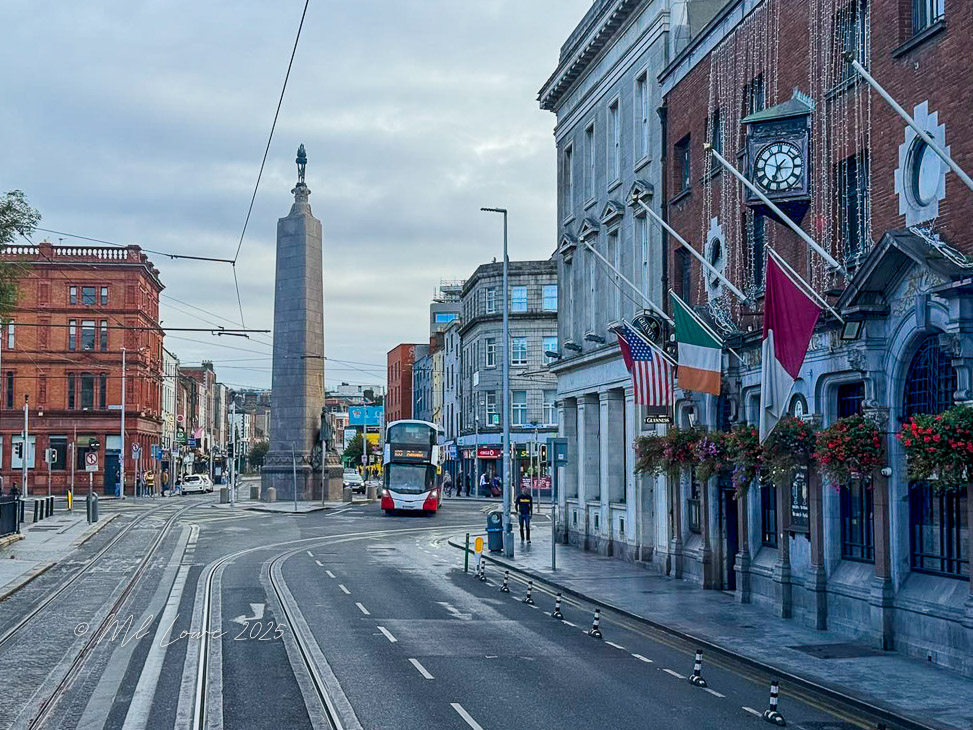
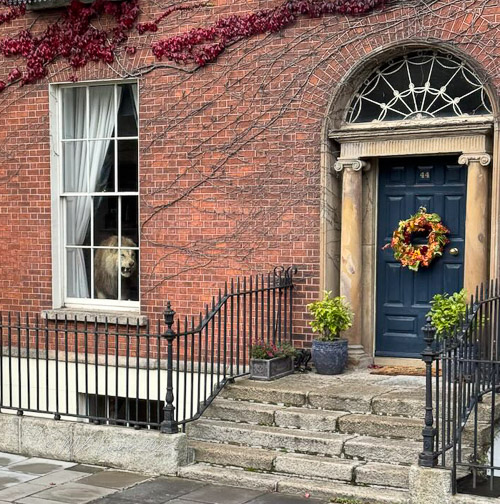
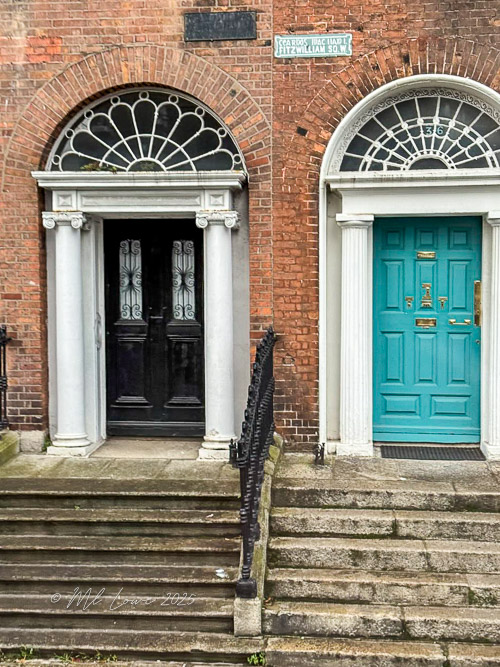
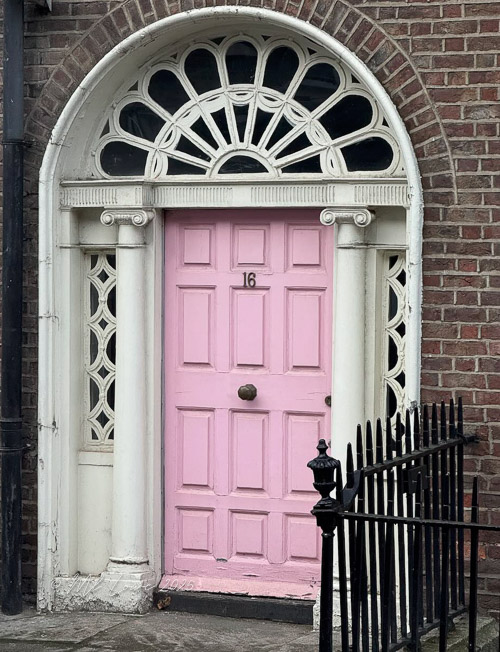
Traveling through the streets of Dublin, our tour guide pointed out many different types of architectures in the city. Of note was the Georgian architecture, developed under the reign of four kings (1714-1830). It is characterized by its uniform redbrick facade houses, the sweep of granite steps, windows diminishing in size as you look up and …

…the famous feature of vibrantly painted front doors with delicate fanlights above them. As we drove along we couldn’t help but notice those unique doors:
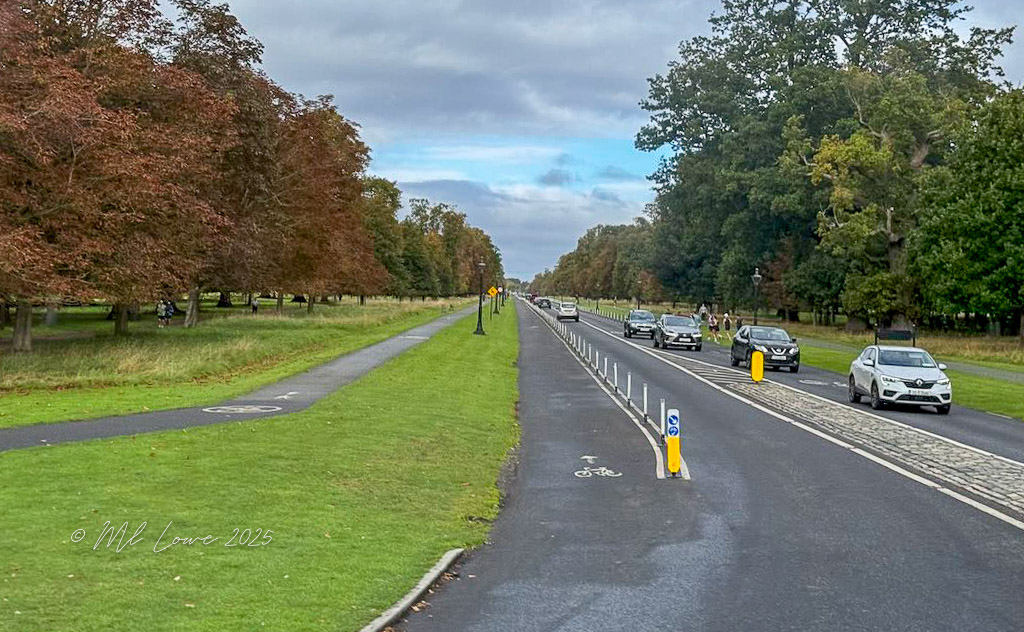
Phoenix Park is one of the largest enclosed public parks of any capital city in Europe. It encompasses 2.73 square miles of territory, making it larger than New York’s Central Park! It began as a royal hunting park in 1662 but opened to the public in 1745:

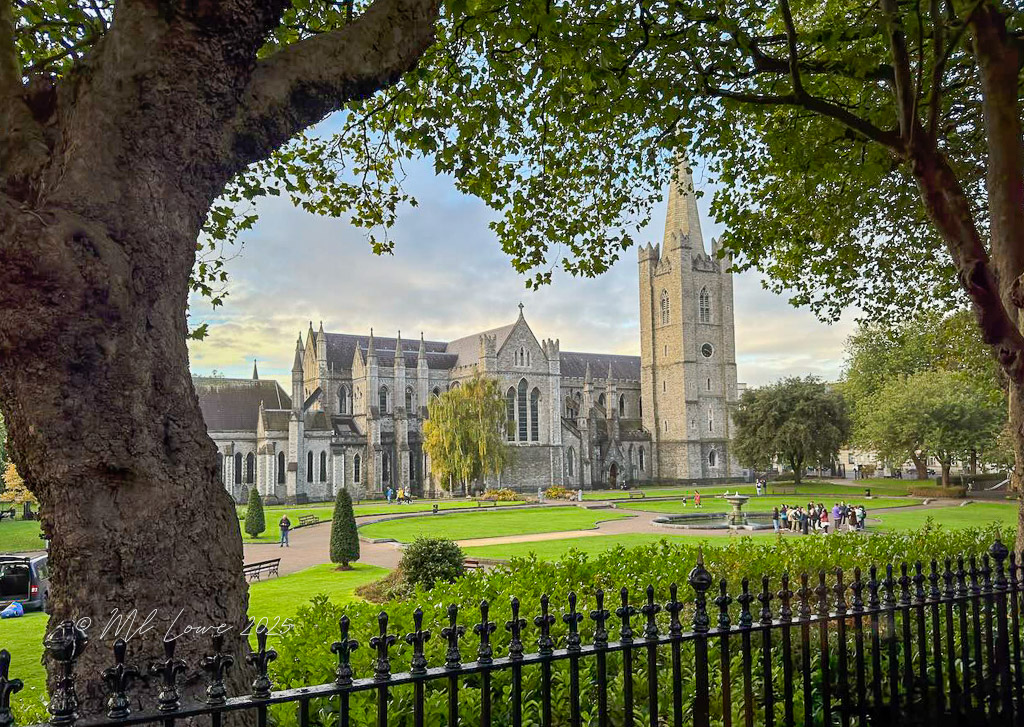
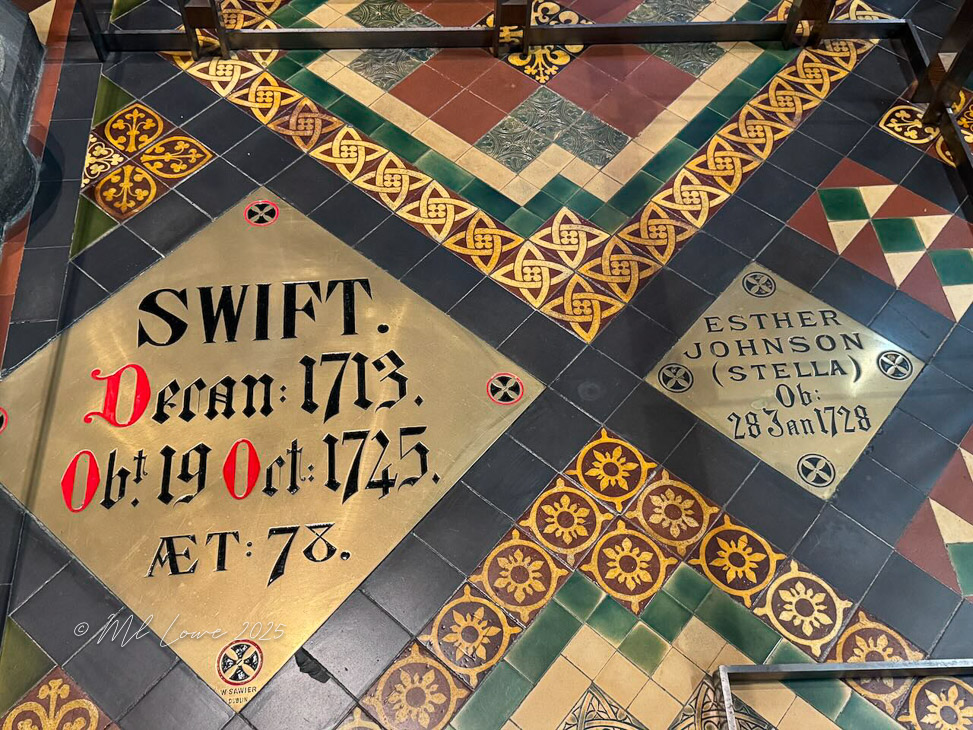
Our only “get out of the bus to stretch your legs” tour was at St. Patrick’s Cathedral. It is a jewel of medieval Irish architecture that has been part of Ireland’s story for over 800 years:



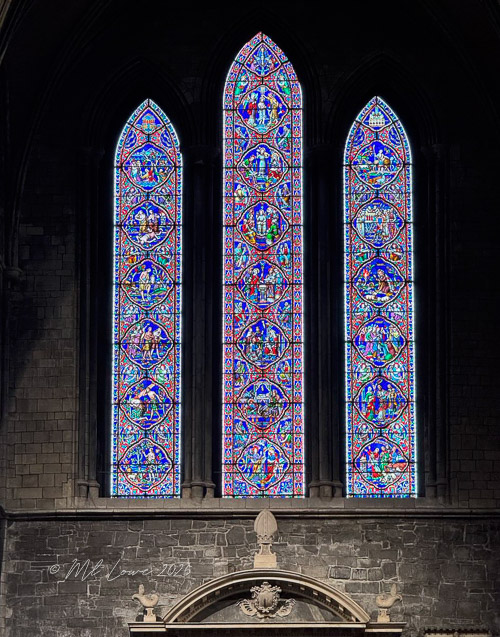
And finally, a highlight of our brief city visit was meeting up with my nephew Bryze, who recently emigrated to work as a nurse in one of the hospitals there.
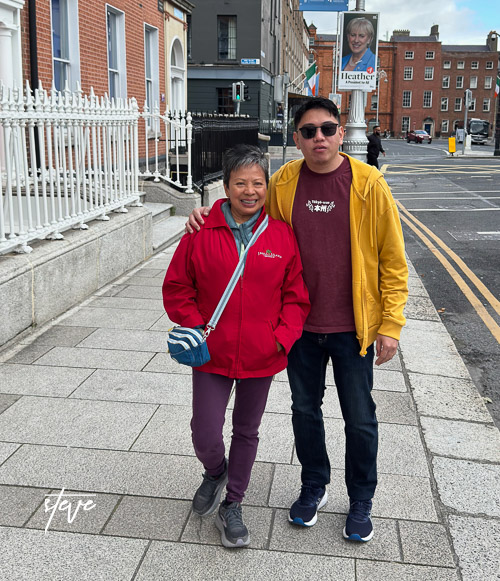
Of course, our visit wouldn’t be complete without enjoying a pint of the famous black stuff. Of course I’m referring to Guinness beer, which is a major traditional industry in Dublin that began operations in 1759:
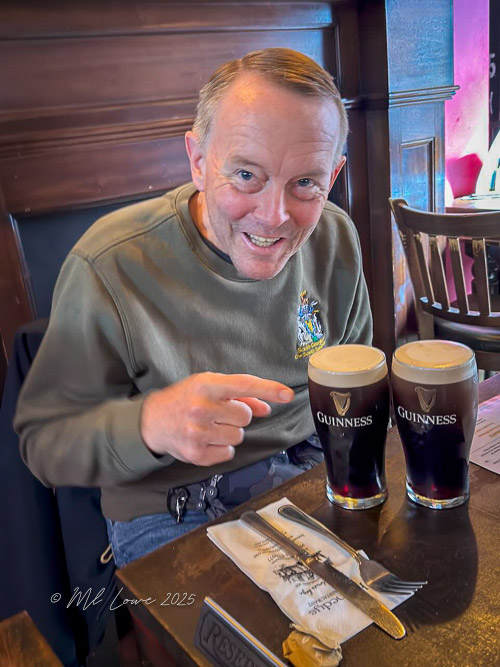
A study once suggested that simply being in the atmosphere of Ireland was enough to psychologically induce a preference for Guinness beer. Others argue that the stout “loses its freshness” when exported overseas, and Steve swears it’s true:

That rounds up our two port stops at the Emerald Isle. Both cities, Belfast and Dublin, gave us insights into their history. Especially in Belfast, where we learned firsthand about the tale of its storied past. In Dublin, each corner we turned revealed another layer of Dublin’s unique identity, making that visit an unforgettable experience. Despite our short and limited excursions, it deepened our appreciation for the cultural heritage that has shaped the region.
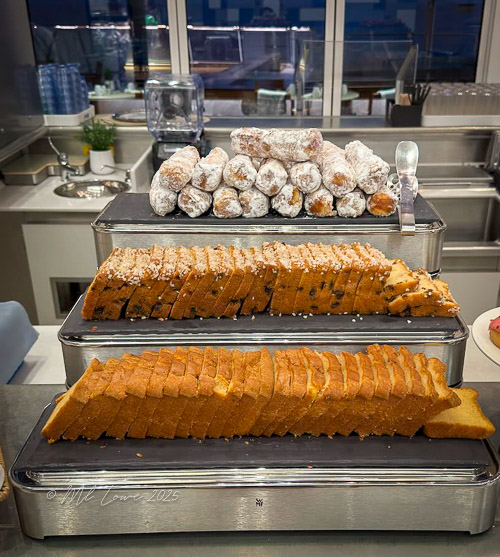
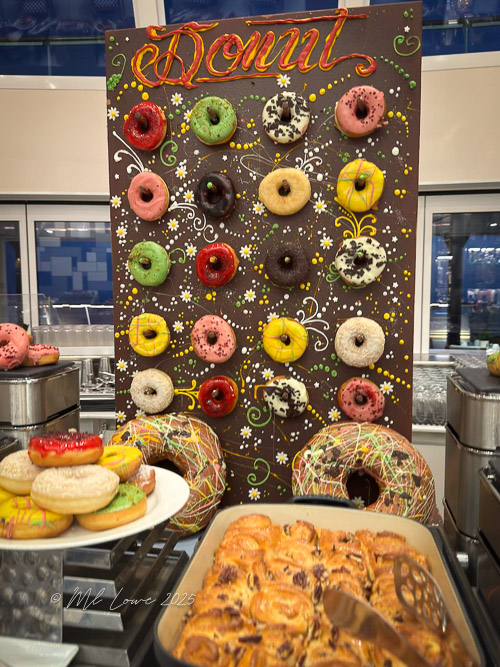
We were at sea the following day, greeted by a beautiful sunrise over the Atlantic Ocean. The culinary team kick-started our morning with an array of high-calorie sugar-rush breakfast choices, balanced with my favorite colorful high-fiber fruits:
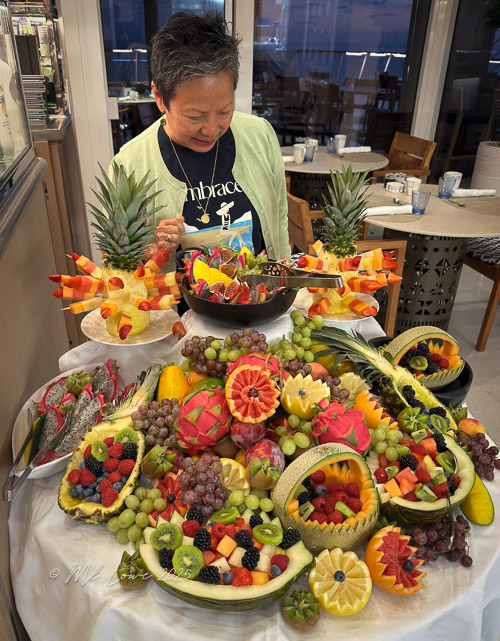
How about this sunrise while enjoying breakfast?

Next up: Wales and England
Comments
6 responses to “British Isles part 2 – Ireland”
Your blog posts are really starting to pull into doing this cruise. Visiting Belfast would be so fascinating especially with its history. That Guinness looked so yummy! Beautiful breakfast and sunrise!
When you do plan on this itinerary, I would take into account the weather, so perhaps a summer trip would be more enjoyable.
I remember the news stories that came out of Belfast in the seventies. That people were actually tarred and feathered, and the other acts of violence and death were hard to understand. I had no idea about that there are still walls up to this day which is rather bizarre. I guess that’s what keeps the peace though.
You certainly had a lot of unique and beautiful views. I really enjoyed the architecture and the colors, not to mention your photos.
I even forgot to mention that there is also a gate that is closed at 8pm at night to avoid any trouble.
What a great intro to the United Kingdom and Ireland. Thank you for all your wonderful photos and commentary. You make us want to go there, too! Brava, MonaLiza!
Thank you Susan, so much to learn new information on this cruise notwithstanding the beautiful scenery that comes with it.