Dec 17,2024
We were thrilled to be back on a Viking ship, it’s felt like a second home each time we’ve boarded. On this amazing cruise we had to attend several briefings before getting up close to the wildlife. We’ll highlight what made this expedition vessel different from other Viking ocean ships shortly.
Click here if you’d like to review our initial post about this adventure.
Mandatory Briefings and Training
We had a busy schedule on our first full day at sea, attending mandatory briefings about IAATO (International Association of Antarctica Tour Operators) guidelines. We completed kayak training and a submarine briefing to be prepared for those optional activities, and finally we did a bio-security check and were fitted for waterproof pants and boots.

At the IAATO briefing, our expedition leader, Pablo, presented important information. We all needed to know this to go ashore in Antarctica following IAATO guidelines. Examples are to not put backpacks on the ground. Do not kneel to take a picture. No hugging of penguins is allowed 🙂 Stay 15′ away from wild animals, who always have the right of way. There are several other guidelines, and knowing all of them we became instant ambassadors with insights into the environmental conditions that made us aware whenever we were ashore.
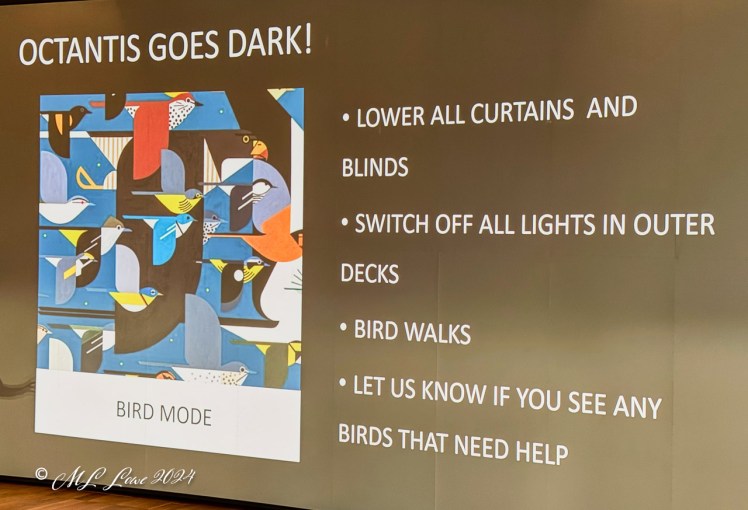
While cruising in the vicinity of the Falkland Islands and South Georgia Island, we had to go dark – meaning that in the evenings our window shades had to be closed in order to prevent birds being attracted to our stateroom light and crashing into the windows. And they meant it, because one night we forgot to close the blinds and they were closed remotely by the captain!
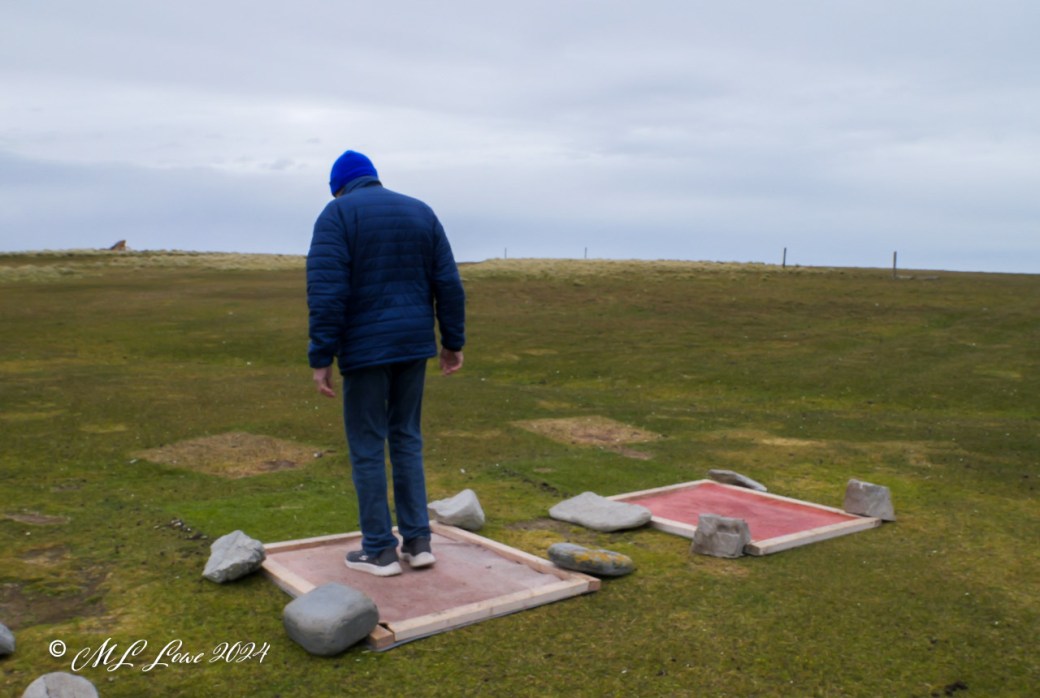
An inspection of our outer clothing was mandatory. It checked for organic materials like soil, seeds, and insects. These could be on us and unknowingly carried onshore. The focus was especially on cuffs, Velcro strips, pockets, seams, hoods, backpacks, and on boots and walking sticks. This process was repeated every time we landed to prevent the introduction of non-native species and diseases, especially now that Avian Flu has arrived in the Antarctic region.
We appreciated the commitment to protecting the environment and ensure compliance. Thankfully they didn’t find any gremlins from the Arizona desert that may have lurked in our clothing:
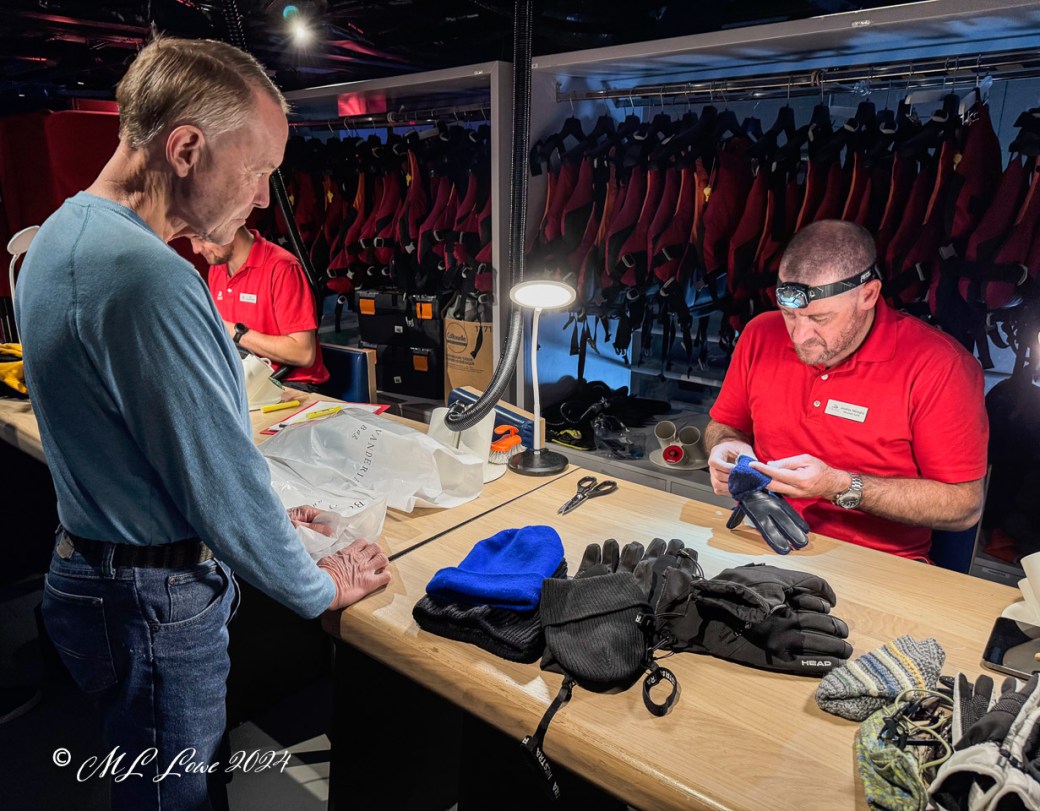
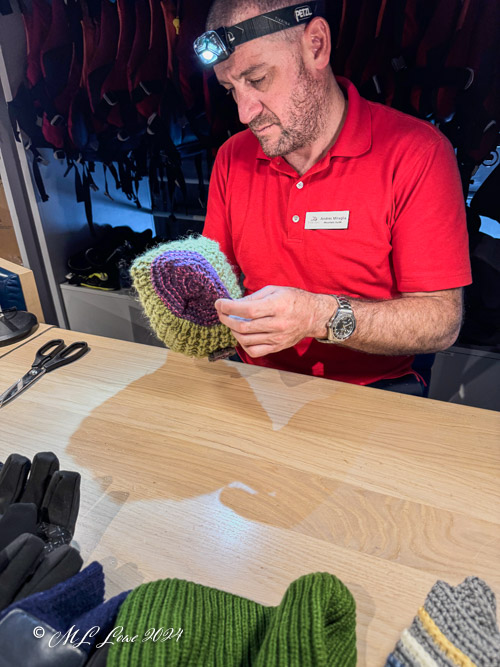
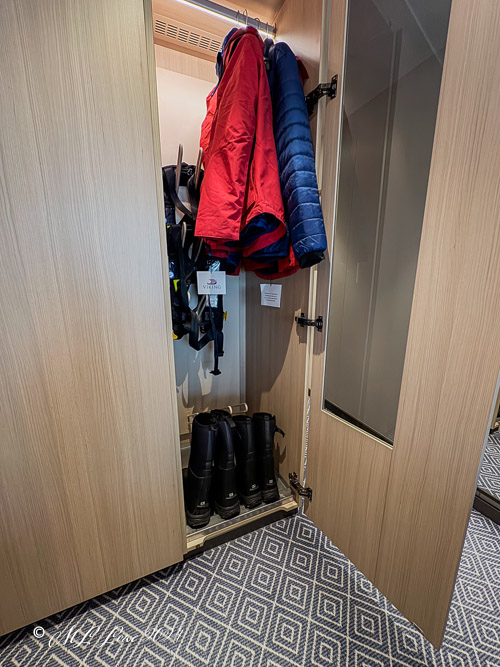
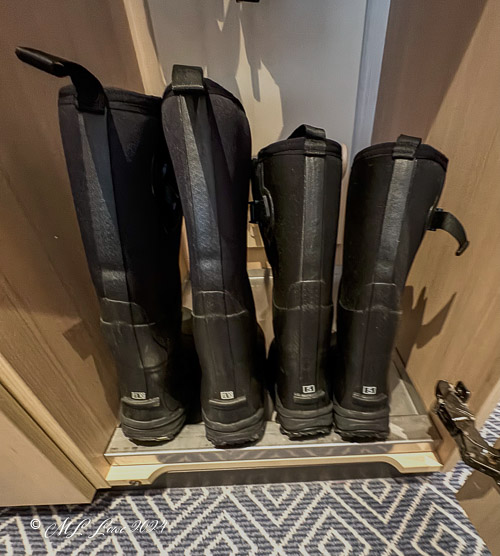
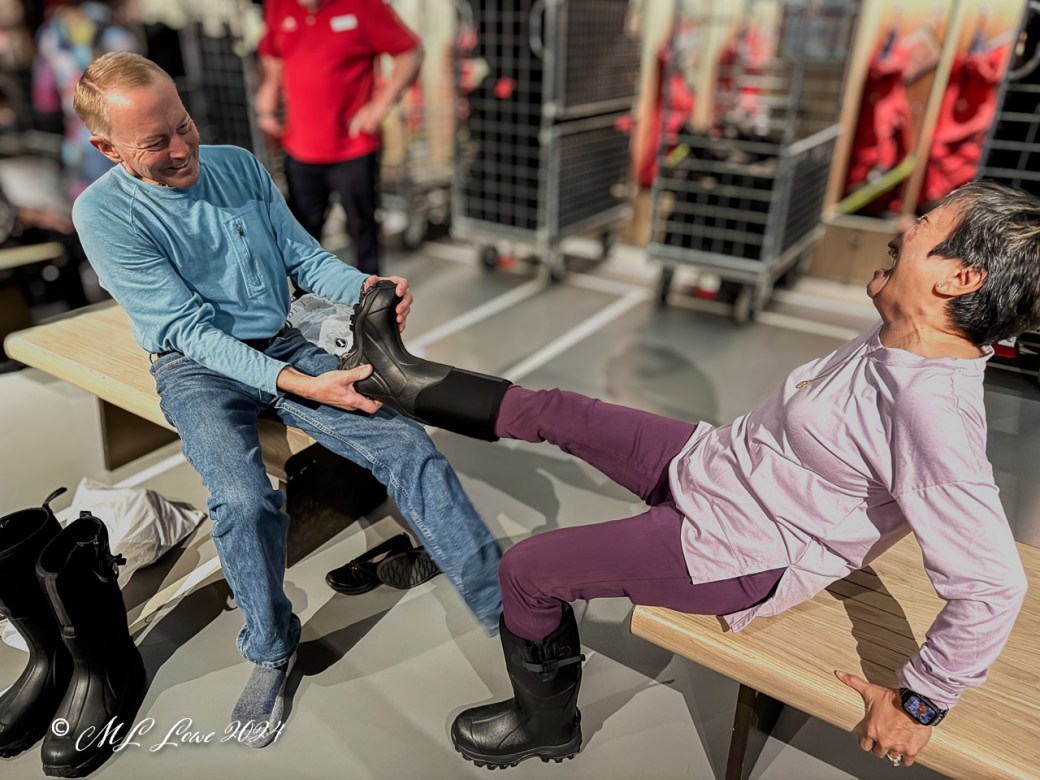
Getting our sturdy rubber boots on was a challenge, and getting them back off was a workout! After fitting, we brought them into our stateroom where there was a designated drying closet for our outer gear, safety vests and those heavy boots.

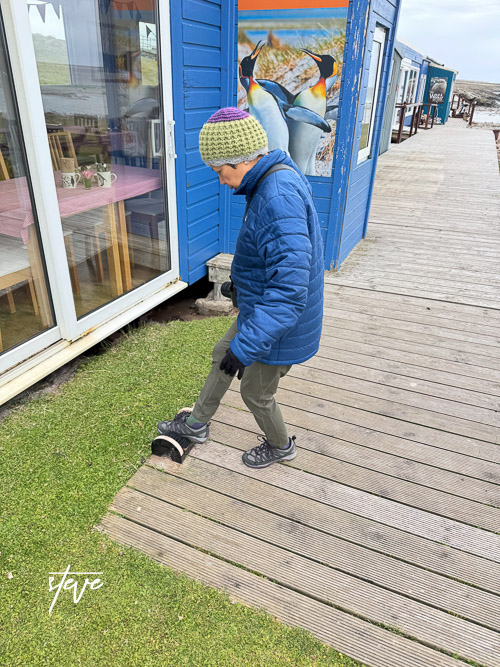
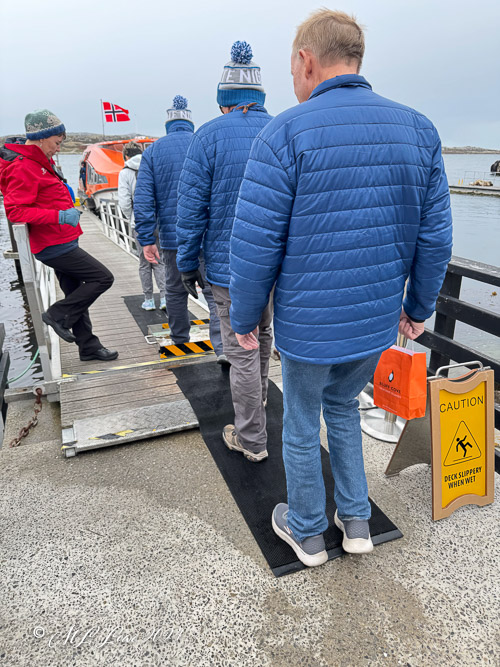
The kayak training included a “Kayak Fit Test”. First we learned how to get in and out of a Zodiac boat onto land correctly. Then we were taught the technique of getting into a kayak from a Zodiac . When you’re in the middle of these freezing waters you definitely don’t want to fall in. So this training familiarized us with what to expect before venturing out. I was so focused on being able to get in and out of the kayak that I forgot to take a picture. But this one shows Steve getting off a Zodiac after landing – scoot to the front and bring those legs up and over. Easy peasy!
The most important takeaway from the daily briefings: flexibility was required. The weather in Antarctica can be very unpredictable, even in the middle of the polar summer which was when we were here. Our plans depended on Mother Nature, and we cruised where it was safe to explore and land. Each evening we received a weather update which showed where we were scheduled to stop the next morning. But due to winds and waves our stops would be moved to another location several times (although every stop was fabulous).

About Viking Octantis
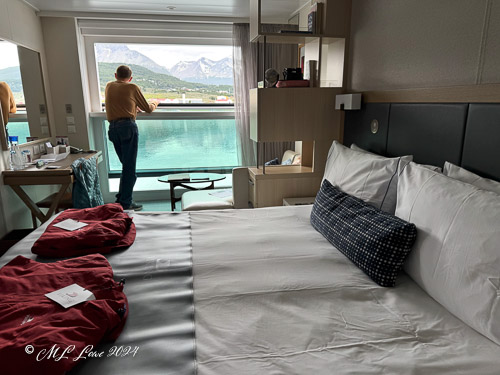
We explored the ship to check out how different it is from the ocean vessels. The Viking Octantis expedition ship is smaller than the Viking ocean cruise ships. It is 665′ long, accommodates 378 guests and has 256 crew members. It was built focusing on remote destinations like the Arctic and Antarctica. It features a Nordic balcony instead of traditional stateroom balconies. The floor-to-ceiling distortion-free glass can be opened by lowering it for an al fresco lookout:
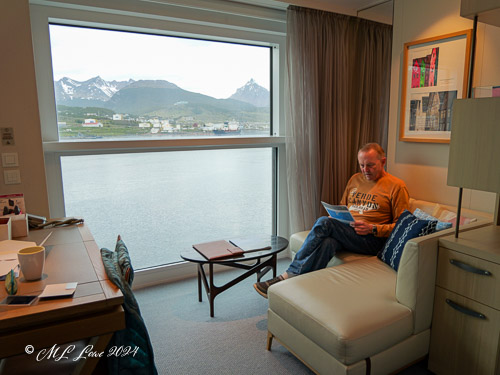
In my past postings I have shown pictures of upscale features inside of a Viking ocean ship. While for the most part the ocean and expedition ships are similar, there are a few added features found only on expedition ships. Here, there are only 6 decks, yet it took me a couple of days to get my bearings of where various areas were located. The ones unique to this ship include: Expedition Central, The Studio, The Hangar and the Science Lab which emphasize discovery, education, and expert-led exploration narrated by real scientists:
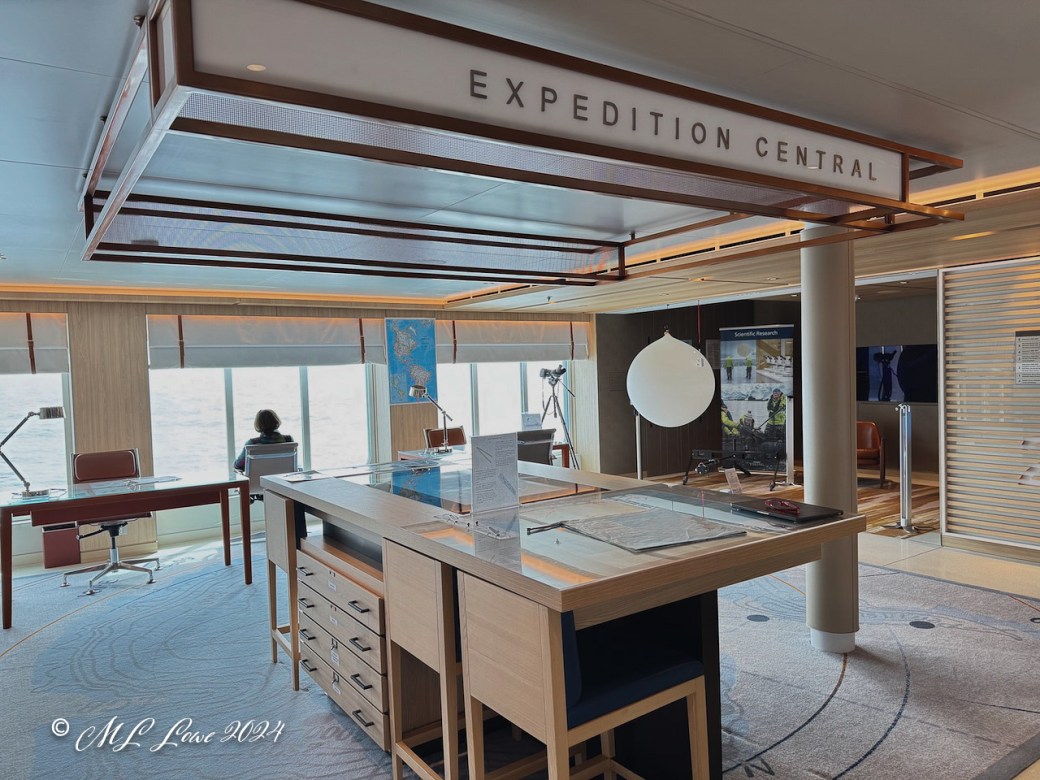

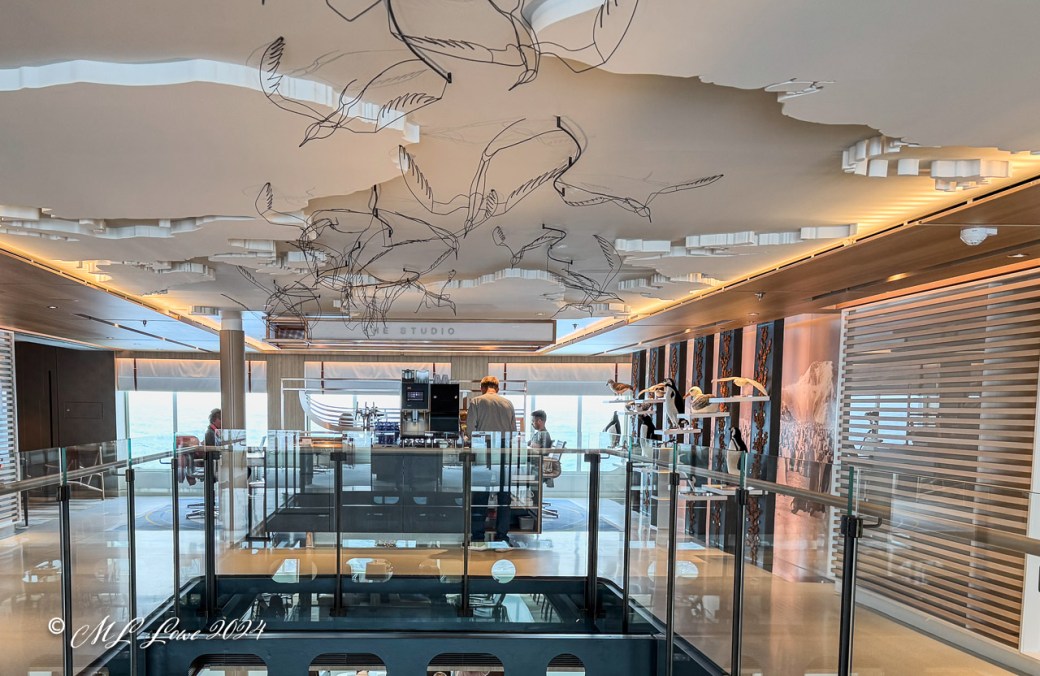

The activities on an ocean ship are managed and run by a team led by the Cruise Director. Here, a team of naturalists, scientists, marine biologists and ornithologists led by the Expedition Leader plan expedition activities and provide lectures and insight to us guests in areas such as biology, botany, glaciology, oceanography and ornithology. This is indeed a different kind of cruise where we learned and had fun at the same time!
We loved this ship — it’s smaller than the ocean vessels but spacious, and it never felt crowded. But I’ll tell you more about that in my future postings. For now let’s go to Port Stanley – the penguins are waiting!
Port Stanley, Falkland Islands
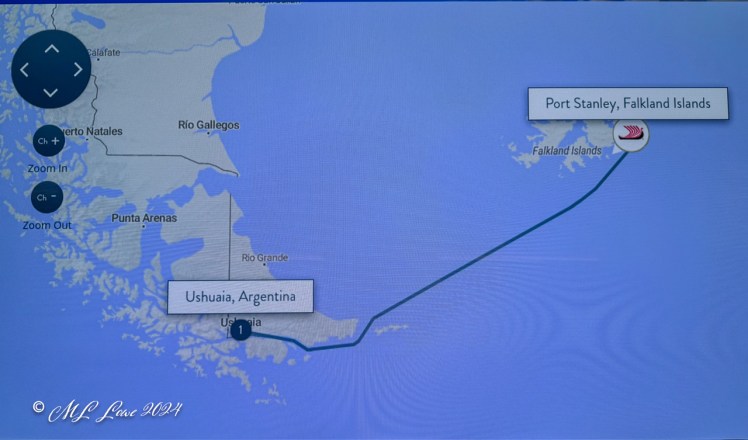
When we woke up on the first morning we were not at the planned stop, which was West Point. Instead we were still at sea, enroute to Port Stanley. A storm was chasing us, so our route had been altered right off the bat.

Like most of you, we had heard of the Falkland Islands due to the 1982 war between Argentina and the United Kingdom over who owned the islands. We heard more about the history in depth as presented by our Expedition Leader, who is Argentinian, and the Lead Scientist, who is from Great Britain. It was a lively discussion and a well-presented history lesson.
But we were here for the penguins! Known as the “Penguin Capital of the World” for its five species of penguins, the Falkland Islands are a British Overseas Territory some 300 miles east of the Argentine coast ,with Stanley as its capital.
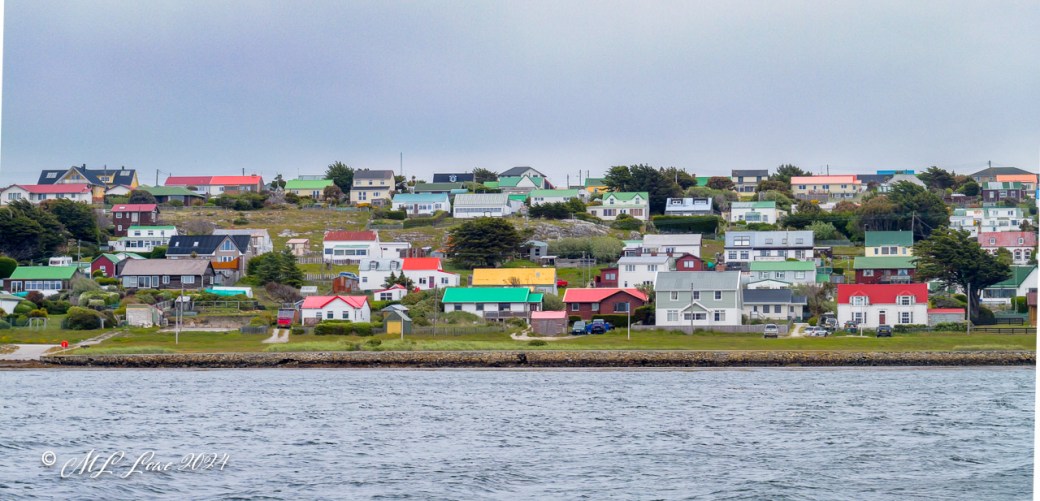
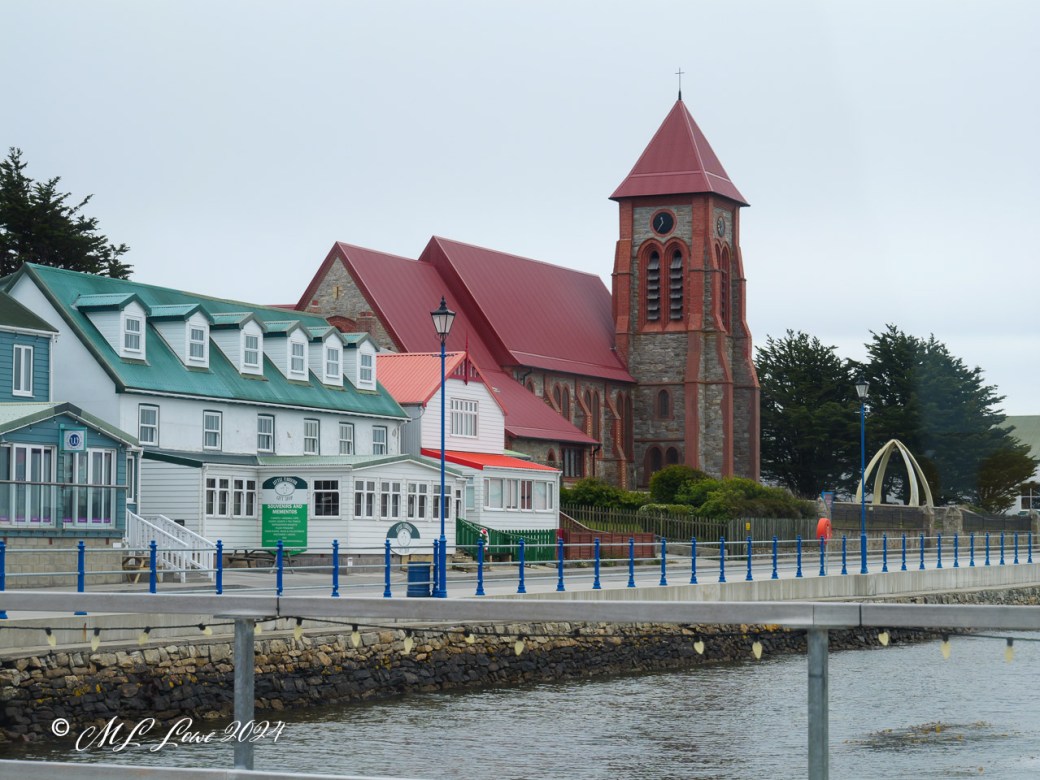

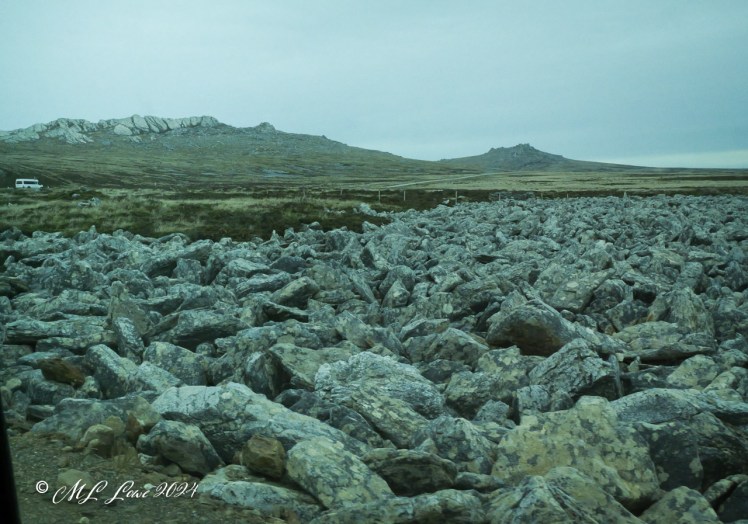
We did not explore the city, but instead went to our included excursion at Bluff Cove. It is a private wildlife haven on a 35,000 acre sheep farm. Our minibus driver gave us informative narrations of what we saw along the way, pointing to some 1982 battlefields and stunning stone-runs flowing down the mountainsides and over a ridge to a remote and tranquil lagoon. He pointed out that there were no trees on these islands:
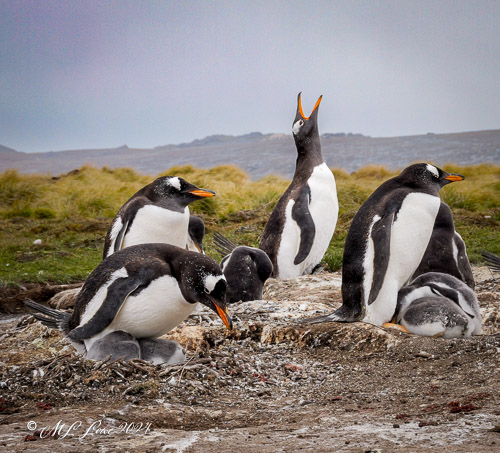
We heard the trumpeting of Gentoo Penguins in the distance as we approached the lagoon. I’ve only seen penguins on TV and as stuffed toys. This was our first time experiencing them up close in their own world, and we were very excited!
While we were instructed to stay 15′ away from them and markers were placed to make sure we did, the penguins did not get the memo; they didn’t care and crossed the line at will. Check out this video to see what I mean:
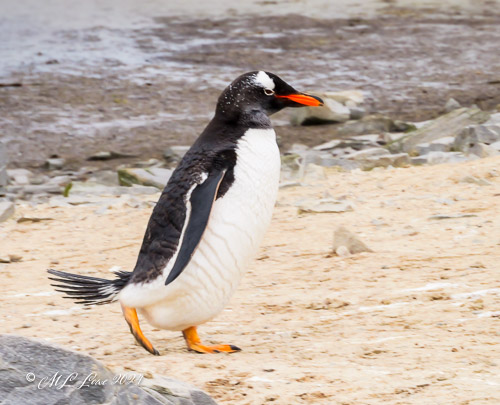
They weren’t afraid of us, as they have no instinctive fear of large creatures on land. We gawked, listened to their vocalizations, and watched their funny and fascinating behaviors:
Gentoo penguins are the third-largest penguins, after the Emperors and Kings. They use stones to build their nests and also to attract females:
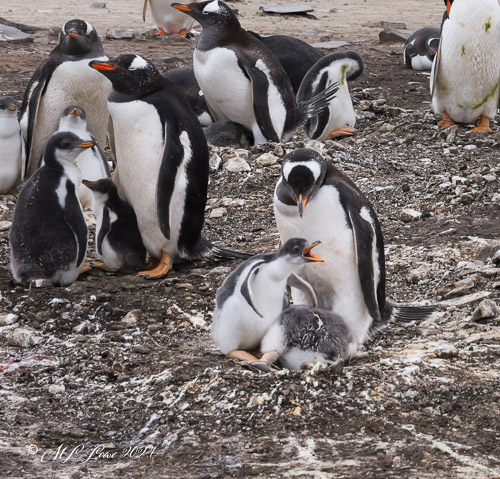
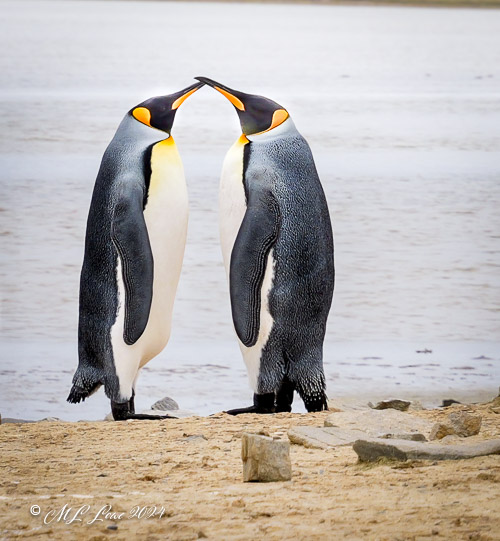
There was a small rookery of King Penguins displaying their own funny antics. Look at these two, either conducting a mating ritual or having an argument:
King Penguins are the second-largest penguin and can reach a height of 31″ to 35″. Unlike the Gentoo’s, King Penguins don’t build nests and instead eggs are carried and protected at all times:
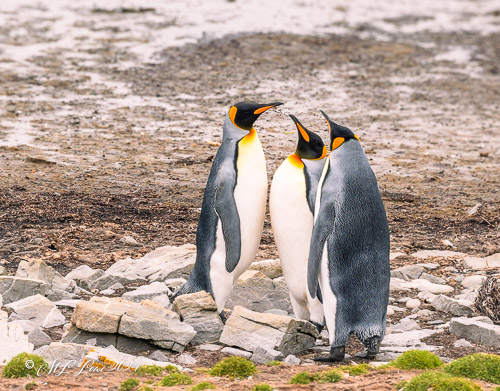

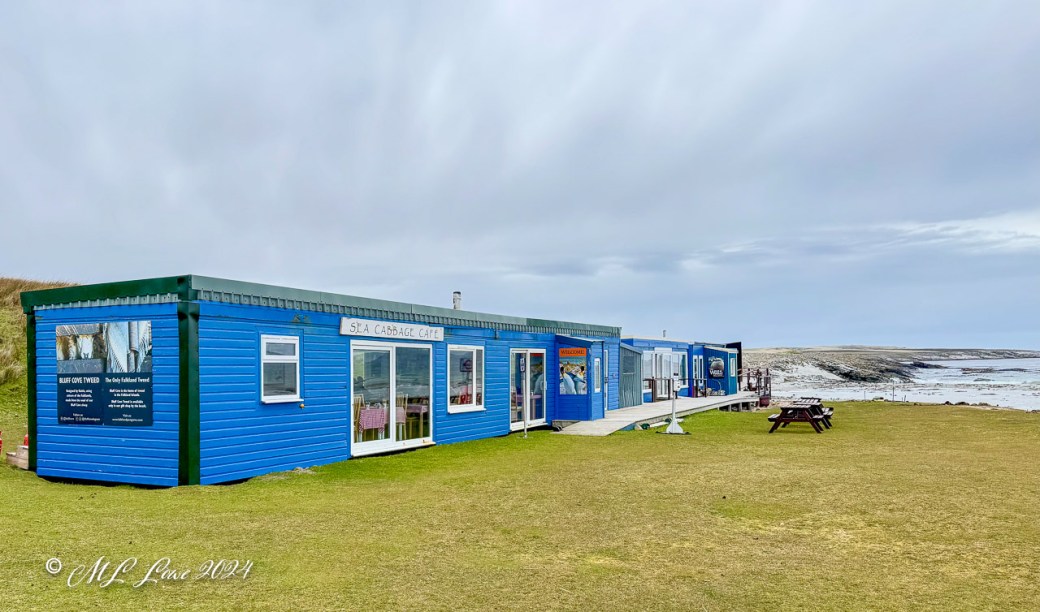
It was amazing checking out the rookeries of Gentoo and King Penguins. Afterwards we were treated to complimentary tea and some delicious home-baked treats at the Sea Cabbage Café. We also enjoyed reading the interesting museum displays depicting Falkland life and about the penguins that make this island their home.
Before heading back to the ship we had to pass bio-security and were closely monitored. No penguin poop allowed onboard!

This was our only stop in the Falkland Islands, offering us a glimpse of the wonderful things to come. The treeless landscapes and lively penguins amazed us, and we felt it was quite extraordinary. But wait, little did we know that we had many surprises waiting for us at South Georgia Island, where the stunning glaciers and subantarctic wildlife viewing promised even more unforgettable experiences.
Next Up:
Stunning South Georgia Island!
Comments
11 responses to “Falkland Islands Wildlife: Up Close with Gentoo and King Penguins”
I am way behind in reading your posts! I’m enjoying following along on your adventure and loving all the photos and videos. The penguins are so amazing! What a great start to your journey.
Oh, my, goodness, ML. What a fantastic trip. Your penguin photos are so beautiful. I could watch those videos over and over. Thanks so much for sharing them. I just watched with a big grin.
OMG, the penguins! They’re as hilarious as I imagined. I’m so glad you’re taking us all along on this journey with you because it’s so unique and special!
PS: Is the reason for not being allowed to kneel while taking photos that they’re worried you’ll fall over? Seems like a kind of random rule, but I guess that would make sense…
No, so that we won’t bring Penguin poops back to the ship 🙂
What an absolutely fantastic adventure! I’m glad you’re including so many photos and details. It’s the next best thing to being there myself. I never thought I would want to go someplace that’s obviously so ridiculously cold, but now I want to go just to see the penguins. They’re so darned cute and have so much personality! Your photos are truly wonderful—as good as anything I’ve ever seen in National Geographic. Thanks again for sharing your journey with us. ❤️
IAATO rules have definitely been evolving since the organization was formed. They have to since visits to the continent have skyrocketed. And now there have to be adaptations (such as no sitting, no placing bags on the ground, and more) to account for the bird flu preventive measures.
A few days ago, I downloaded a couple of reports from the IAATO website to look at the visit trends (in particular, how many people actually made landings) since our first two visits … in 2006-2007 and 2014-2015, total pax landed were in the 26-28K range (steady). That number jumped to 80K+ last season. Of course, the stats for the current 2024-2025 season are yet to be compiled, but I don’t expect that there will be much of a change 🤞🏻.
Mother Nature is definitely in charge anywhere below the Roaring Forties and Furious Fifties, and even more so when you get to the Screaming Sixties and beyond. Anyone who can’t accept that and go along with any itinerary changes, is doomed to disappointment. We had a couple of pax in 2015, who by their own admission, had no idea what to expect from expedition style cruising.
Managing at least one landing in the Falklands will have given you a comparison of how different the rest of your landings were.
Your cruising adventures are the only ones ever that have made that sort of traveling look appealing. I’m not so sure about the freezing Antarctic, but those penguins and the unique viewing windows from your stateroom are pretty great. I’ll bet it was really hard not to try to pet a penguin!
I want to hug them!
Exciting adventure for sure! Thank you for the write-up!
The penguins are so fun to watch!
So glad you’re continuing your adventures!