Oct 8- 15
Lisbon
This is the final segment of our 30 day Europe cruises in October. After our Viking Saturn ocean cruise around the British Isles (click here if you missed those stories), we joined a river cruise on Viking Osfrid, traveling the Douro River in Portugal.
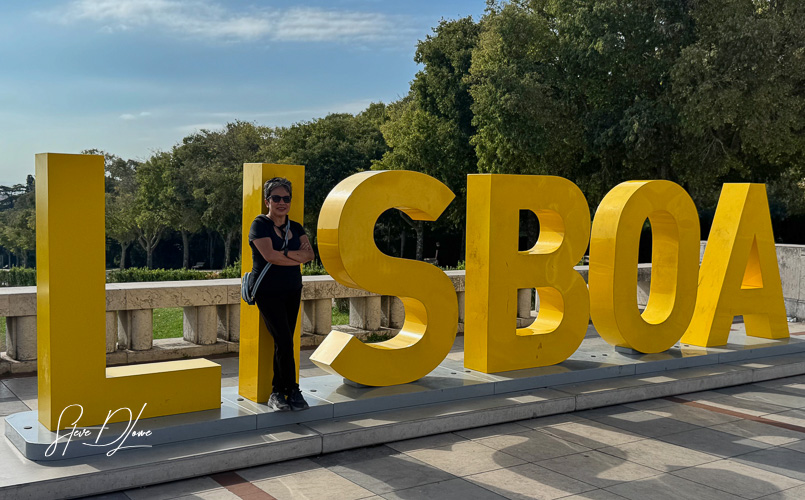
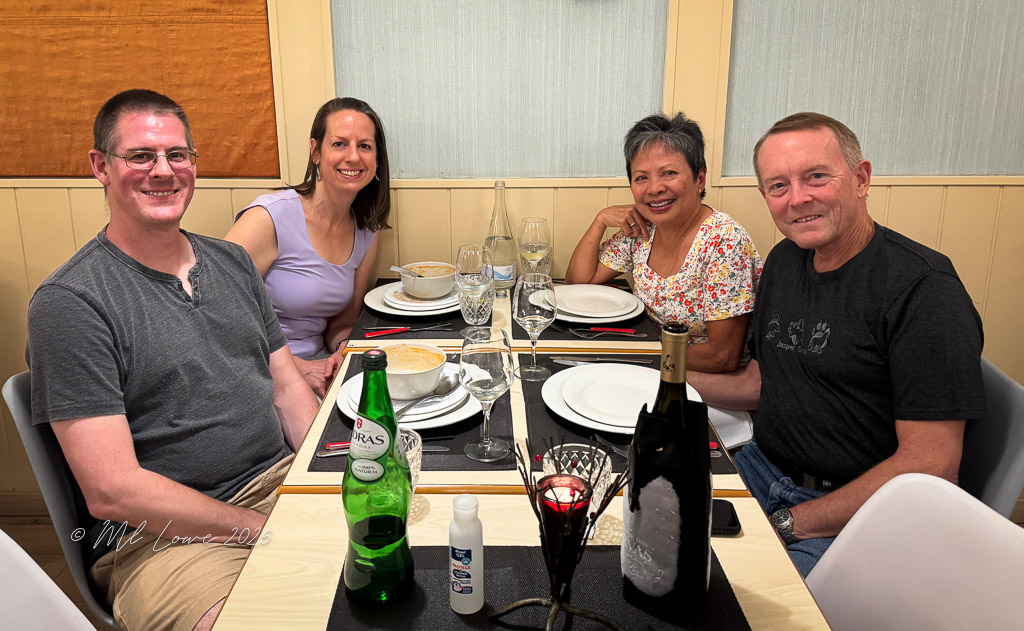
This was our second visit to Lisbon – the first one was back in 2023 – so we decided to take it easy this time around instead of playing the tourist marathon. If you’re curious about our previous escapades in this enchanting city, click here to see how fascinating it is. The real cherry on top for us this time was reuniting with our friends Kevin and Laura, those adventurous expats from the USA. It’s always a pleasure hanging out with them, and we had so much to catch up on that our talk lasted until the restaurant’s closing time. We enjoyed listening to their fascinating and exciting new life since they moved here in 2023. It was a great night!
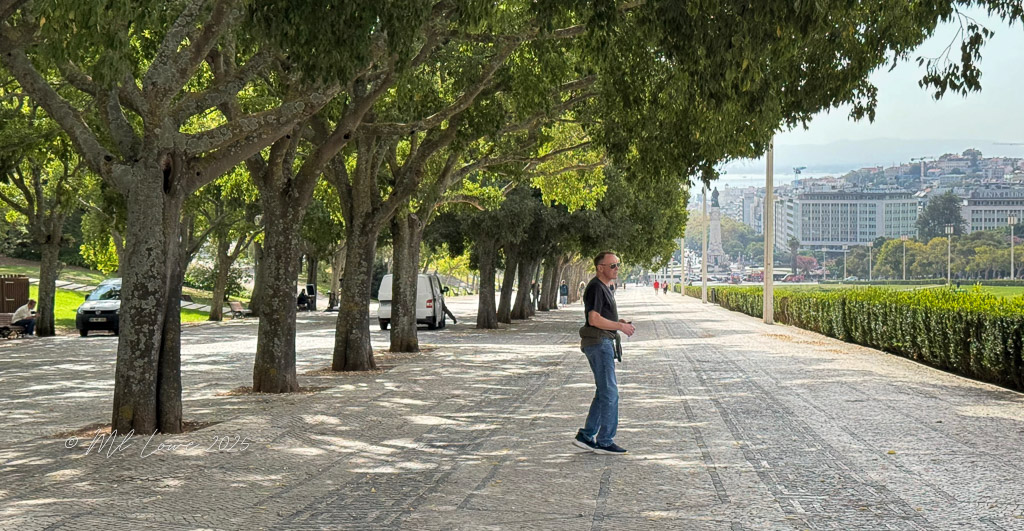
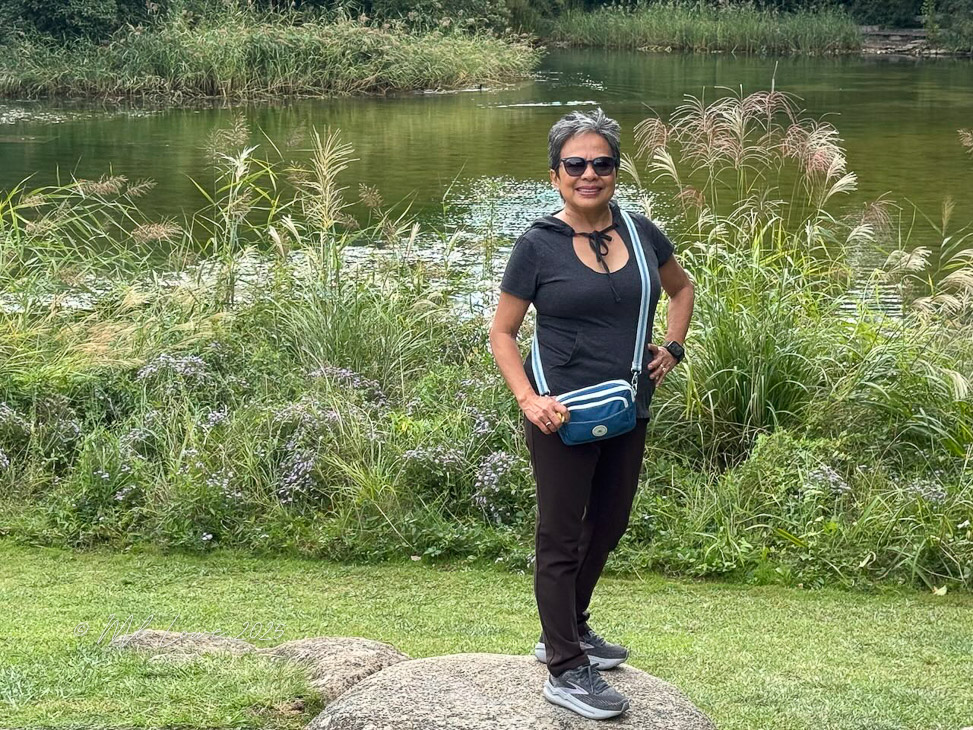
We had a day and a half to spend in Lisbon, part of our pre-cruise itinerary. We forewent joining the included excursions that Viking provided, since we’d previously toured with them in 2023. Instead we opted to stroll on our own to two places near our hotel that Laura had suggested; the Park Eduardo VII and the Garden of the Calouste Gulbenkian Foundation:

From the observation deck at Park Eduardo VII 
Park Eduardo VII Garden of the Calouste Gulbenkian Foundation 
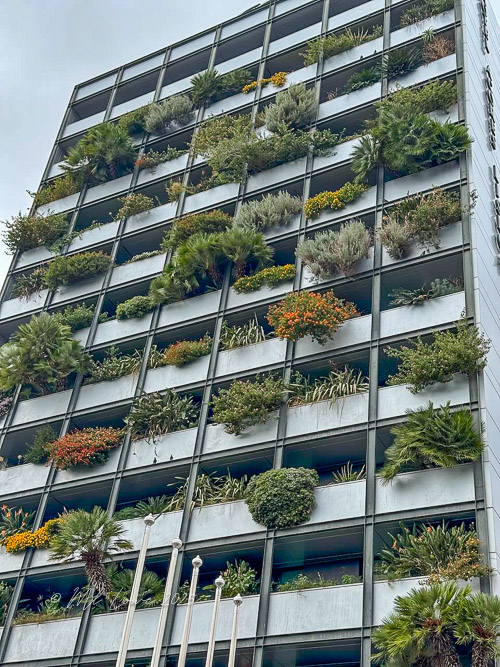
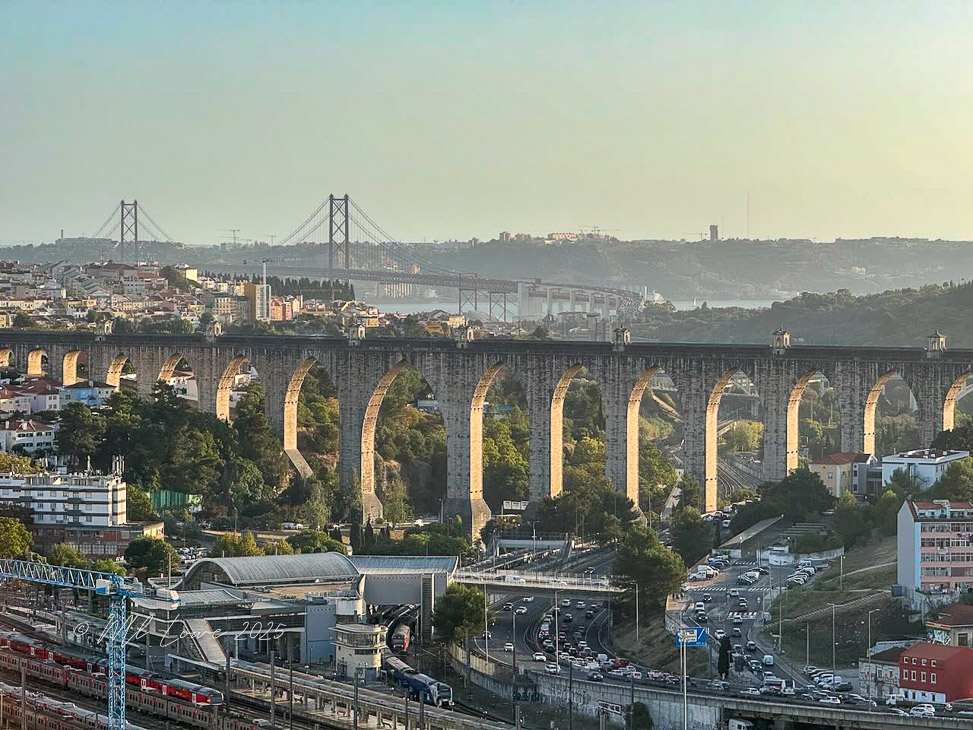
Very cool hanging gardens are common on residences here View from our hotel room: the aqueduct and the Ponte 25 de Abril bridge, both iconic Lisbon structures 
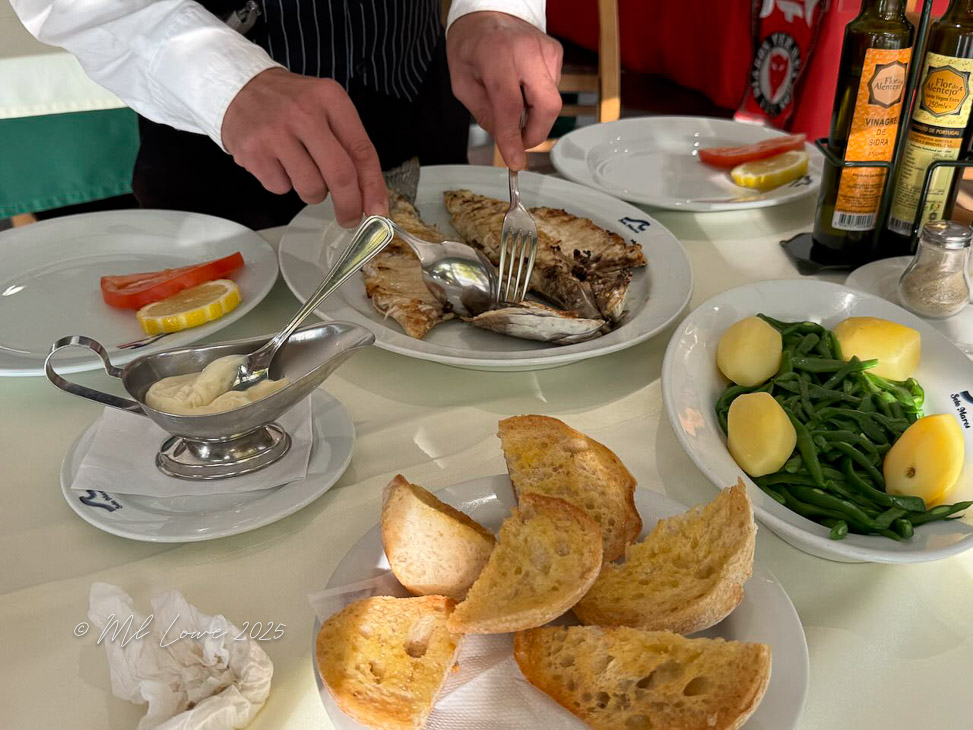
Another view from our room We enjoyed a traditional Portuguese dinner


We embarked on a Viking coach the following morning that took us north to the ship in Porto, a four hour affair that allowed us to board Viking Osfrid. To break up the long drive we had opted for an optional tour that took us to two of Portugal’s most significant religious sites in the towns of Batalha and Fatima.
Batalha
Batalha is a small town in Portugal known for its UNESCO World Heritage and listed as Batalha Monastery (Mosteiro da Batalha). It’s a masterpiece of Portuguese Gothic and Manueline architecture, and was constructed over the reign of seven kings from 1386 to 1517. There are nearly 650 year’s worth of history here, and a lot more to the monastery than I can cover. But what impressed us the most was the fine detailing on the stonework:


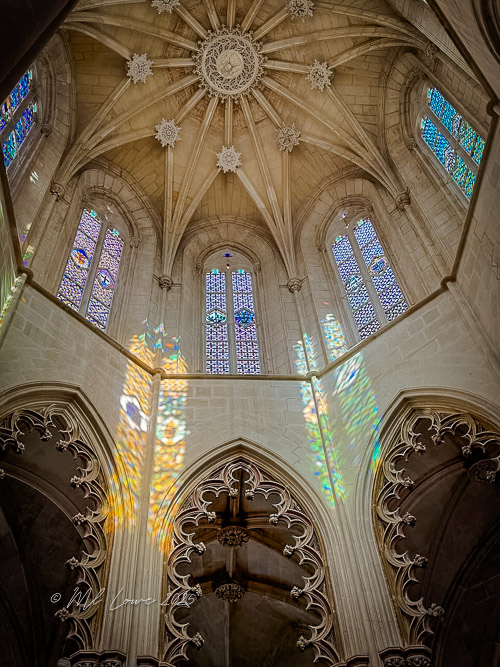
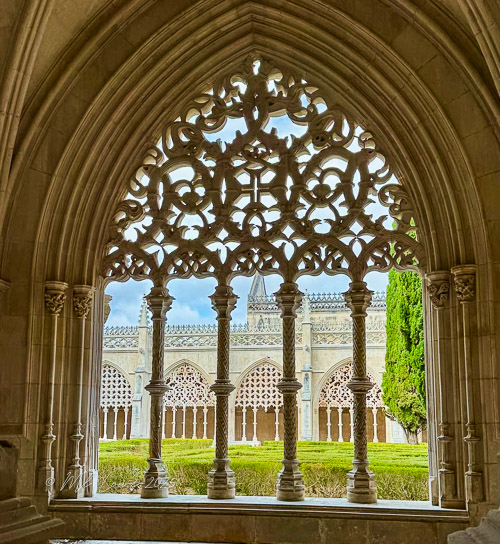
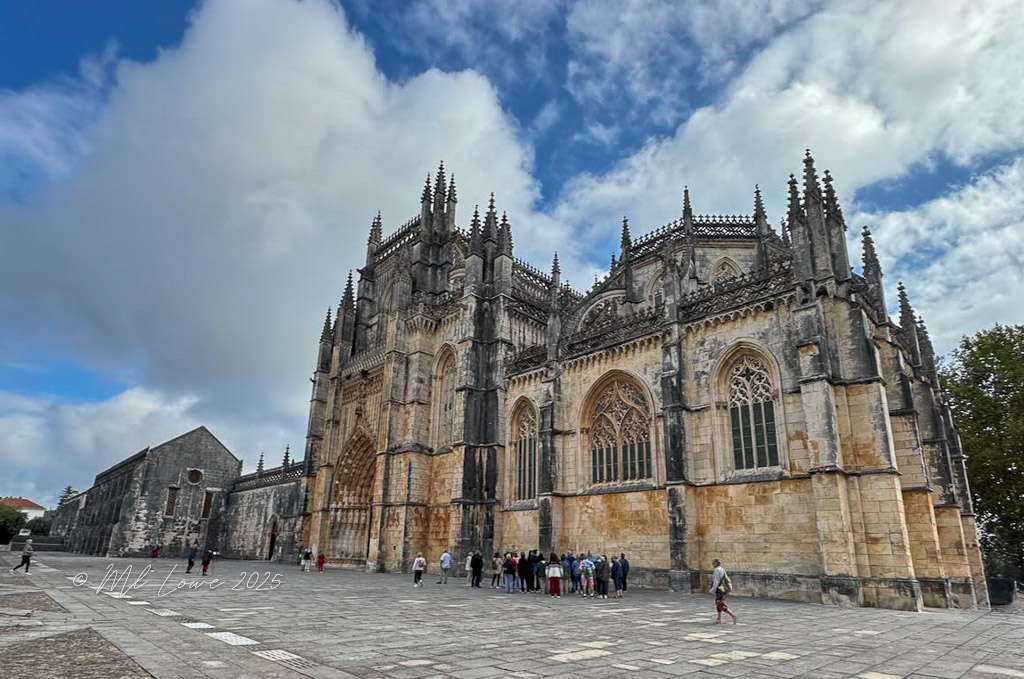
Fatima
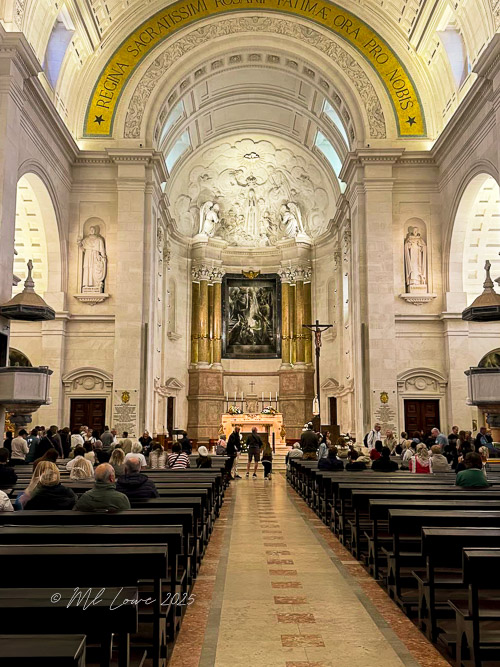
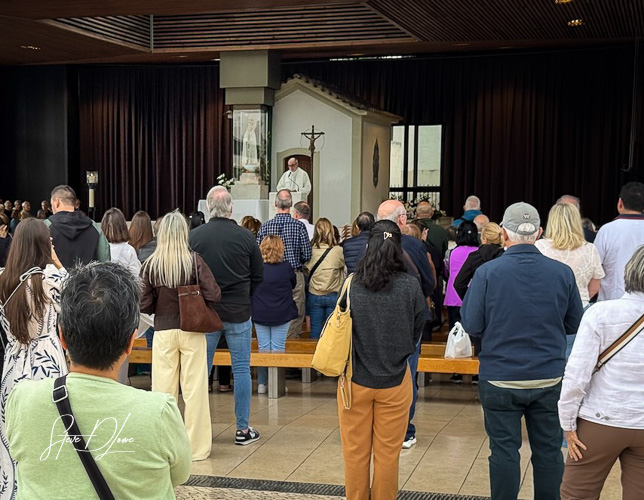
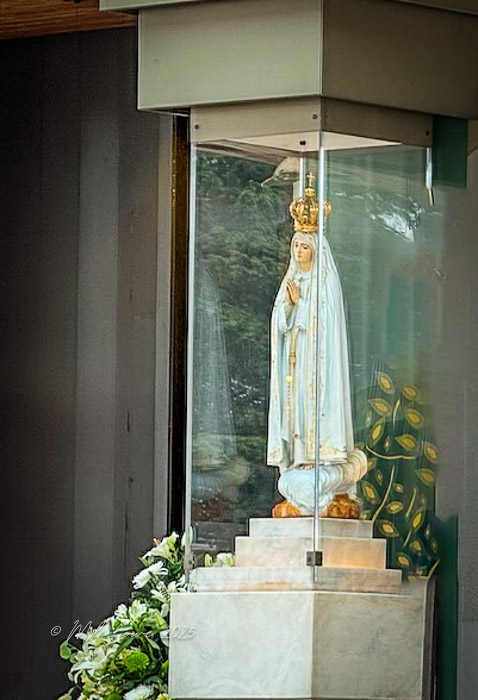
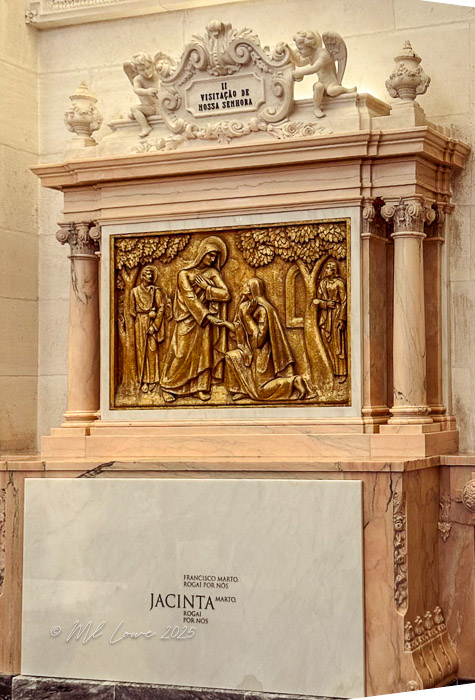
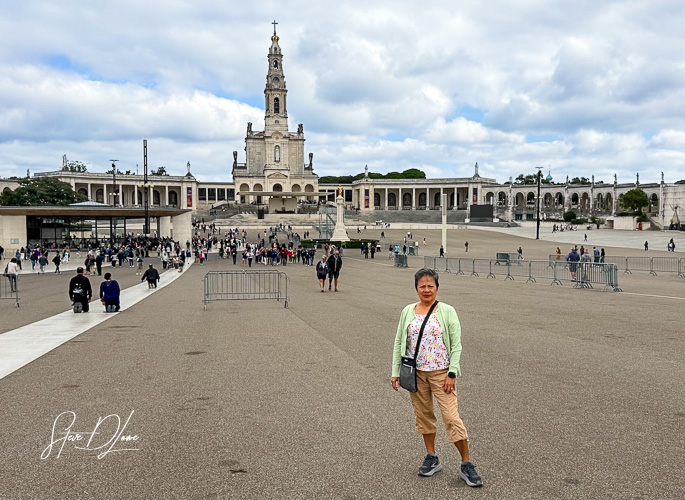
As a catholic I was filled with a deep sense of reverence and awe as we approached the renowned Sanctuary of Our Lady of Fátima, a major Catholic pilgrimage destination. It is here at the sacred shrine where the Virgin Mary is said to have appeared to three shepherd children in 1917. The atmosphere was imbued with spirituality and faith that surrounded this sacred site:
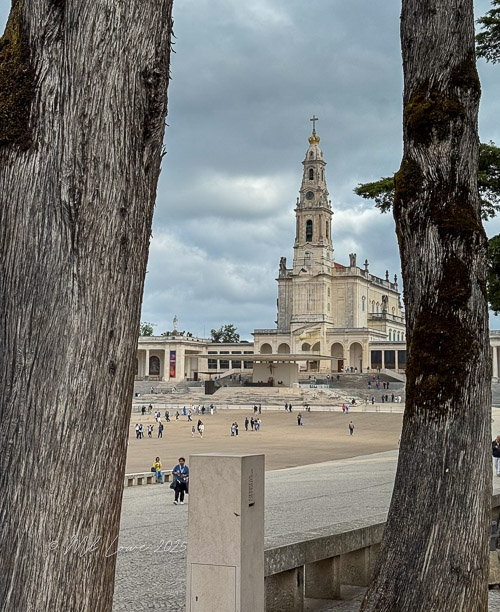
And finally we were onboard Viking Osfrid!
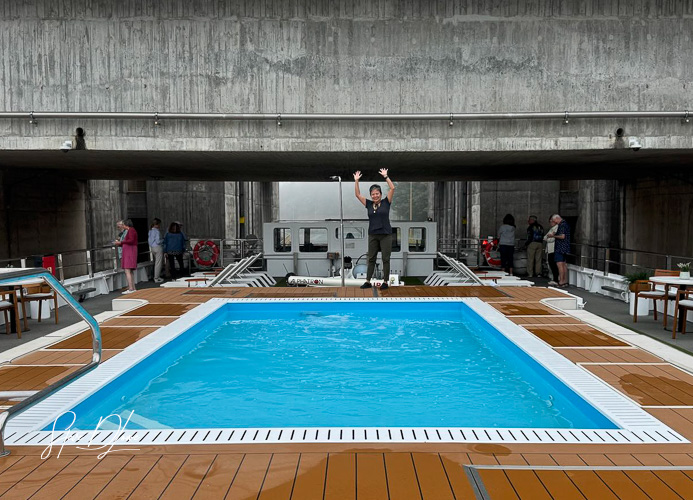
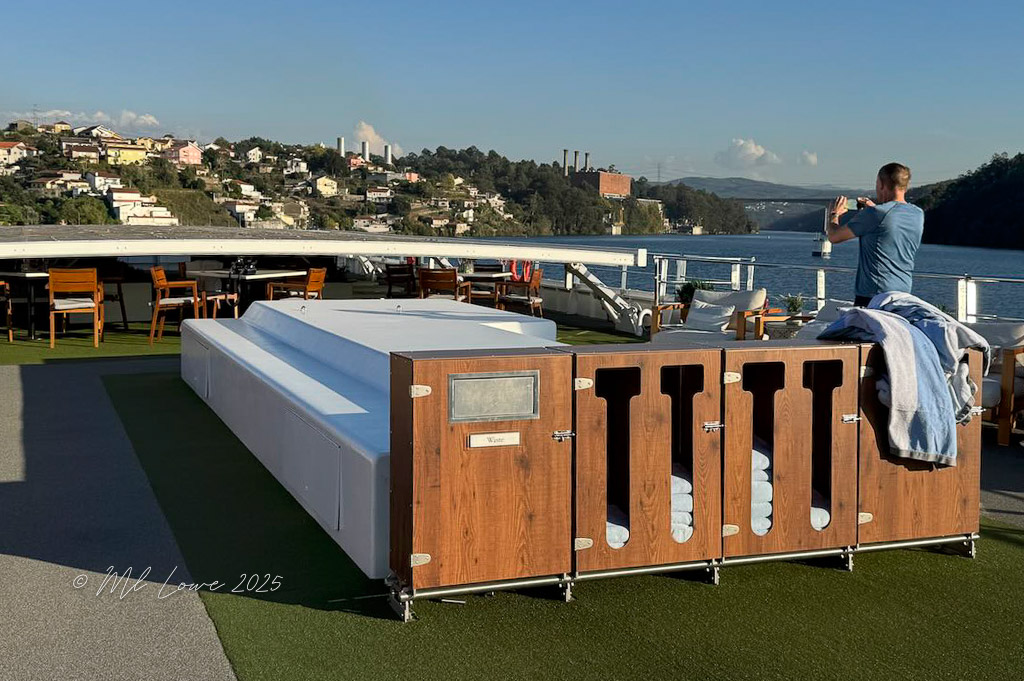
After a long day of travel we arrived in Porto where we boarded Viking Osfrid, our home for the next seven days. This was our fifth Viking river cruise, and we immediately noted the differences from the other Viking ” longships” that we had enjoyed on the Danube, Rhine and Siene rivers in Europe. For starters, this ship is smaller at a length of 262′ with a crew of 33 serving only 106 passengers. The Viking longships that we had sailed on previously are 40% larger, handling 190 passengers with a crew of 53. Interestingly, Osfrid has a swimming pool on the top deck but we never saw anyone in it!

We learned why river cruise ships on the Douro River are smaller – it’s because of the river’s topography. Ship size regulations are in place so vessels can safely sail through its narrow passages and turns. They are required to sail only during daylight, hence they must dock overnight. On other river cruises we could sail overnight and be in another city or even another country when we woke up. We liked this cruise because we didn’t miss anything while we were sleeping.
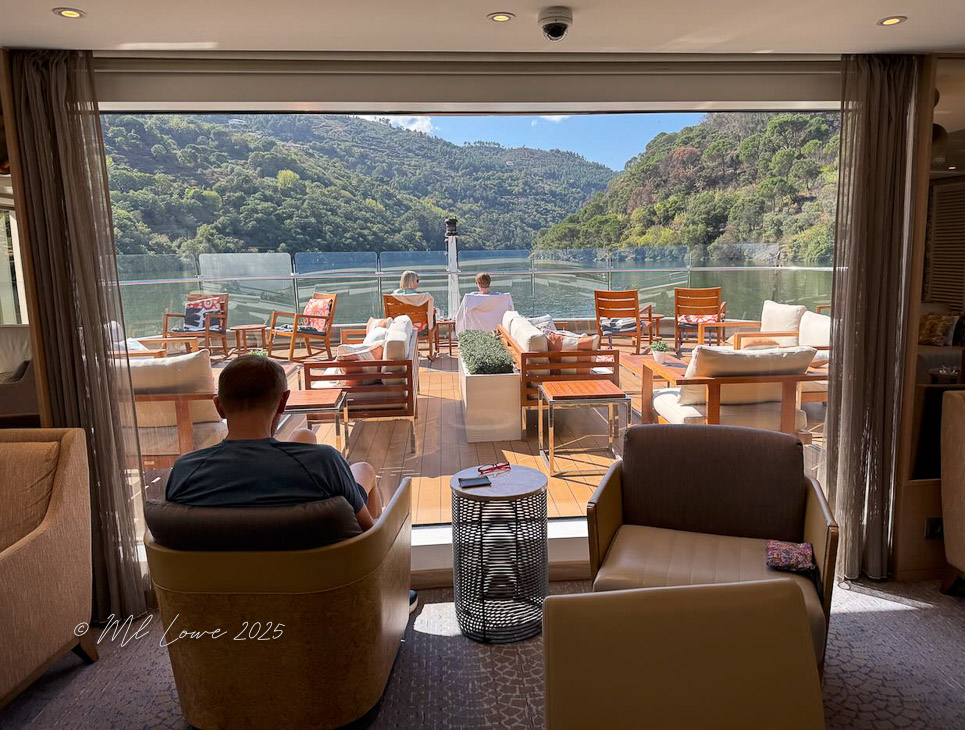
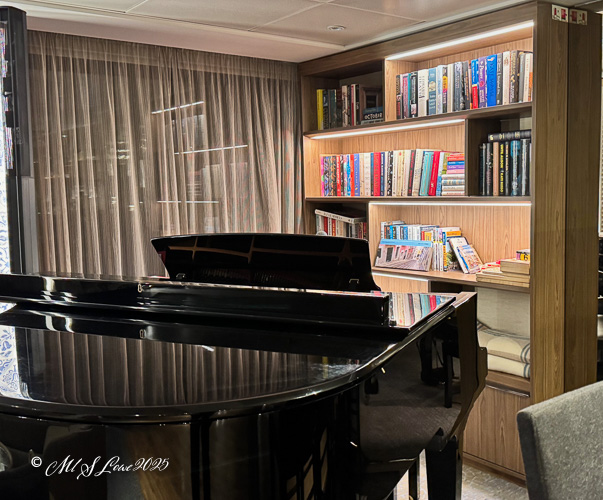

Despite the differences of these ships, we experienced the same excellent service and food quality. We also appreciated that Viking highlighted some traditional Portuguese foods for our dinners. I was so busy savoring the dishes that I didn’t take a single photo 🙁
Our itinerary
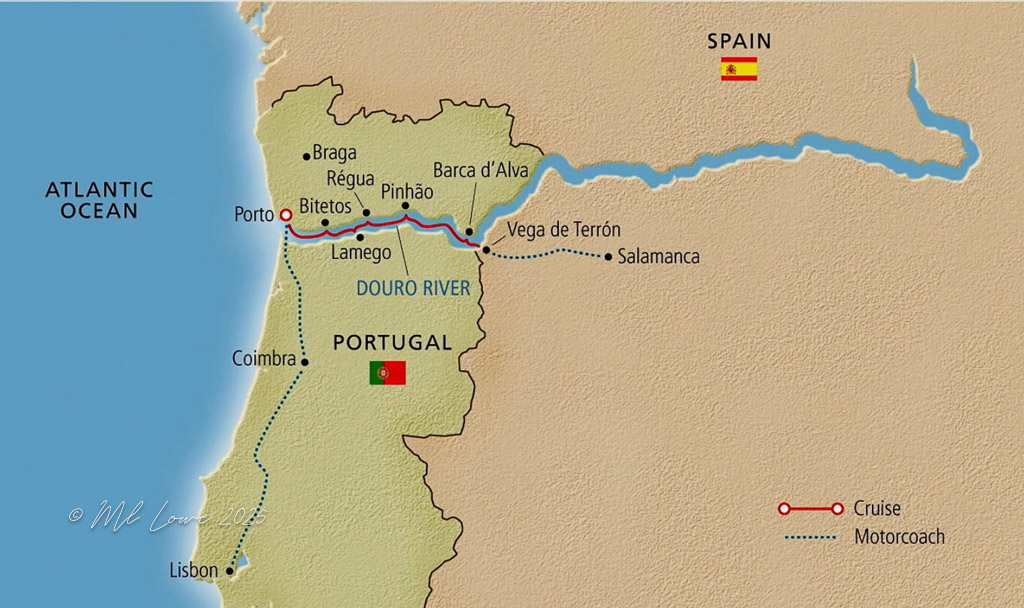
Viking labelled this itinerary as “Portugal’s River of Gold”. It sails roundtrip between Porto, the second largest city in Portugal, and Salamanca just over the border in Spain. It’s a very popular itinerary, so much so that when we booked it two years ago we got the last stateroom on the ship. The Douro River Valley is the world’s oldest demarcated wine region, and is a UNESCO Site. It’s located in northern Portugal and is renowned for its breathtaking landscapes, terraced vineyards, and the iconic Douro River scenery.
This itinerary is unique, as it begins and ends in Porto while passing many charming small villages along the way. That makes it different from the other European river cruises we’ve taken.
Locks, dams and bridges
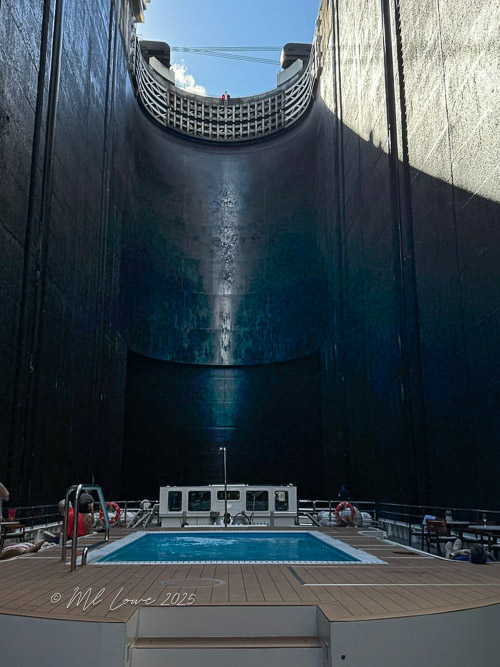
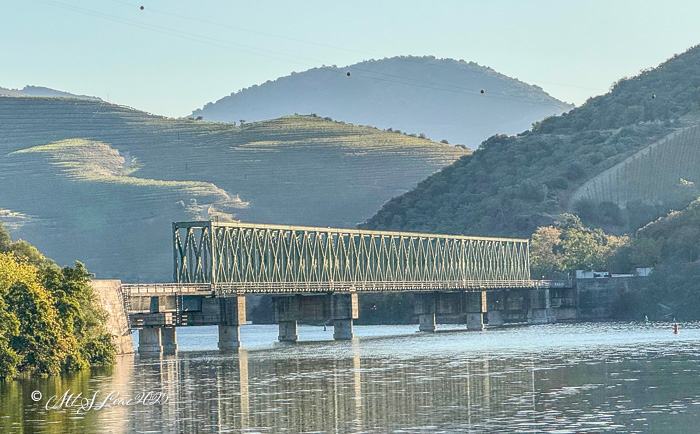
Cruising the Duoro River also involves passing under many bridges and through five dams with navigation locks. Passing through these locks is a major highlight because of the spectacular feats of engineering that transform the river into a navigable highway. It’s an amazing experience, raising and lowering the ship sometimes over 100′ at the dams! And because it’s a round trip sailing we passed through the locks twice as we headed upstream and downstream.

One of the key river locks is at Carrapatelo Lock, the second one upstream. This has the largest water level difference in Europe and one of the highest in the world, with a maximum lift of 115′:

Below is a video showing as we approached the lock before the water filled it to level us with the next section of the river. The process of filling and draining the water happens in just a few minutes:
There were also several low bridges over the river that the ship had to maneuver under. For the really, really low ones, the top deck was closed and everything had to be lowered, including the wheelhouse from where the captain navigates. After crossing under the bridge, everything is raised back up again. Amazing!
Below is a video of our passing under the lowest bridge of them all:
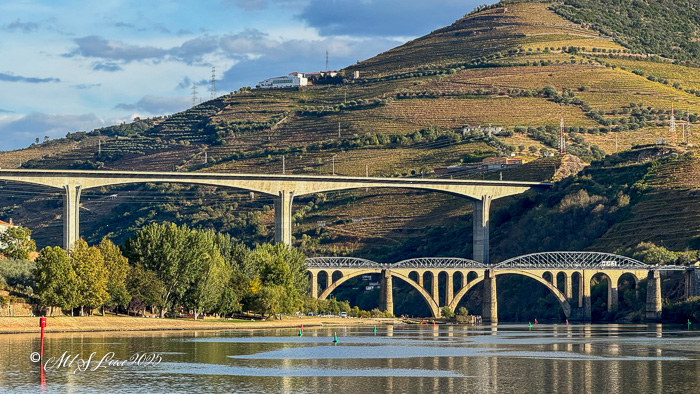
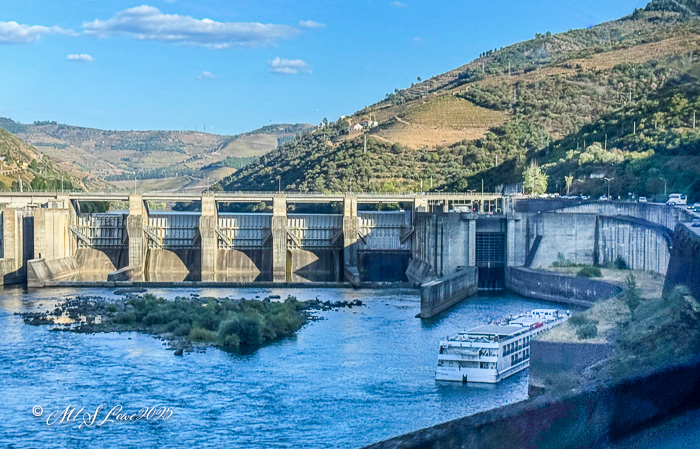
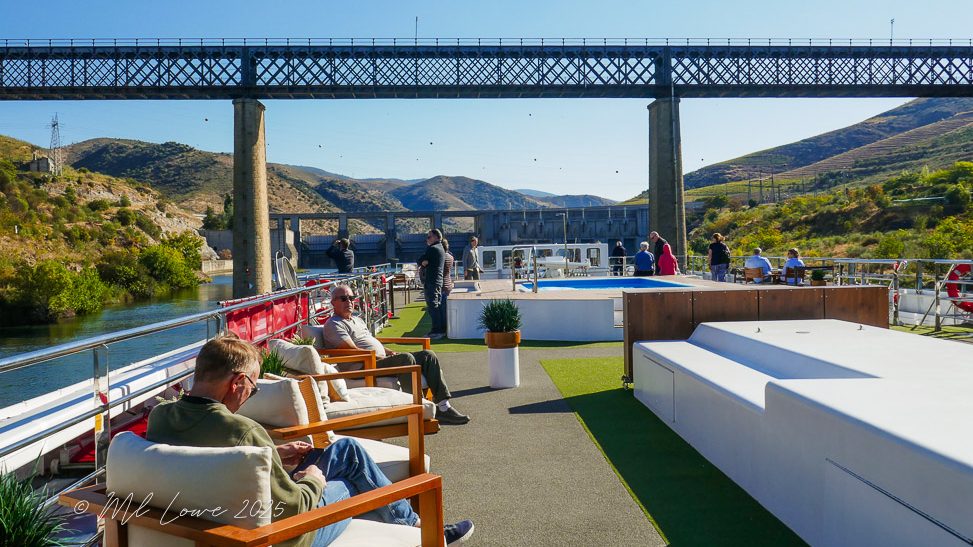
Being lifted or lowered in locks and crossing under low clearance bridges are events that by themselves make this an amazing cruise!
Stunning mountain vineyard landscapes
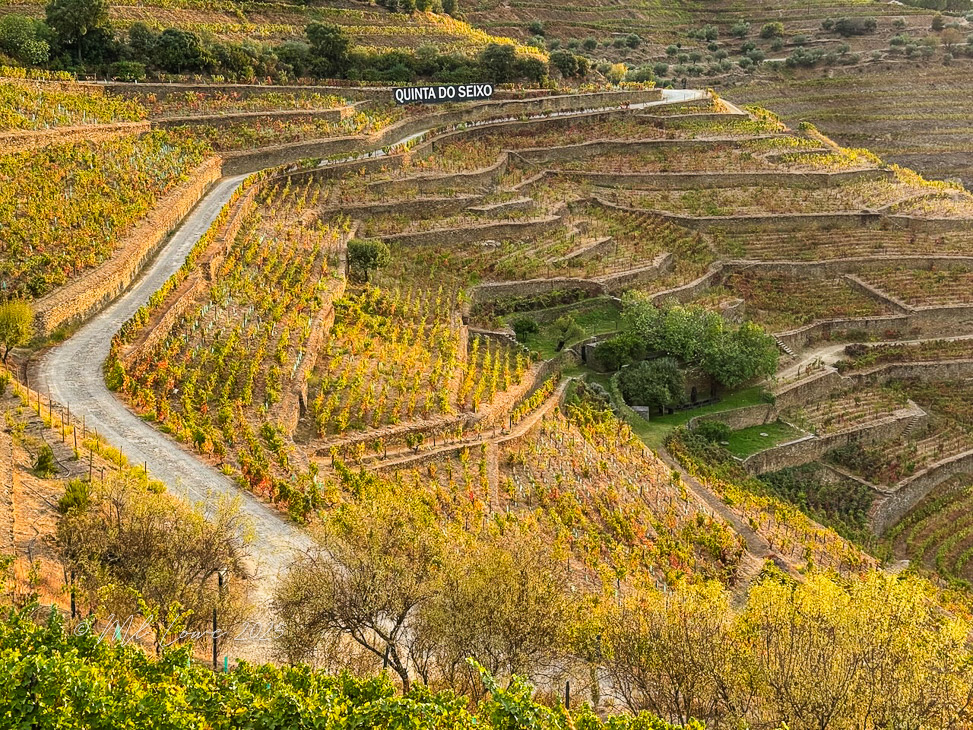
Cruising along the Douro River is smooth and relaxing. As the ship went upstream we saw how the entire region is mountainous and crossed by steep valleys. The scenery seen from the ship or on a coach was the terraced vineyards climbing up the slopes and the rugged canyon walls that make it so picturesque. This unique landscape makes the Douro Valley different from vineyards we’ve visited in Germany, France or the USA. It’s terracing is ancient and a key feature of the region that has made it a UNESCO World Heritage site.

Whichever way we looked, the picture-postcard terraced hillsides that are synonymous with the Douro River Valley were in our faces:
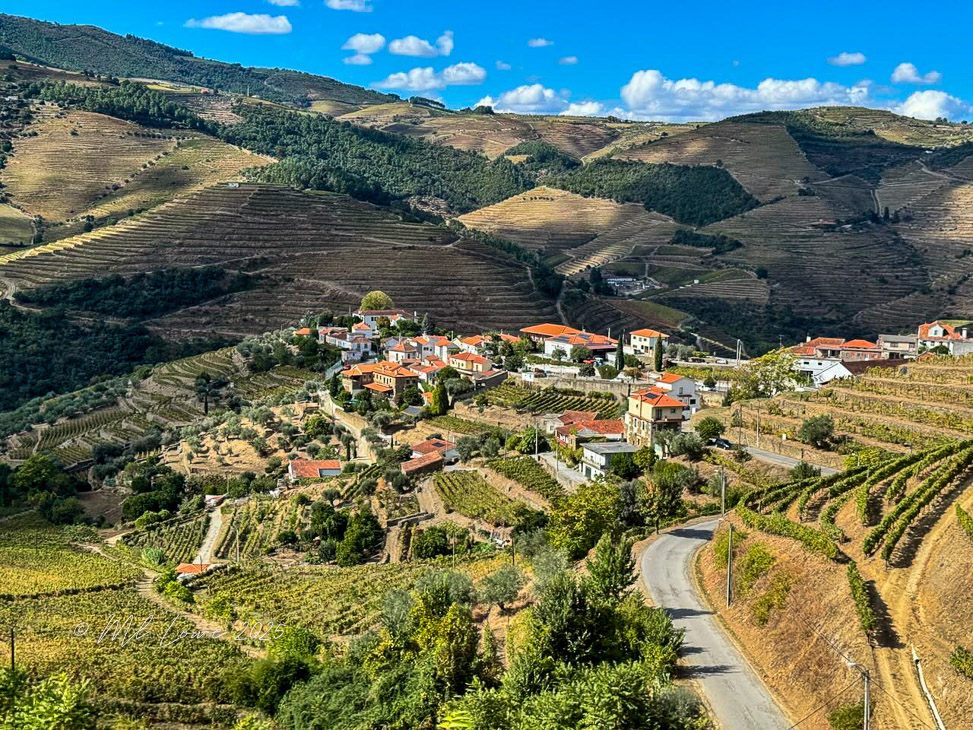
In this largely unspoiled region, olive and almond groves share the river’s banks with the vines:
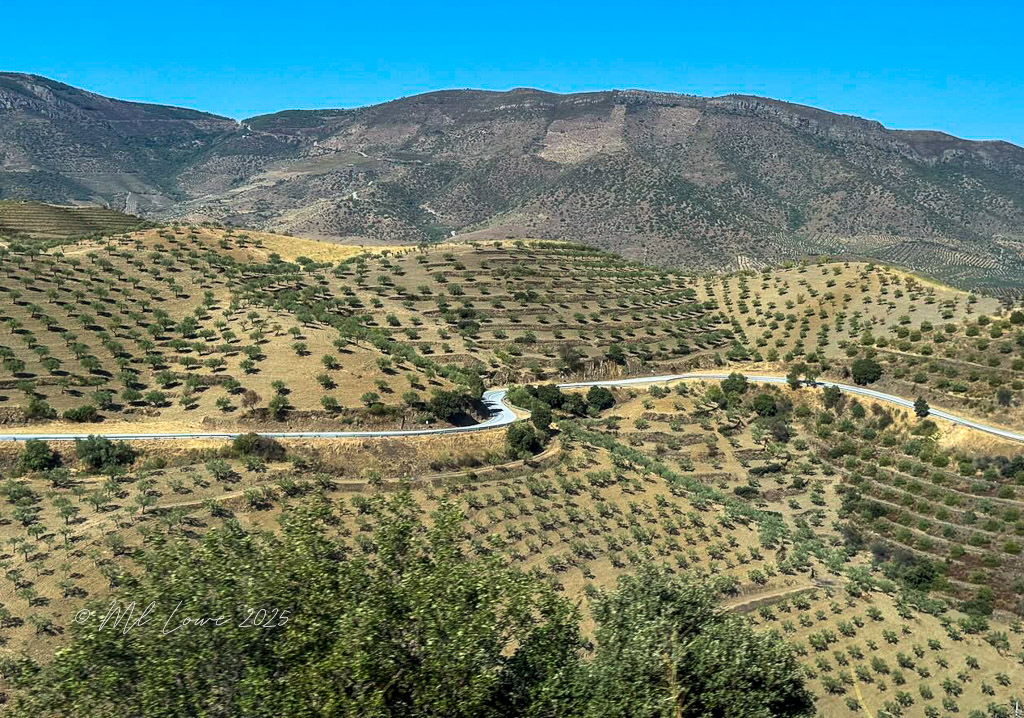
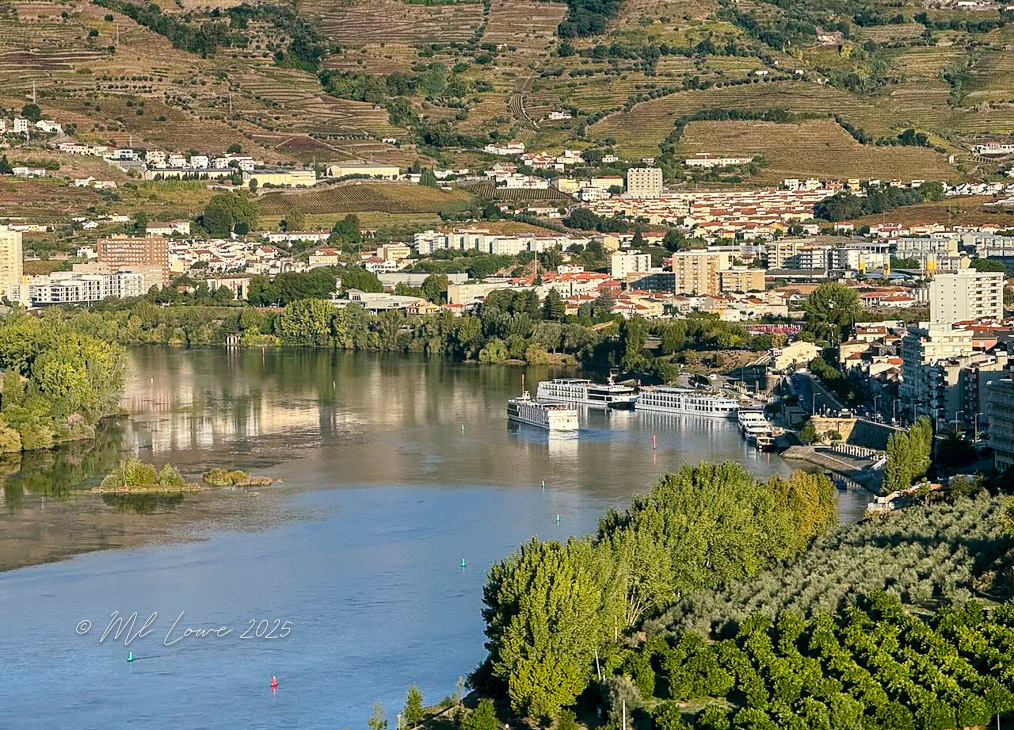
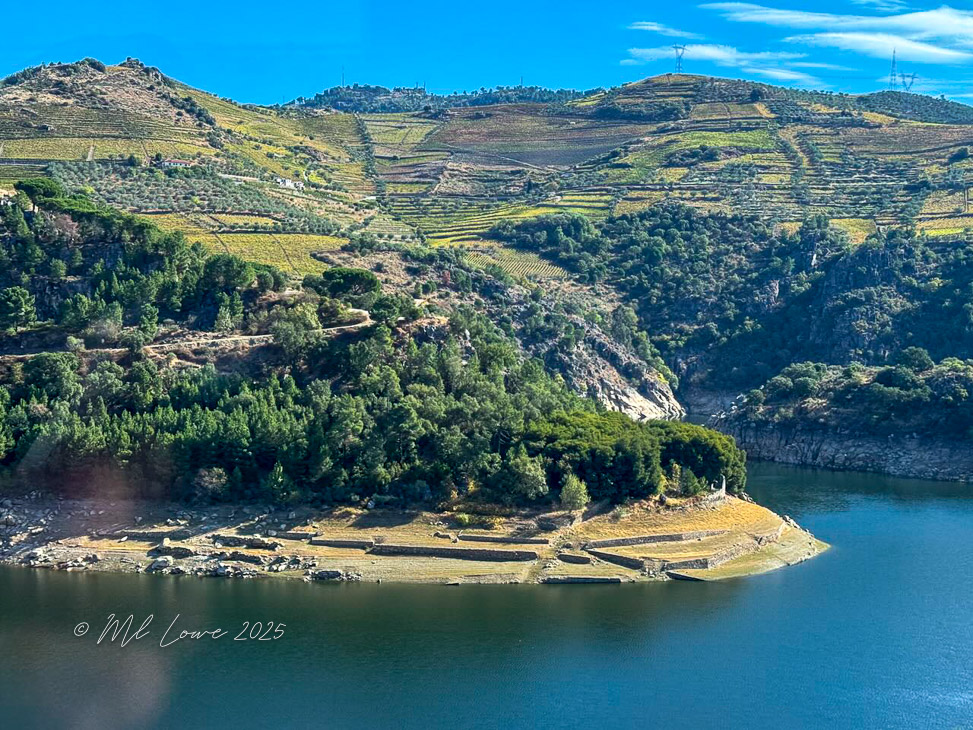
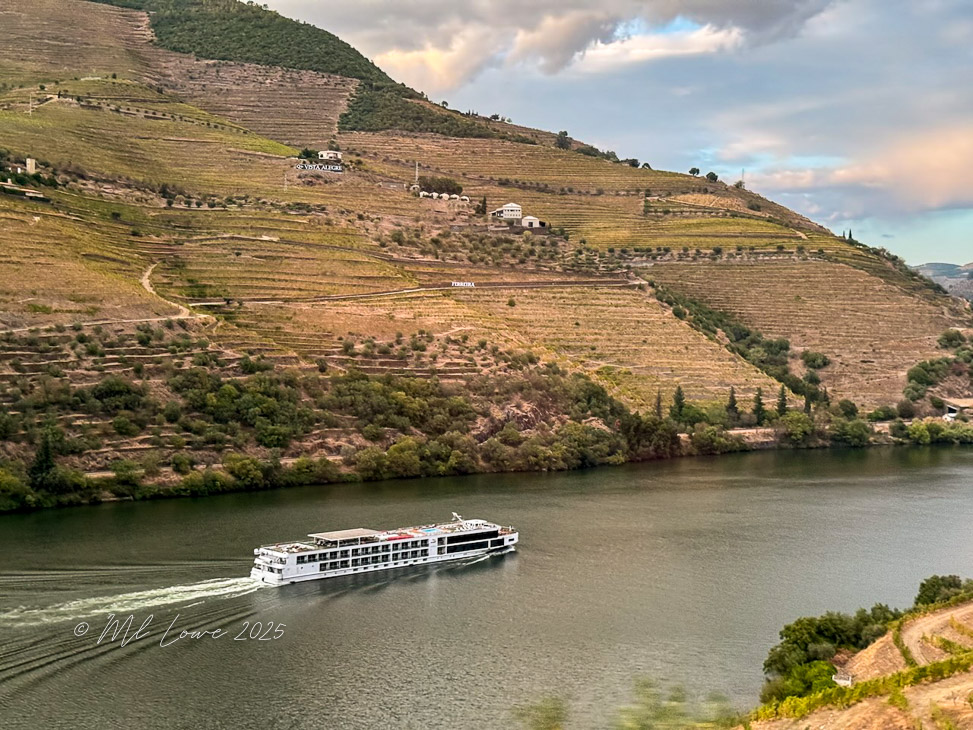
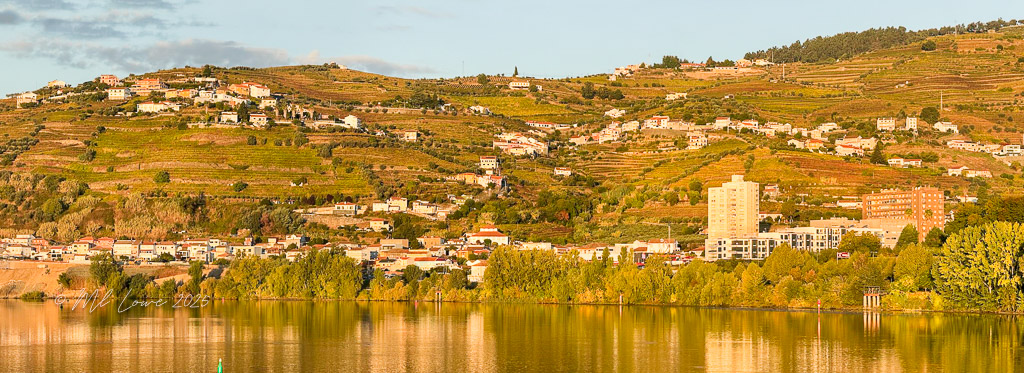
Later on we learned that the horizontal planting of wine grapes is a centuries-old solution to the Douro’s challenging geography. Primarily to create flat planting surfaces on extremely steep hillsides, it prevents soil erosion and allows for cultivation where vines couldn’t otherwise grow.
To this day, the production of port remains a labor of love, as grapes are still generally picked by hand. Having seen the vineyards here, we appreciated how much hard work is involved in harvesting by hand – no harvesting machines can climb these steep hills.
Below is a video where you can hear the tour guide talking about the challenges of harvesting:
As usual I took hundreds of pictures to capture the unparalleled vistas from these different vantage points, and it was really exhilarating. In my opinion it’s the most beautiful of all rivers we’ve traveled, enjoying fantastic views while cruising!
Comments
6 responses to “Discoveries in Portugal”
Looks absolutely perfect as far as ship size and the top deck with seating to enjoy the views in the sun and warmth.
Heeeeeeyyyy! I know those people! 🙂
Love seeing your beautiful photos of our current home country. The Douro Valley truly is spectacular and we need to explore more of it. Seeing it via river cruise is absolutely the best way to do it. Though, that lock still gives me claustrophobia.
It was so great seeing you guys and getting to catch up. Promise, we’ll make the trip next!
Hope you have a lovely Christmas and all the best as we turn the calendar to 2026!
You look familiar somehow.
I think you could also try those rabelo boat ride cruising on the river in Pinhão, so you don’t have to be in a lock 🙂
Have a joyous Christmas too in your adopted home country, you still have a lot to explore and discover there.
It seems like in all your cruising, there is seldom if ever anyone in those on-board swimming pools. Other than the time they had to clear the top deck to pass under a bridge, I think being IN the pool for those passages would’ve been very cool. It also makes me wonder that if my assessment is correct that they’re so lightly used, do you think Viking will eventually take them out? The other thing that stood out to me so starkly (besides the de facto beautiful cruising and scenery) was that even though this ship was the most compact you’ve sailed, they still had a full-sized grand piano wedged in there 🤣
Yup you are absolutely right, on this cruise we did not see anyone dipping there. But I think if it had been warmer, some guest might dip their toes. So I don’t think Viking will take them out as only ships plying in the Duoro River have swimming pools.