
April 23-30
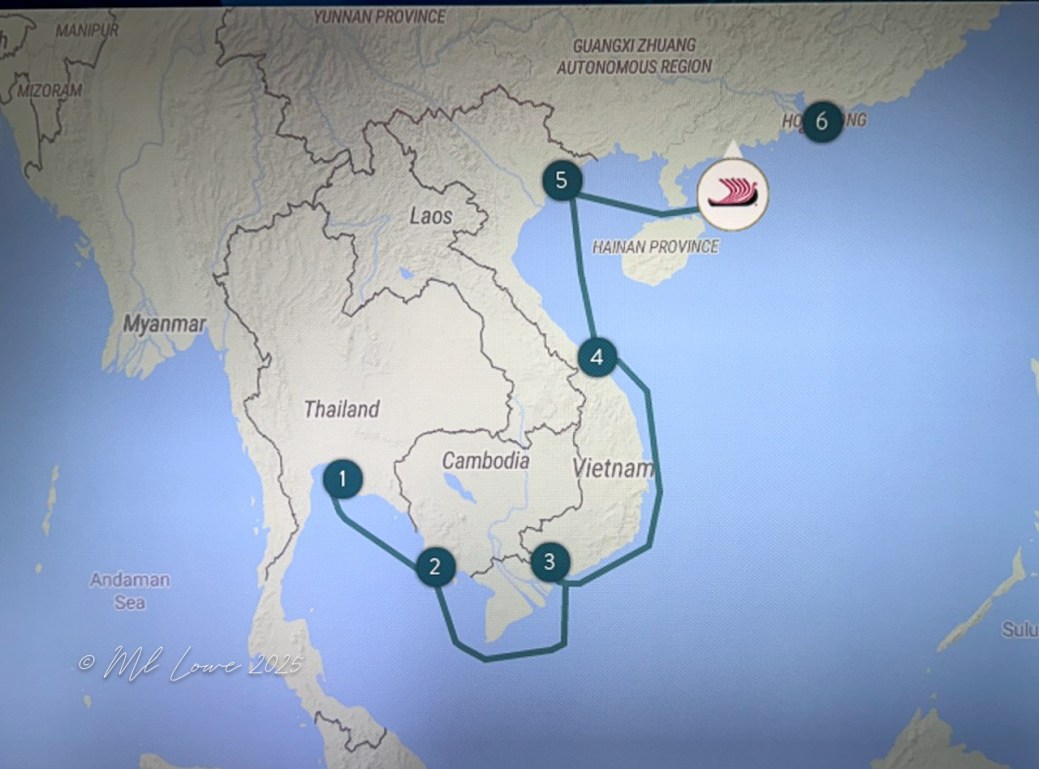
I’m slowly catching up with my postings detailing our recent Southeast Asia Viking cruise. Our first two stops were Thailand and Cambodia, click those links if you missed them.
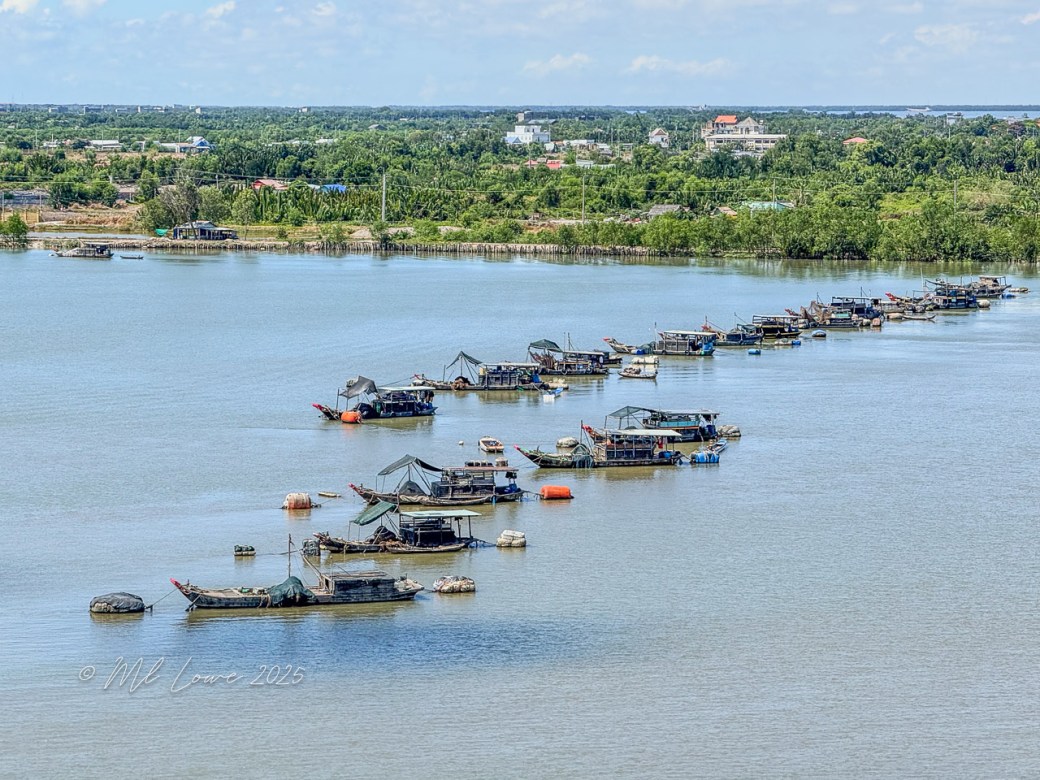
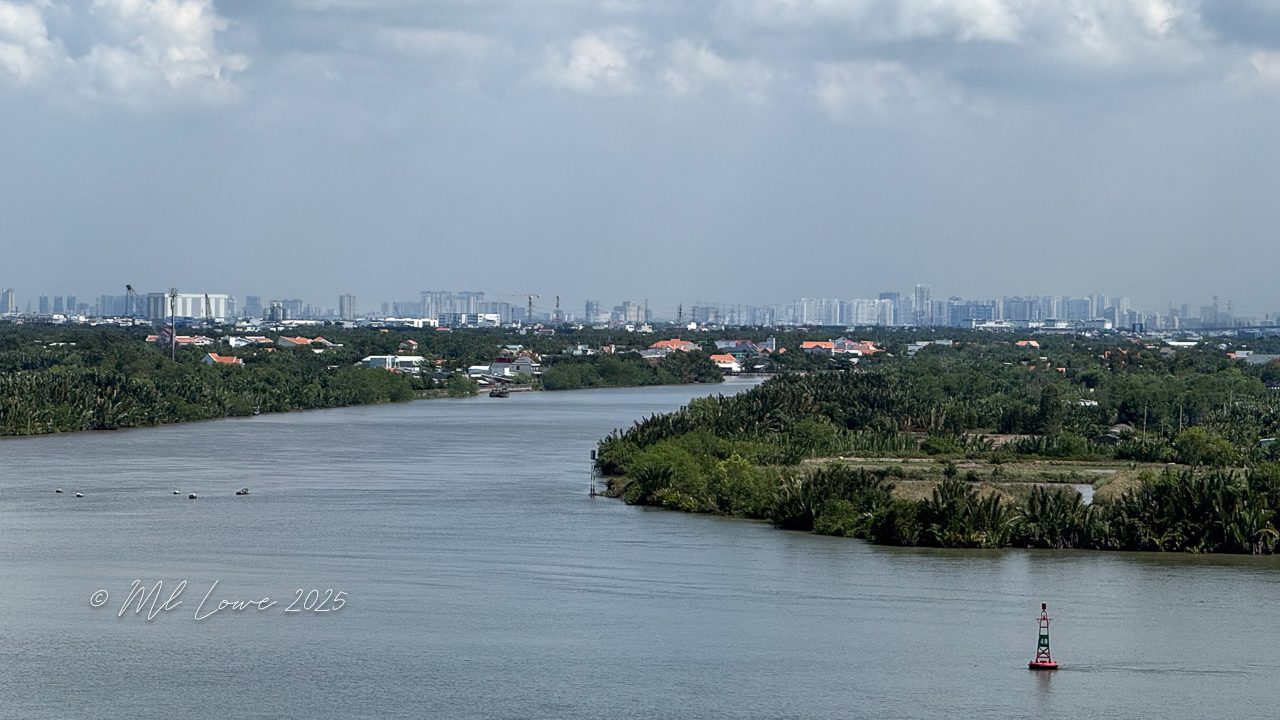
Vietnam is one of those exotic Asian countries that intrigued us to explore not just because of the many good things we heard about it but also because of its place in American history. It was an interesting coincidence that we arrived there on the eve of its 50th anniversary of the fall of Saigon on April 30, 1975. The South was defeated on that day 50 years ago and the war was over, leading to the reunification of North and South Vietnam.
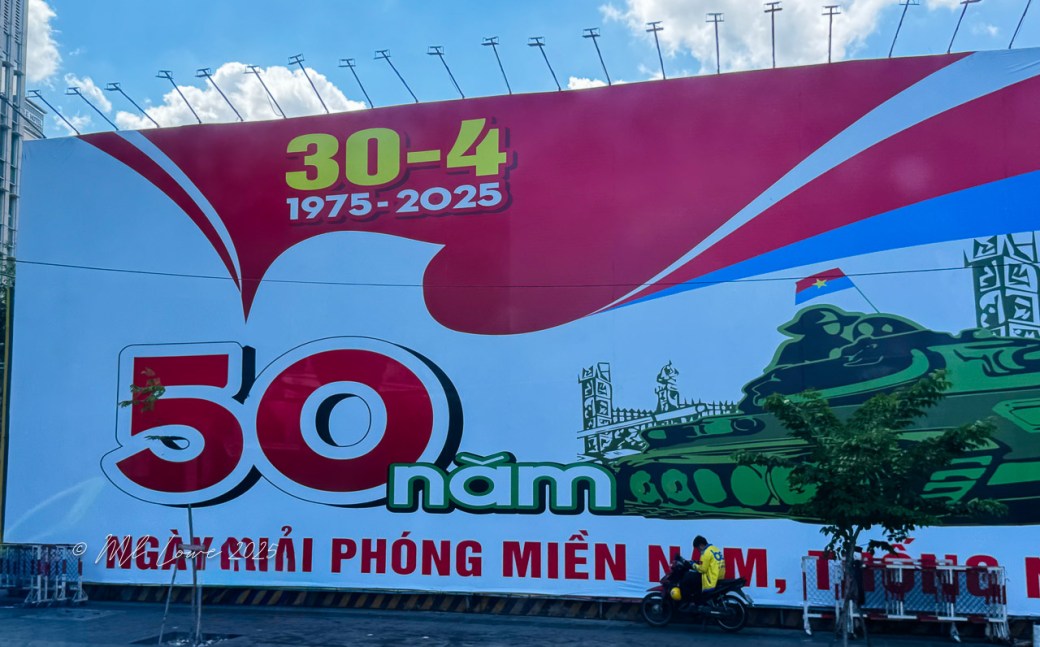
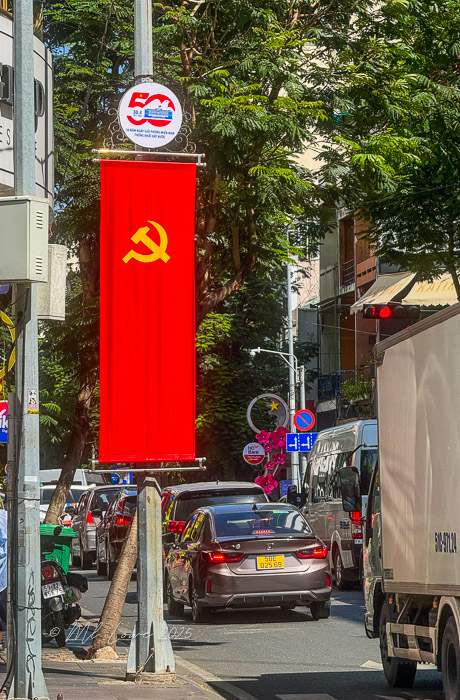
The city was busy preparing for the big day of celebration. The streets and buildings were adorned with the country’s flag and the Communist Party flag:
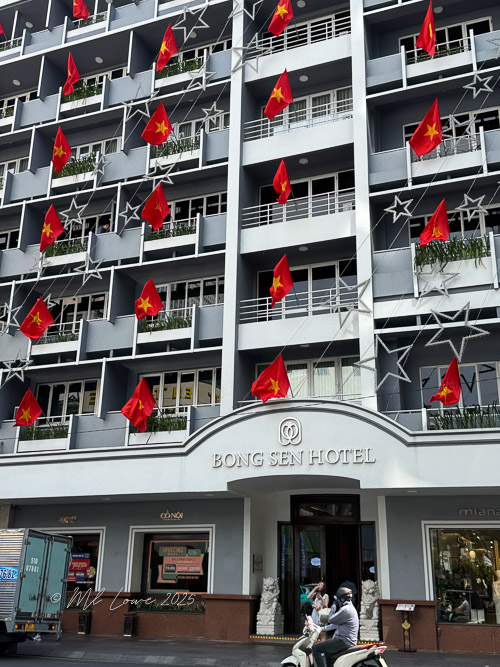
Ho Chi Minh City
Ho Chi Minh City, formerly Saigon, is a blend of French and Vietnamese cultures. The city is lively with skyscrapers and busy streets filled with motor scooters. It was overwhelming and interesting to see so many scooters everywhere especially during rush hour. We also noticed that most people wear long sleeves, masks, and conical hats to shield themselves from the sun.


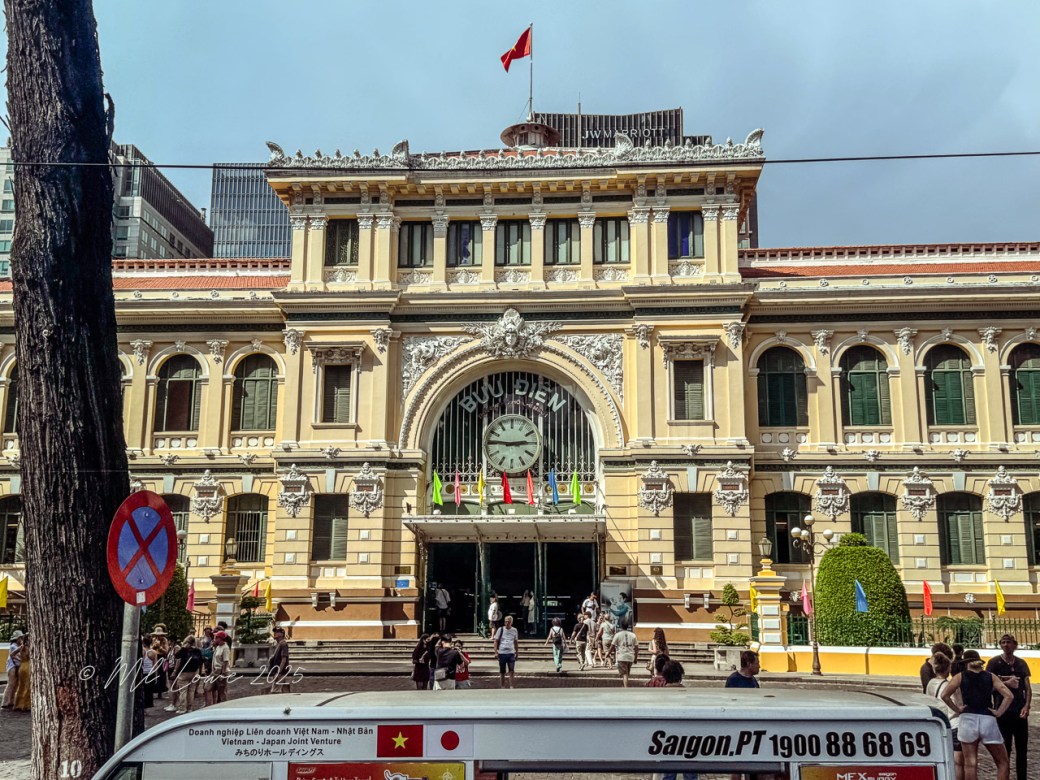
Street scenes of Ho Chi Minh City (HCMC to the locals)
Mekong Delta
One of the Viking excursions we signed up for was a visit exploring the Mekong Delta in southern Vietnam, to get a deep insight into the traditional villages and floating markets. What we did not like very much was the 2-hour bus ride each way between Ho Chi Minh City and the Delta. End of rant 😉
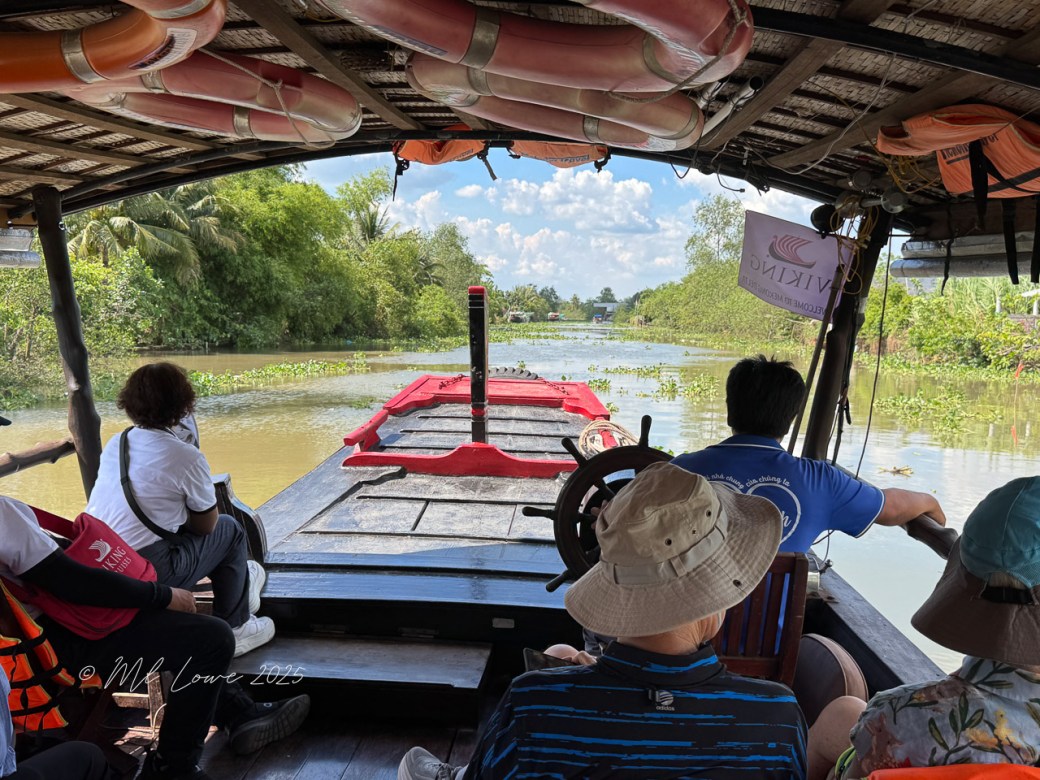
The Mekong Delta is a vast maze of rivers, swamps and islands. It’s famous for its beautiful natural landscape and cultural heritage, with the Mekong River serving as a major water source for people there. Our excursion took us various places where hand-made pottery is created, and then watched the process of making rice paper, snake oil and a cultural presentation. Finally, we were served a traditional Vietnamese lunch with a local lady showing us how to assemble and roll a Vietnamese spring roll.
After lunch, Steve took a short ride on a sampan that cruised through a mangrove forest. I didn’t go along because it was so hot and humid! Click on the images below showing our experiences with Vietnamese local life in the Mekong Delta.
Da Nang
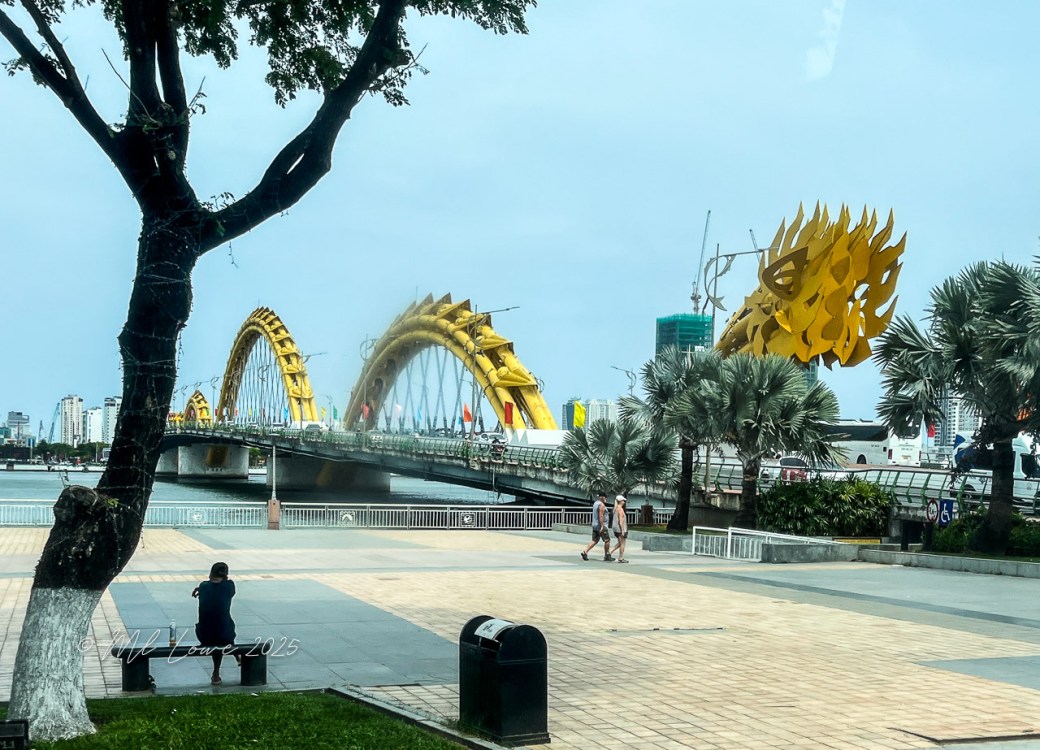
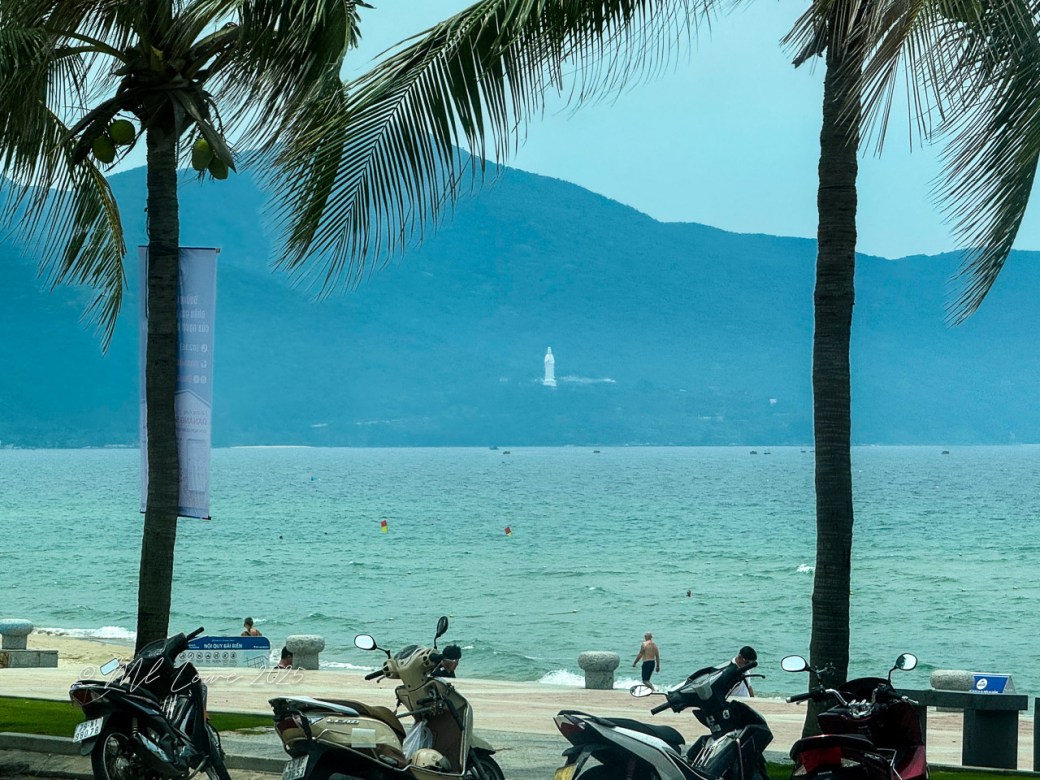
Our second port stop in Vietnam was at Da Nang, a bustling cultural center nestled along Vietnam’s central coastline, midway between Hanoi and Ho Chi Minh City. It is known for its natural gems (from marble mountain), ancient sites, and white sand beaches. Our excursion took us to a museum, a spiritual landmark and China Beach.

Linh Ung Pagoda, one of Da Nang’s iconic spiritual landmarks, covers 49 acres and holds many buildings. It has a 219′ high statue of Lady Buddha that overlooks the city and sea, making it the tallest Buddha in Vietnam. Vietnamese pagodas blend sacred architecture with natural beauty, and their architecture has their own distinct characteristics, often influenced by Chinese and Hindu-Buddhist traditions. It was so packed with tourists that our bus waited for me for fifteen minutes because the line at the lady’s room was very long! They thought I was lost in the crowd.
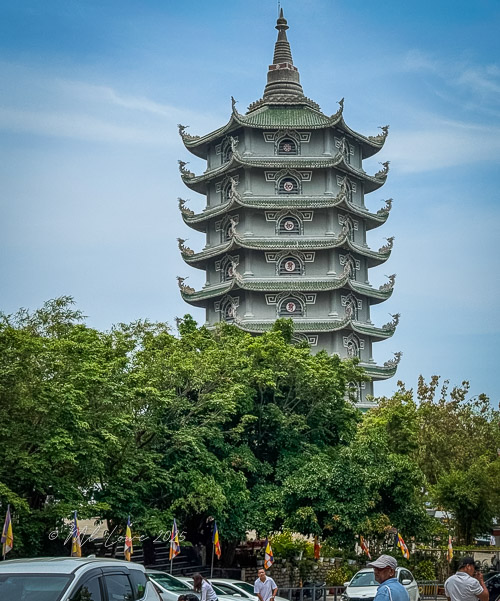

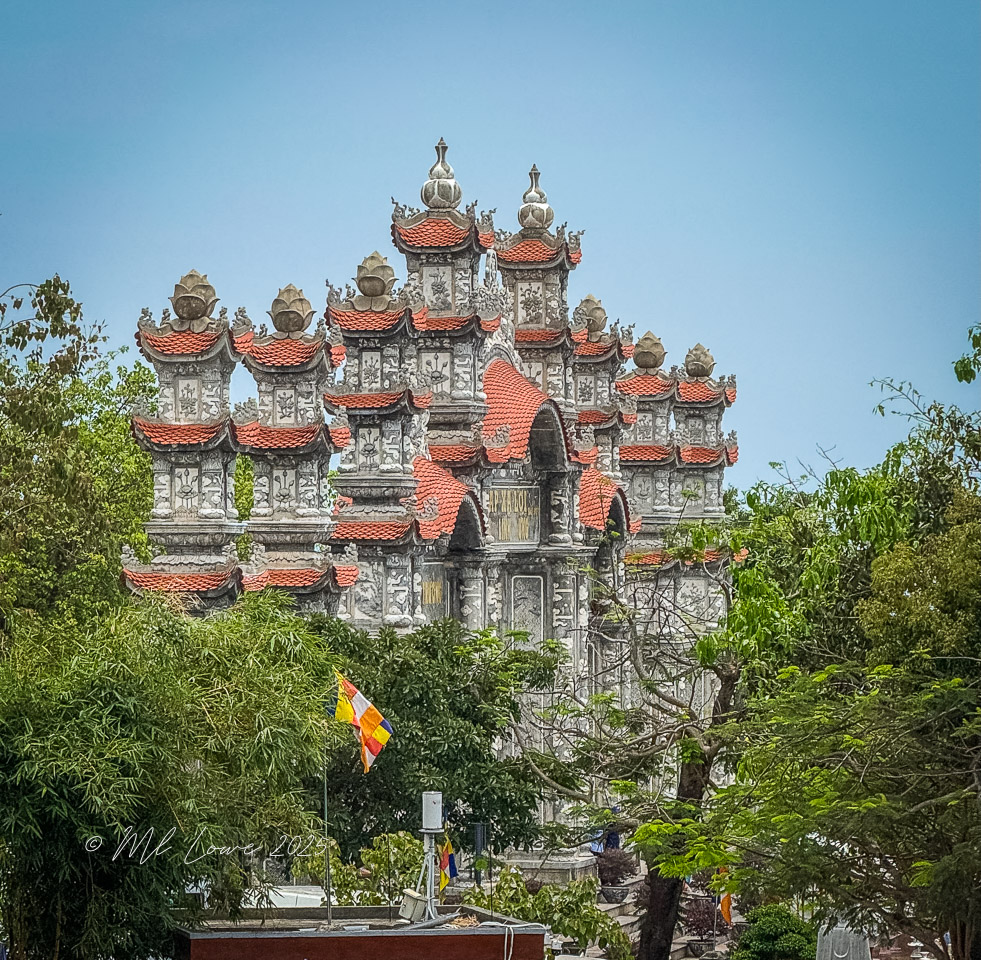

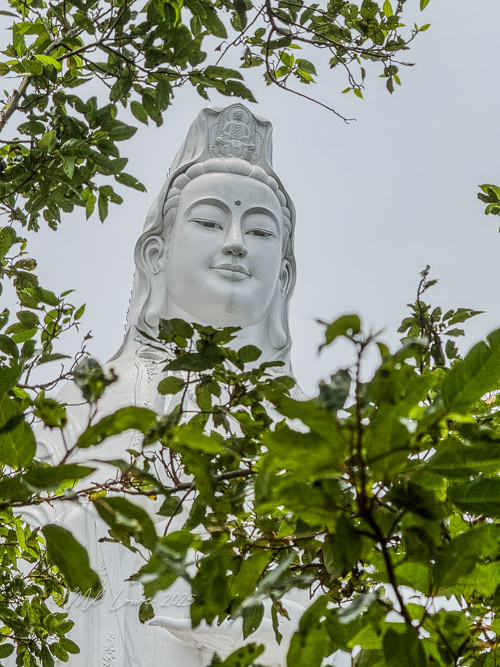
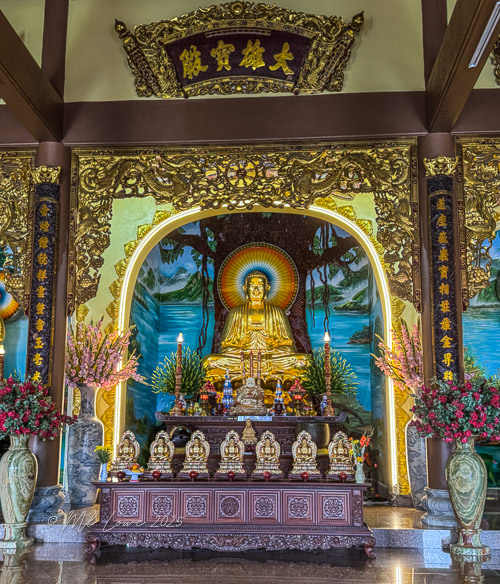
The architecture of pagodas in Thailand, Cambodia and Vietnam are distinct from each other as you may have seen from my previous posts.
The Museum of Cham Sculpture has the world’s largest and most preeminent collection of Cham sculpture and artistic works from the 7th-15th century. The sculptures, inscriptions and architectural remnants discovered within Đà Nẵng show that the Champa Kingdom flourished in this area between the 9th and 13th centuries. It was fascinating to hear our tour guide telling the stories of each piece, with beautiful details and its unique styles that reflect Cham culture and beliefs.
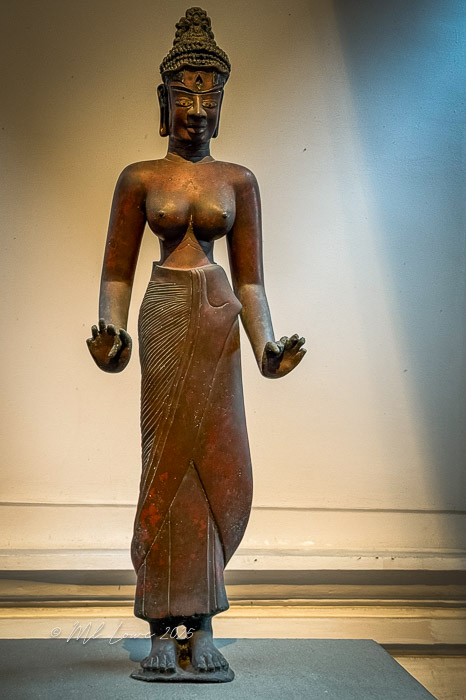

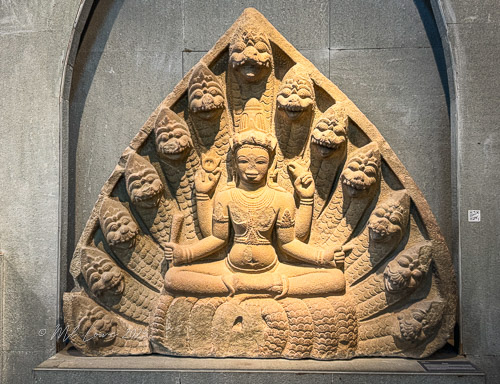
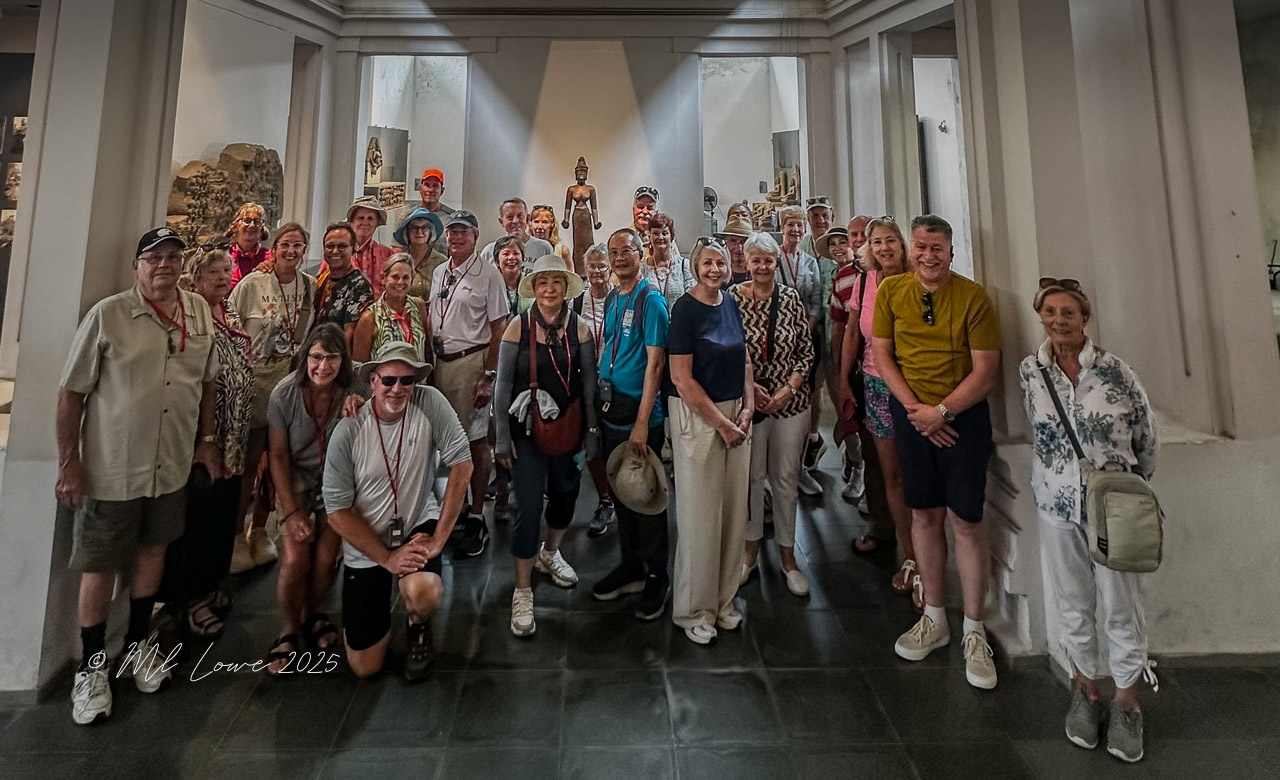
Before going back to the ship we had time to relax at China Beach and chat with fellow cruisers:
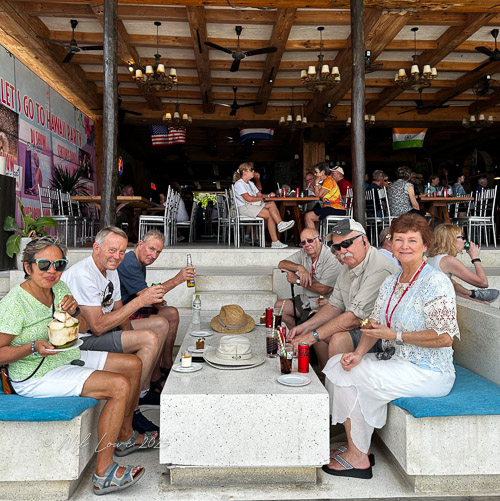
a while ago?
Ha Long Bay
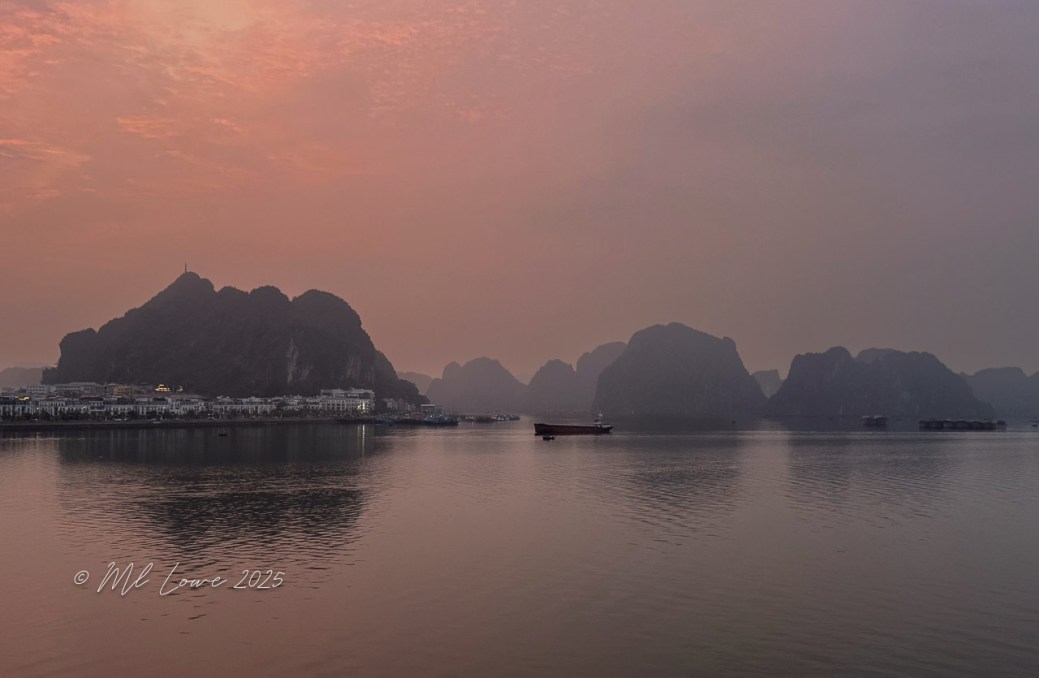
Our third and final port stop in Vietnam was at Ha Long Bay. It’s known for the thousands of towering limestone islands (karst) rising up from the emerald waters topped by rain forests. There are more than 2,000 islands of limestone that dot the seascape here, and this 100-mile stretch of islands is designated as a UNESCO World Heritage Site and we can see why.


Steve and I explored the Karst Islands through separate excursions. I went on a boat ride and he took a seaplane to see the islands from a different perspective:
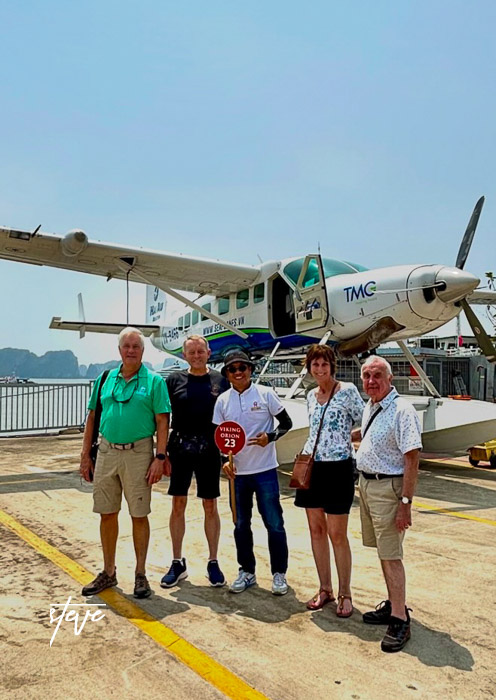

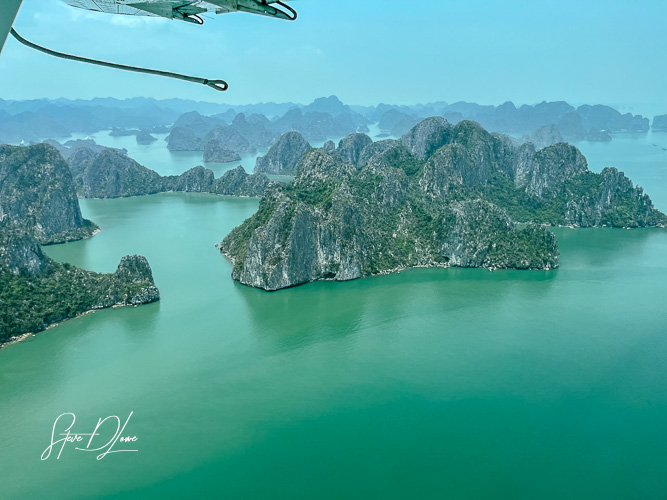
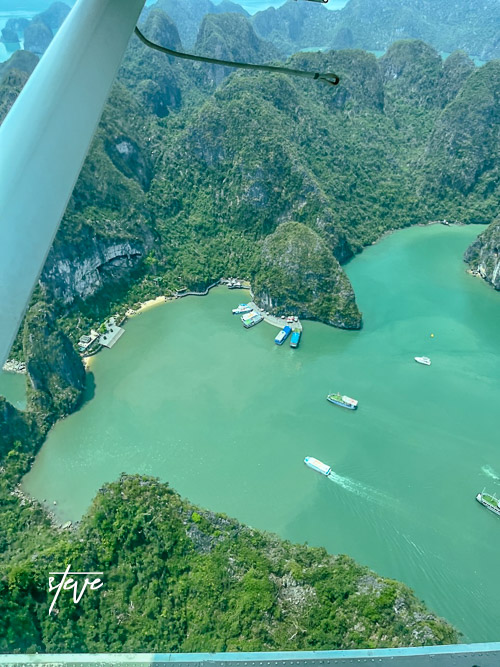
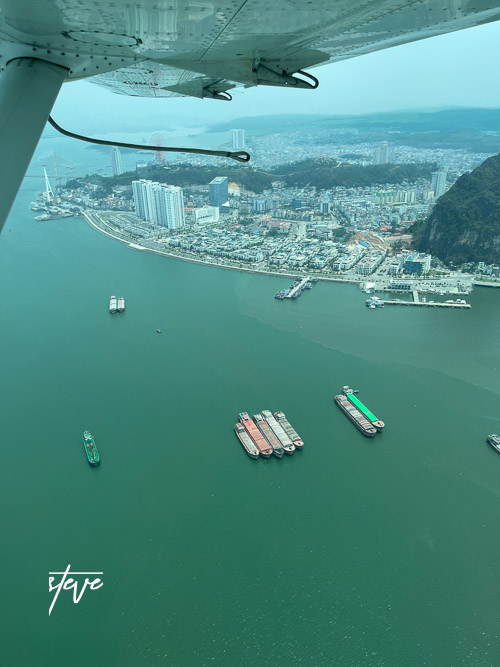
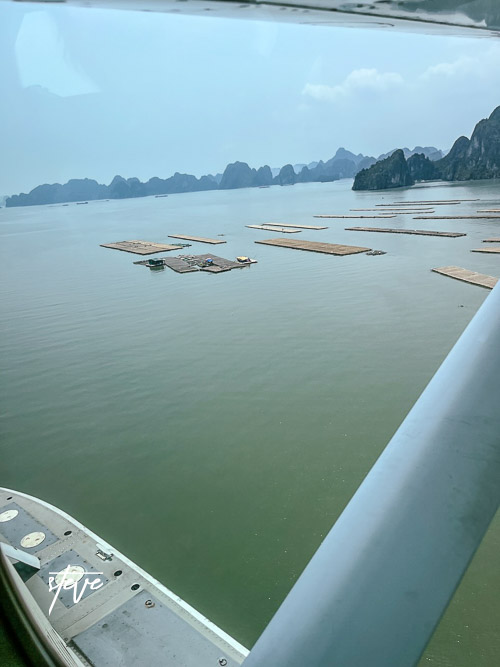
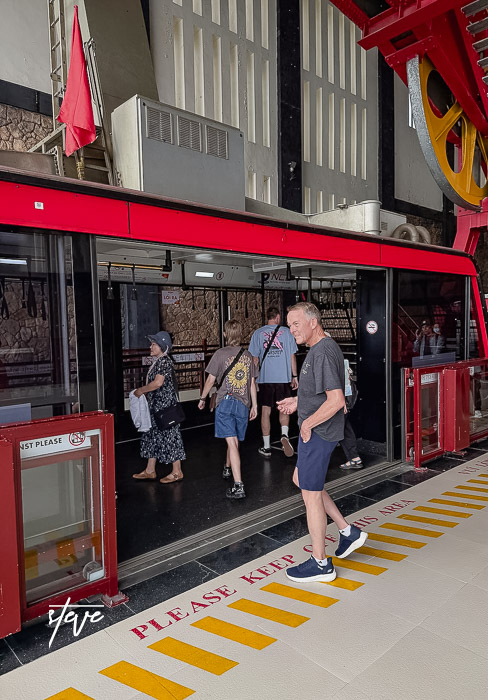
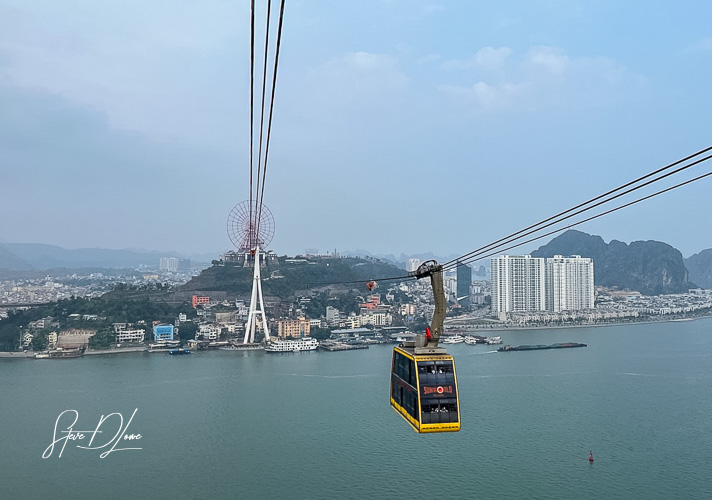
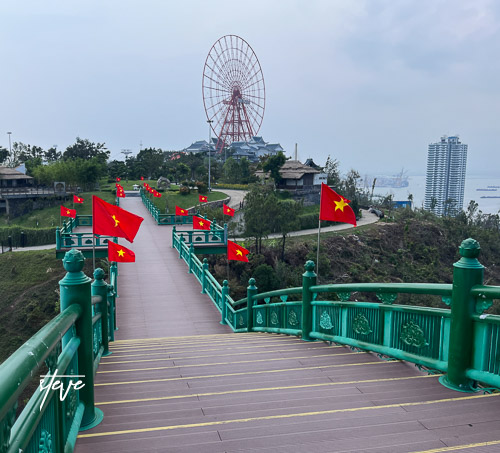
After his flight, he and his new friend Kevin hopped on the Queen Cable Car to the Ba Deo Hill Coastal Amusement Park. It has the current distinction of having the highest cable car tower (619′) and the largest cable car capacity (230 people) on earth. Can you tell he likes being up in the air?


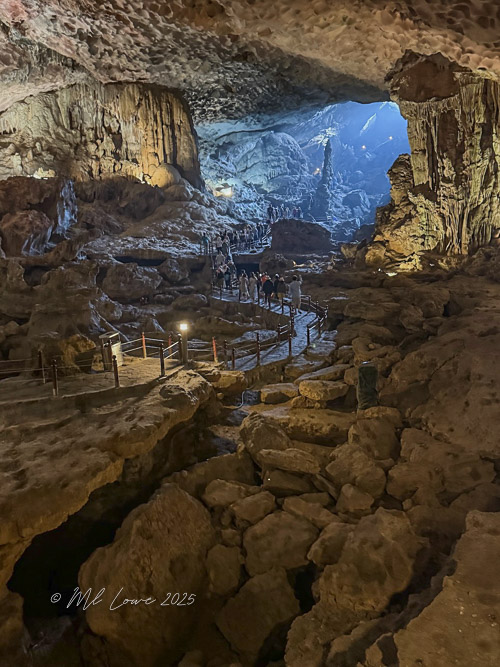
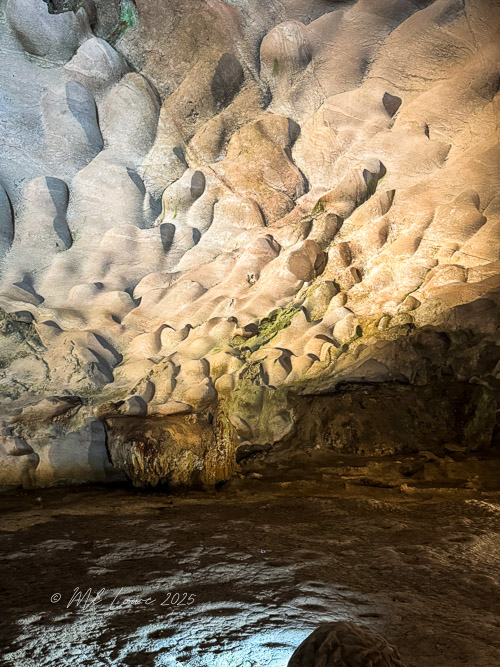
While he was up there checking out the islands below and their shiny emerald waters, I was on a boat excursion, cruising through the islands. Our first stop? The biggest cave in Ha Long Bay, the Sung Sot Cave also known as Surprise Cave. It is located on one of the islands that jut out of the water. I would say I got my first workout of the day ascending a very steep staircase. Then once inside the cave, a half-mile walk within the chamber, then another 275 steps to get up to the exit. Finally there were 250 steps back down to the dock. Not only was it tough, it was a hot and humid day!


My next stop was at Ti Top, a small island named after after Gherman Titov, a Russian astronaut who visited the island with President Ho Chi Minh in 1962. During their visit the president named the island after Titov to honor the friendship between Vietnam and Russia.


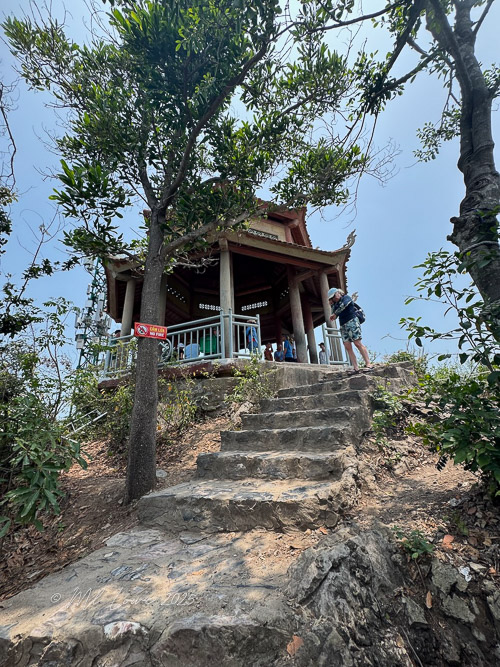
When our guide said we could hike up to the top, I took it on without hesitation. It was steep and strenuous, but the panoramic views of Ha Long Bay from the summit made the climb worth the huffin and puffin with several breaks along the way.
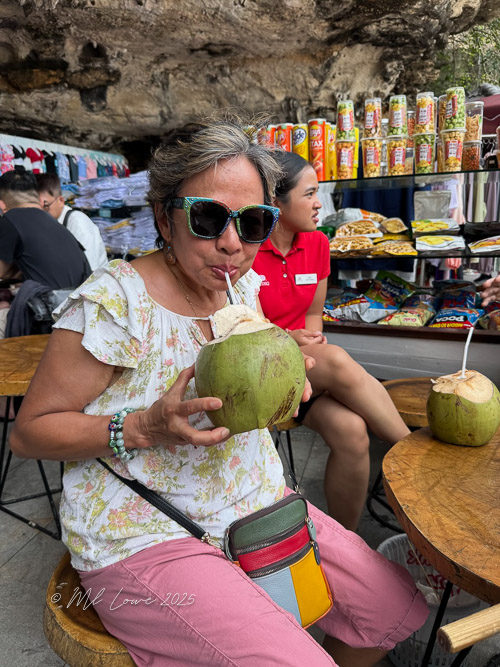
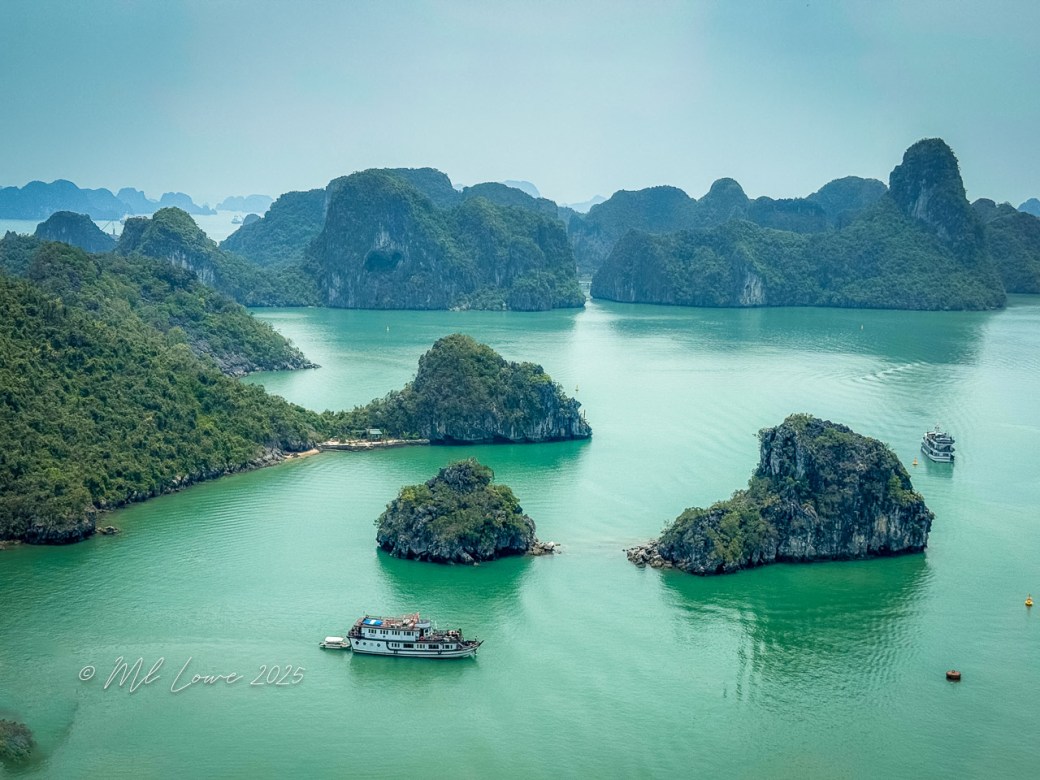
Back at the ship, we were ready for for a taste of Vietnam at the World Cafe, but I forgot to take pictures. I did capture our Surf and Turf event at the Aquavet Terrace on another day:
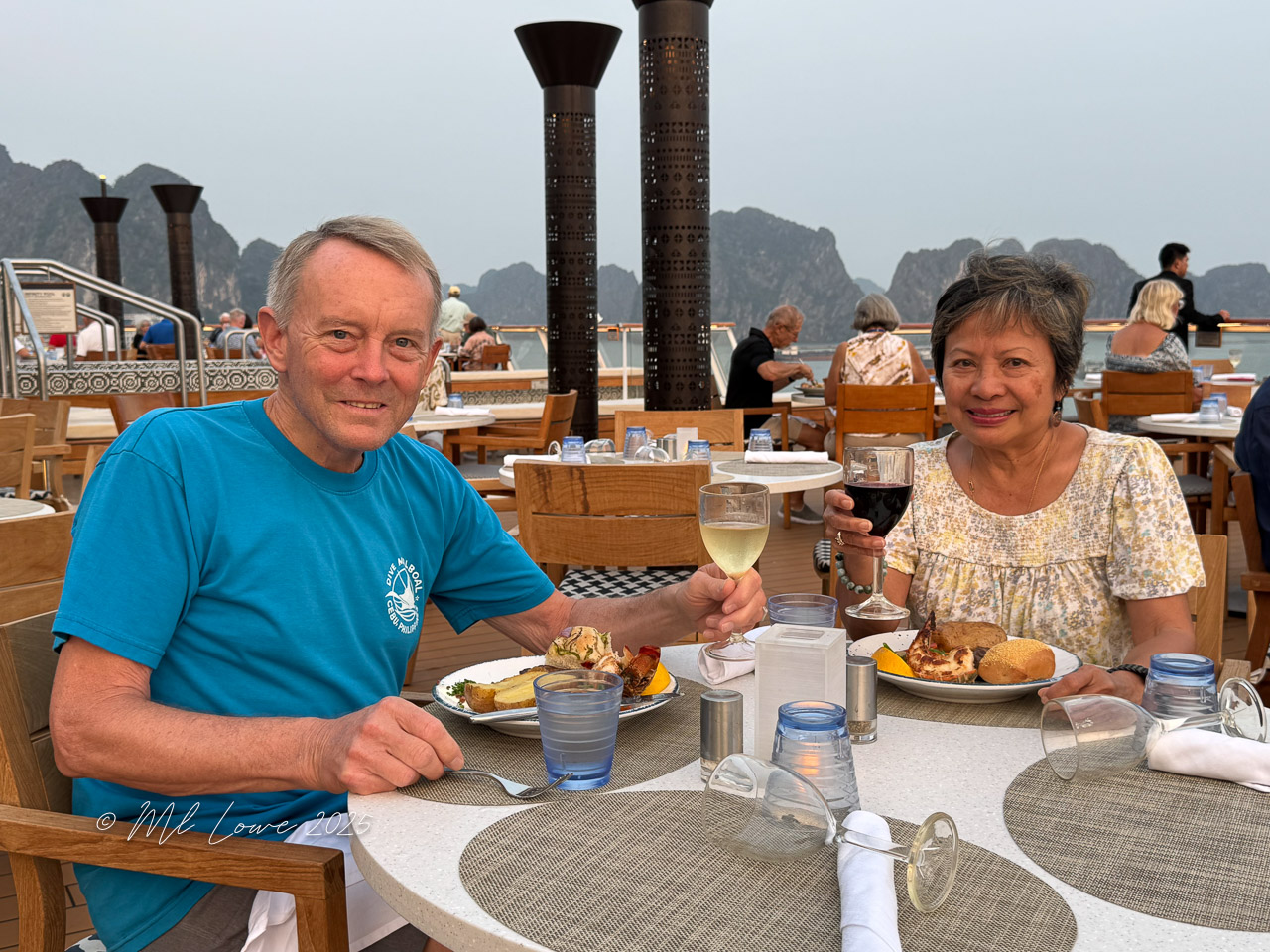
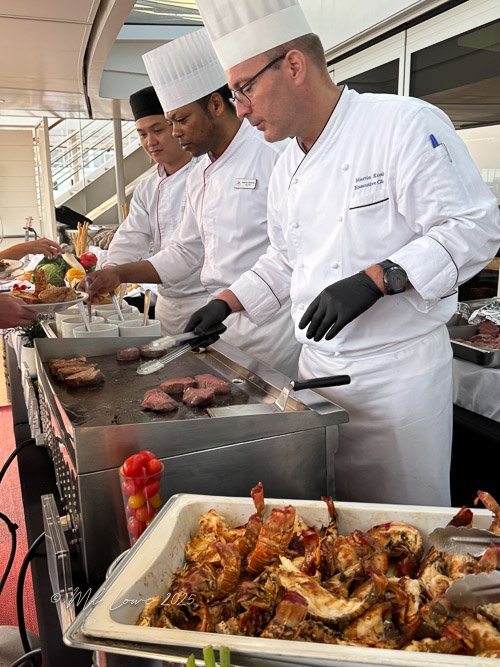
Our three port stops in Vietnam offered different experiences. They provided a diverse range of attractions including historical sites, natural beauty and vibrant cities. It was also hot, humid and a bit crowded. Because we were on a cruise our exploration was limited to places near the ports. If we were to return for a visit we would definitely revisit Da Nang.
=====================
Next up: Far Eastern Horizon – Hong Kong
Comments
4 responses to “Postcards from Southeast Asia – Vietnam”
My first thought was, “Wow…it’s been 50 years since the fall of Saigon?!” I remember that. 😳 I’ve always heard that Vietnam is beautiful, and your photos certainly show that to be true. The karst islands are gorgeous! I would have chosen the boat ride, too. And I would have hiked to the top for the view with you, but it looked like a tough hike! By the way, I had no idea that snake oil is a real thing! Is it supposed to have medicinal properties?
So much to see!. What an experience. You’re both so brave. I think I like the tour down below rather than from above. ML, you certainly deserved that drink!
I think if I were to ever visit Vietnam, I would focus on the natural beauty and avoid the cities. The cities are just too overwhelming – and I am a city person at heart. The nature is fabulous though, and well worth the effort to see. I particularly loved the views from above!
I think Vietnam is my favorite of your tour so far. I’ve always heard that it’s so beautiful, and your photos and narrative support that. Absolutely breathtaking!