It takes about two days to reach the Antarctic Peninsula from South Georgia Island by sea.
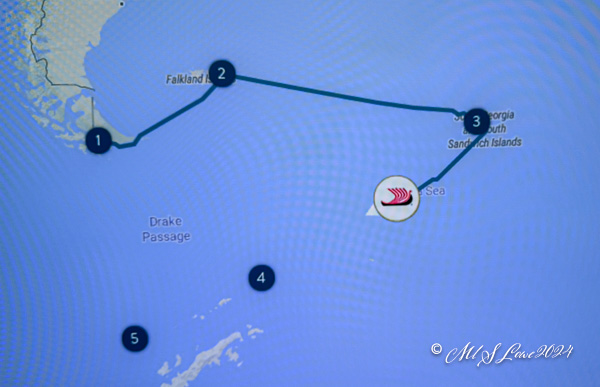
While cruising, we came across the largest iceberg in the world, and our Captain lingered for a couple of hours as we viewed it close-up. Later, we watched a weather balloon launch and joined tours of the Hangar, Galley, and Bridge among other activities. It’s accurate to say we stayed busy during our sea days!
Megasize Iceberg A23a
In my previous post I alluded to a possible collision that could disrupt the lives of the penguins and seals at South Georgia Island. It could happen. A23a is currently drifting northeast towards South Georgia Island. As of January 2025, its area is about 1,400 sq. miles, which makes it the current largest iceberg on earth. Click here for the latest news about A23a.

We had heard about this iceberg during a lecture on the ship and were thrilled when our Captain announced we were approaching it! This was Viking’s Christmas gift to us as we sailed closer. The ship lingered for a couple of hours so we could enjoy viewing and photographing it. We watched the scientists doing their work, including sending a drone over to investigate those openings along its face. The iceberg is slightly smaller than Rhode Island and more than twice the size of London. It’s so huge that my short video couldn’t take it all in:
Scientists are closely monitoring its movement due to concerns that it may collide with South Georgia Island, potentially threatening penguin and seal populations by blocking their access to feeding grounds. Not that there’s any way it can be stopped 🙁
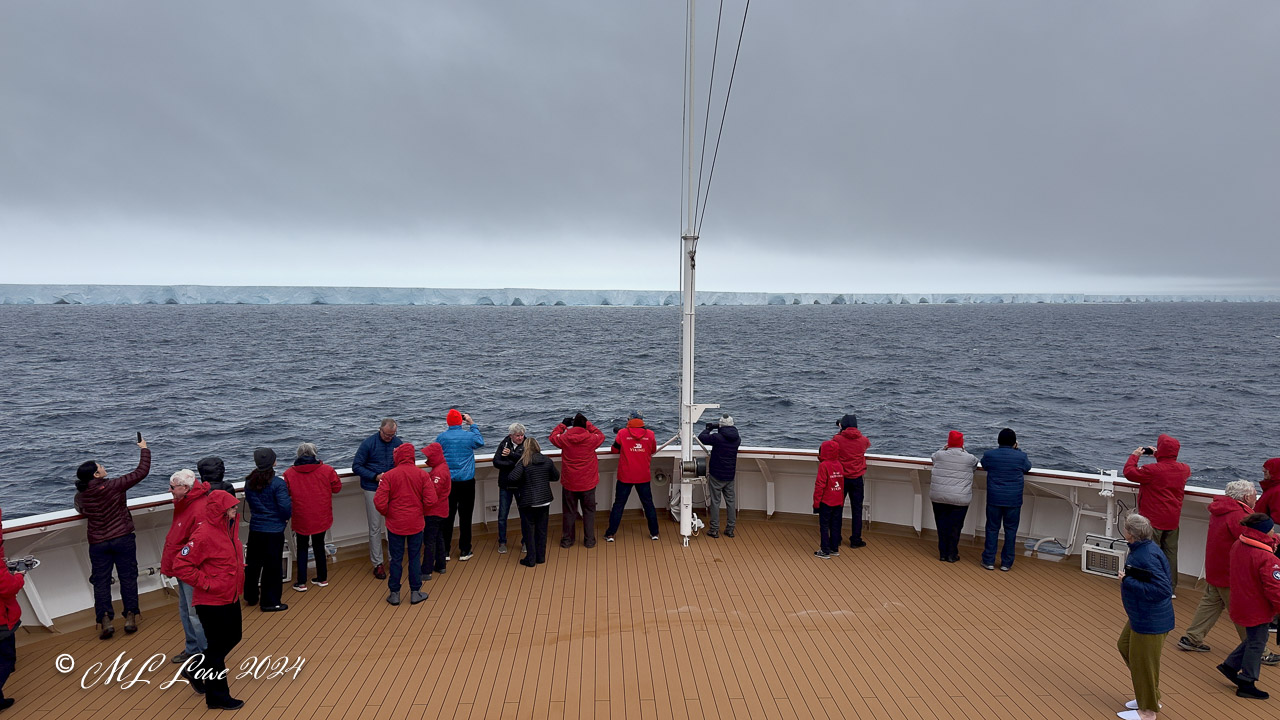

After first calving, or breaking off, from Antarctica’s Filchner Ice Shelf in 1986, the iceberg spent some 30 years grounded on the seafloor of the Weddell Sea. In 2020, A23a broke free and began its slow journey north, and as of January 2025 it’s 173 miles from South Georgia and heading that way.
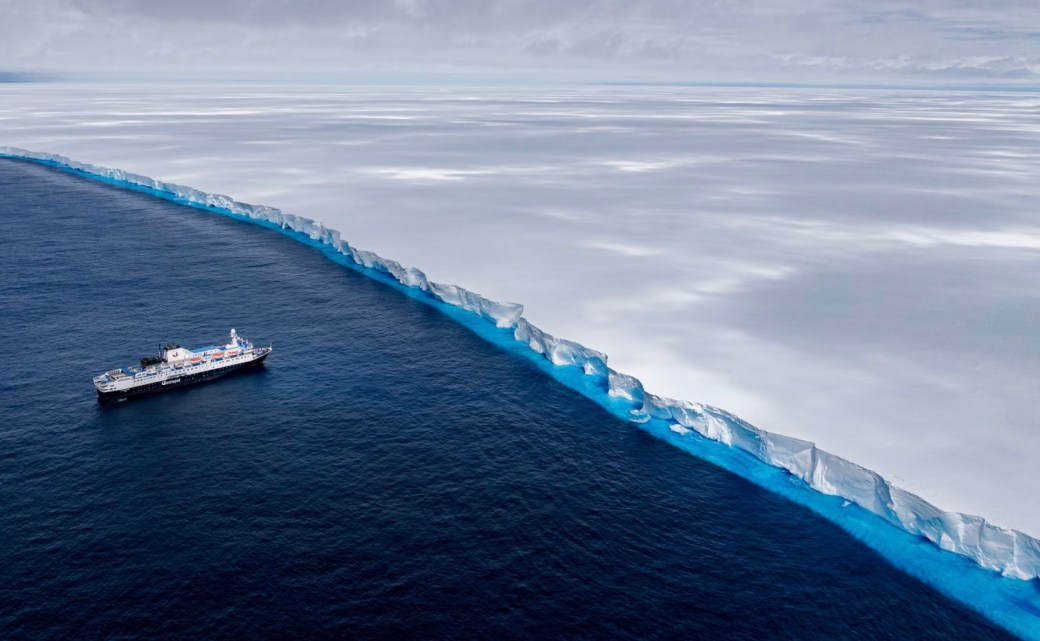
Seeing its size from above, can you imagine that slamming into South Georgia Island? Fingers crossed it veers away or will melt or break up along the way. But if it breaks up the result could become dangerous for ships navigating the treacherous Southern Ocean.
Weather balloon launch
Both Viking Octantis (our ship) and its sister ship Polaris are the first civilian ships to be named official launch stations by the US National Weather Service. On every sailing, they launch two weather balloons as part of scientific studies with the National Oceanic and Atmospheric Administration (NOAA).


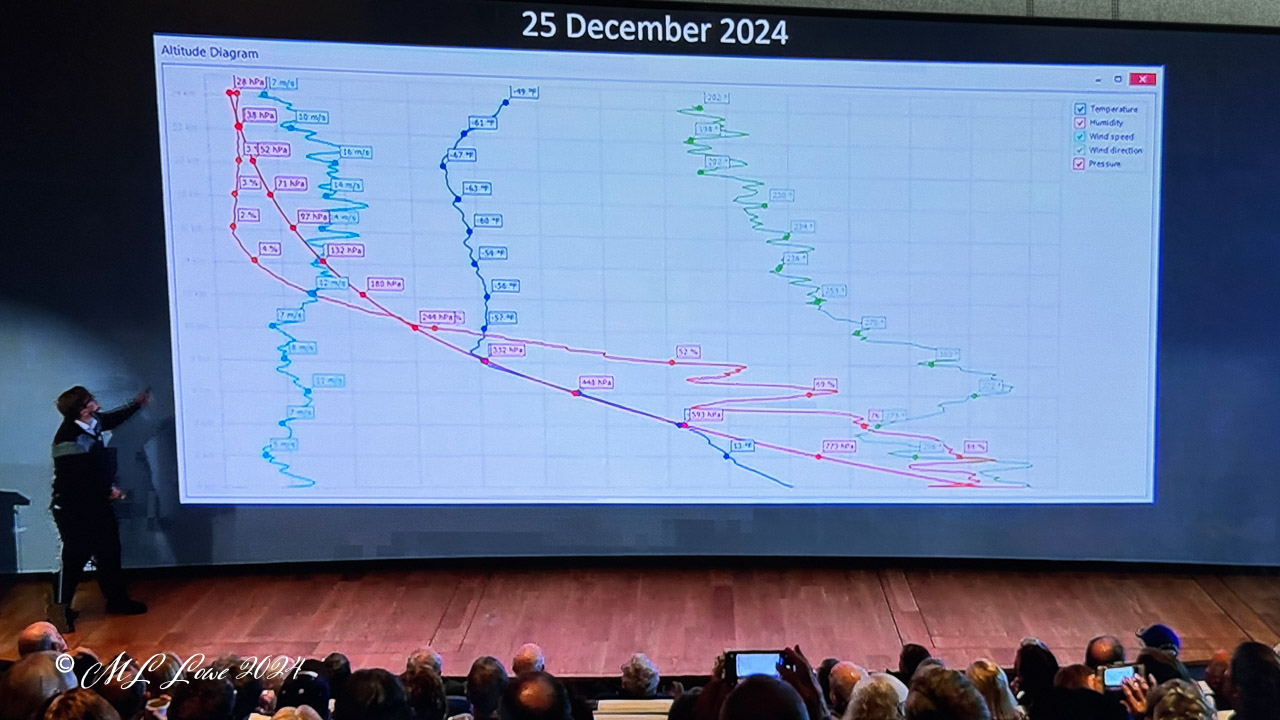
The balloon itself is made of biodegradable latex, and the radiosonde which hangs below collects the data which is sent back to the ship in real time. Flights last around 2 ½ hours before the balloon “pops” at altitudes often reaching over 18 miles (30 km) high.
These weather balloons, which are often launched in coordination with many others around the world, integrate their data with other data gathered via radar and satellites to give us the accurate weather forecasting we enjoy today.
As I mentioned in my previous post, this expedition ship holds a genuine floating laboratory dedicated to scientific research. After the balloon launched, the one-day-only scientists like me tried to comprehend the data flowing in:
The Hangar
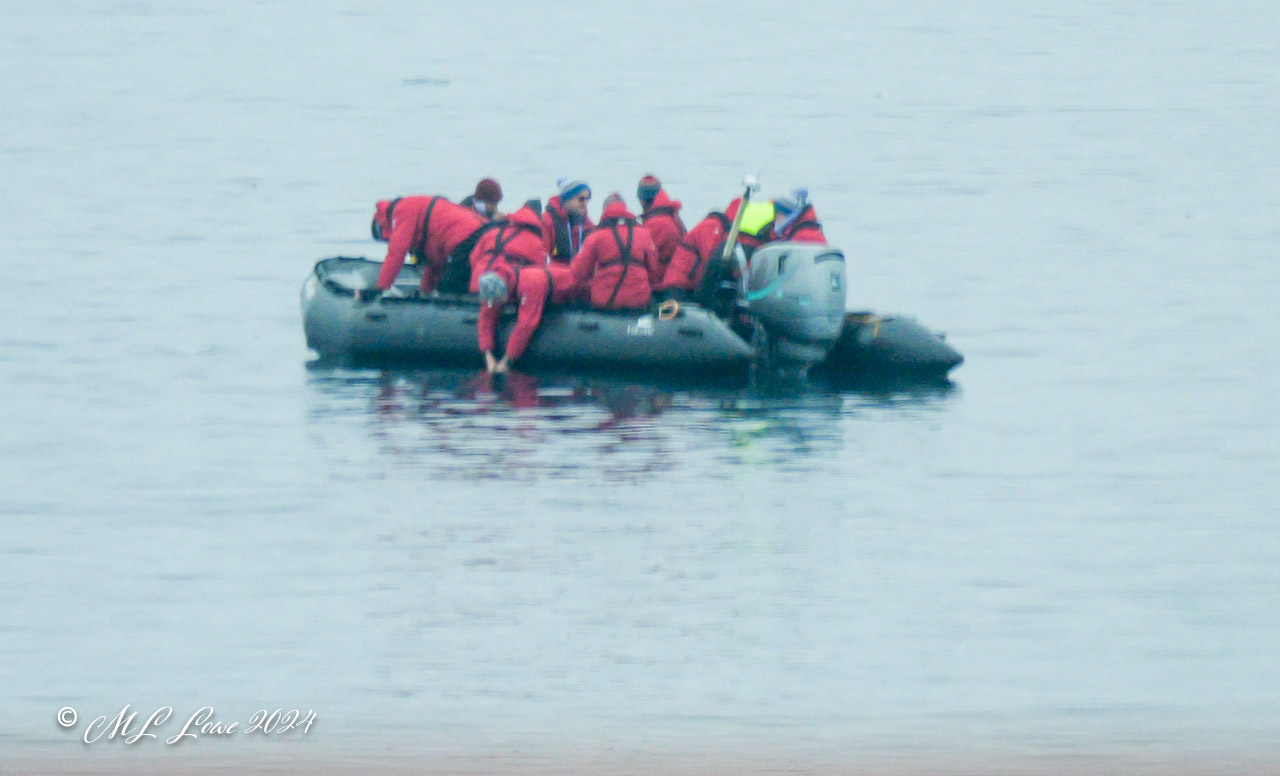
Viking features the first internal marina, called The Hangar, in the aft ship bay. It houses 2 high speed Special Operations Boats (SOBs), 17 Zodiacs, and 18 tandem kayaks. It was exciting to view up-close all of the toys we had experienced, except one.
The 6-seater submarine expedition could have completed our Antarctic adventure with a preview into the deep, but the steep price for a very short dive discouraged us and besides we had previously done a submarine dive in Hawaii. The very cool high-tech yellow submarines are named “John” and “George”! But the feedback we got from those who had dived was that overall there was little to see at the bottom.
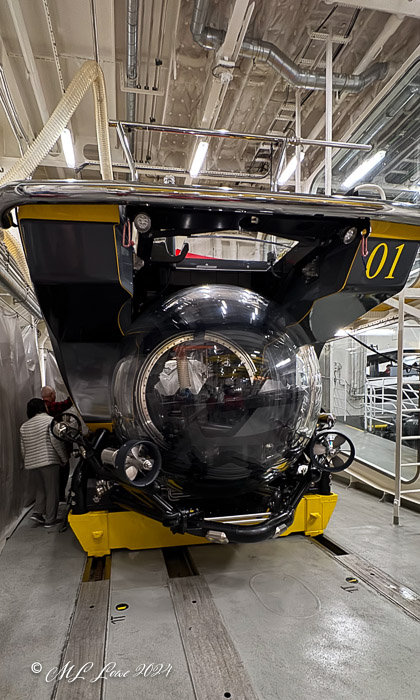
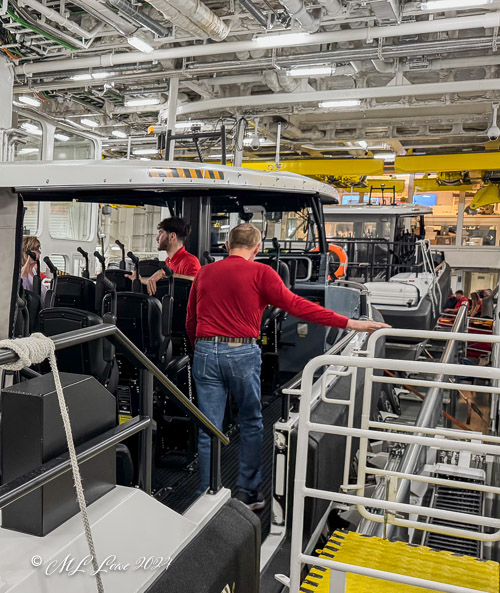

These toys were piloted by licensed, experienced, and safety-conscious guides who were knowledgeable about the continent and the life that abounds here. We felt safe at all times.
The Aula
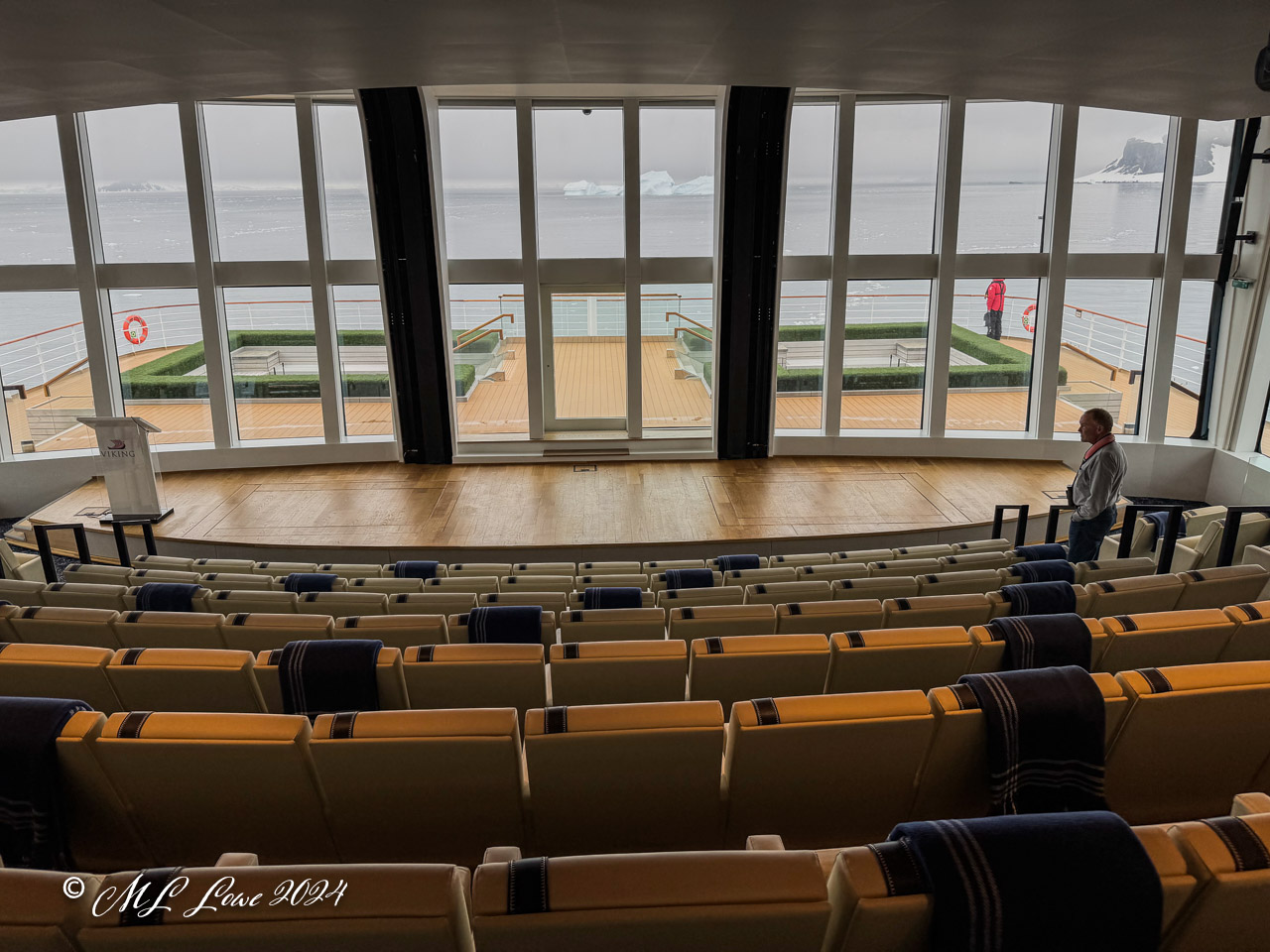
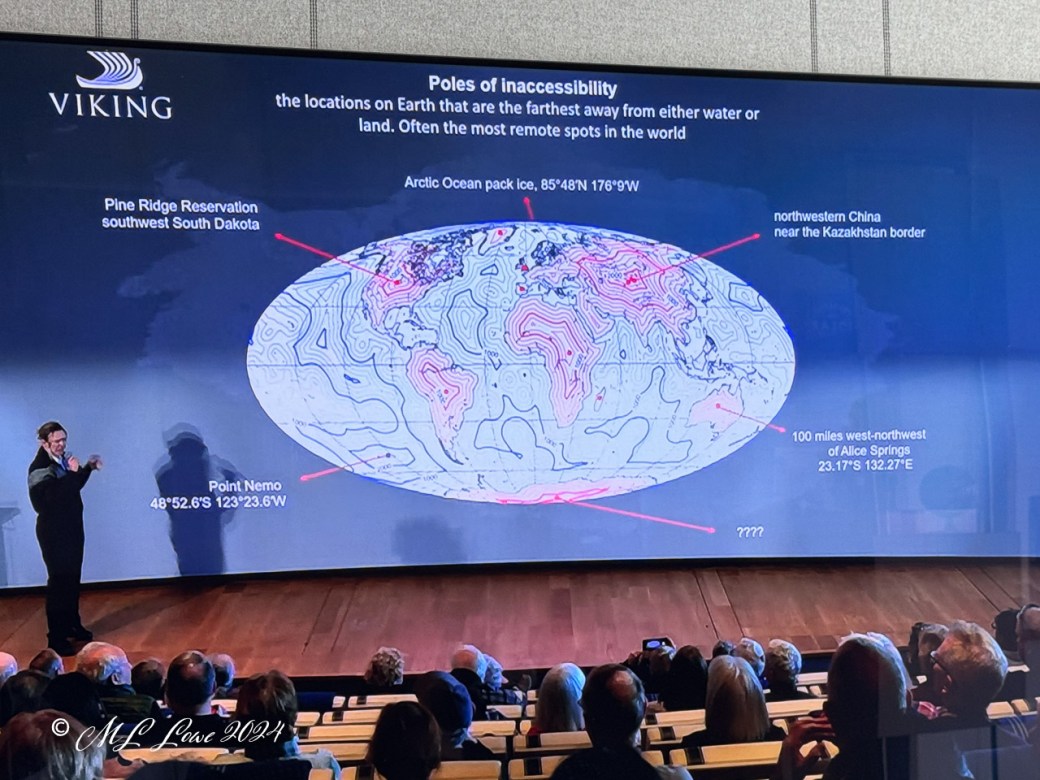
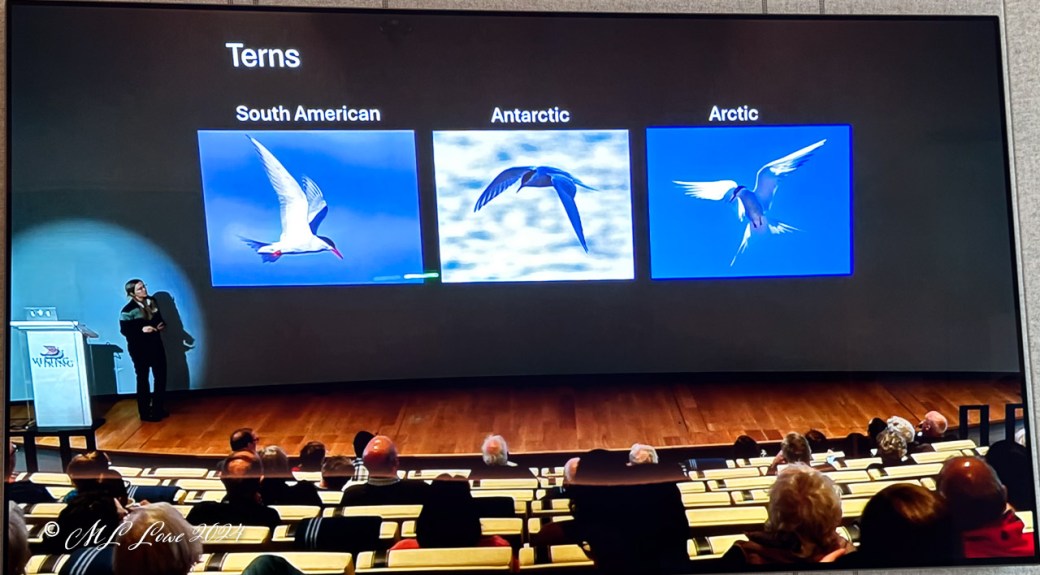
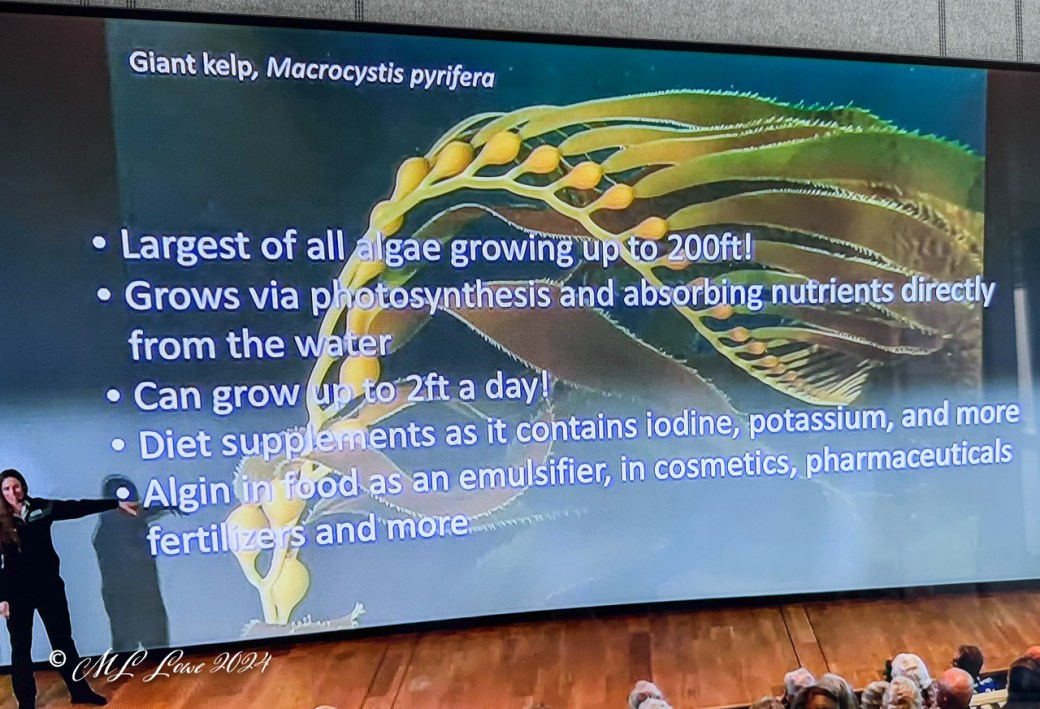
During this expedition cruise, not only did we enjoy stunning scenery and varied wildlife, but we also learned so much. At the end of each day we gathered at The Aula auditorium to hear Viking resident scientists present enriching lectures on the flora and fauna of the area, including ornithology, marine biology, climate change and oceanography. Tidbits such as the successful eradication of rats from South Georgia Island (fascinating), and that the Giant Kelp is the world’s largest algae at 200′ long. So many amazing and interesting facts about the Antarctic continent – believe me, there’s nothing boring about this place!
Just a few more samples of what we are learned while on board:


The Science Lab
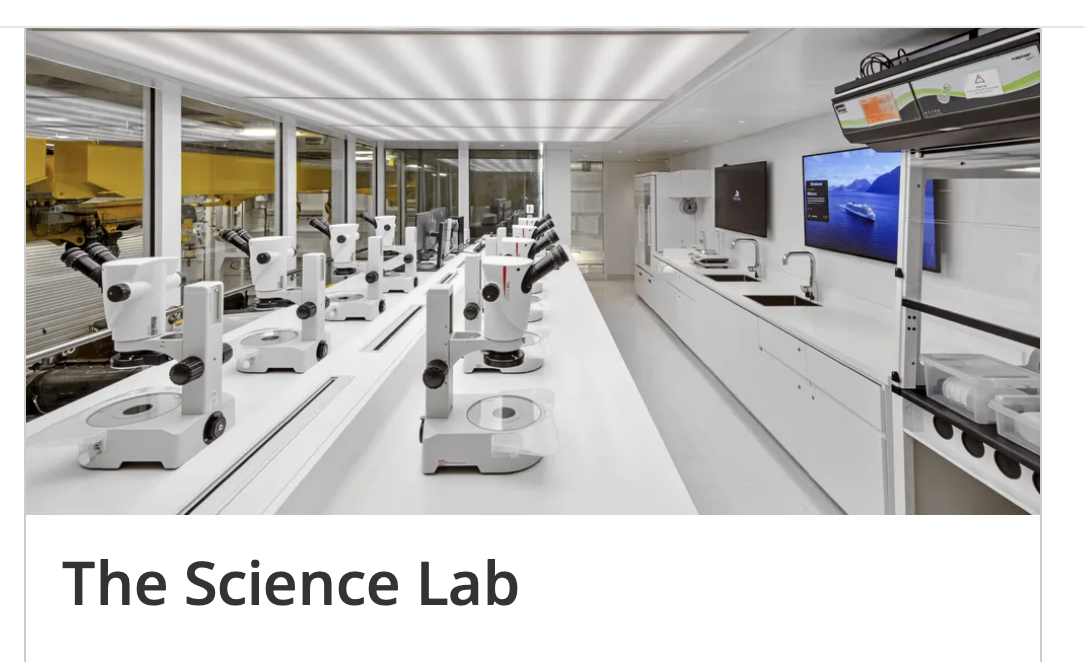
For guests eager to be scientists for a day, there was an opportunity to engage in real research. The ship’s science facilities, created with input from the University of Cambridge’s Scott Polar Research Institute, include a functioning laboratory on every voyage which allows guests to assist and learn with scientists conducting actual research – a first in the industry. The lab was packed all the time so we missed this one, but it got rave reviews.
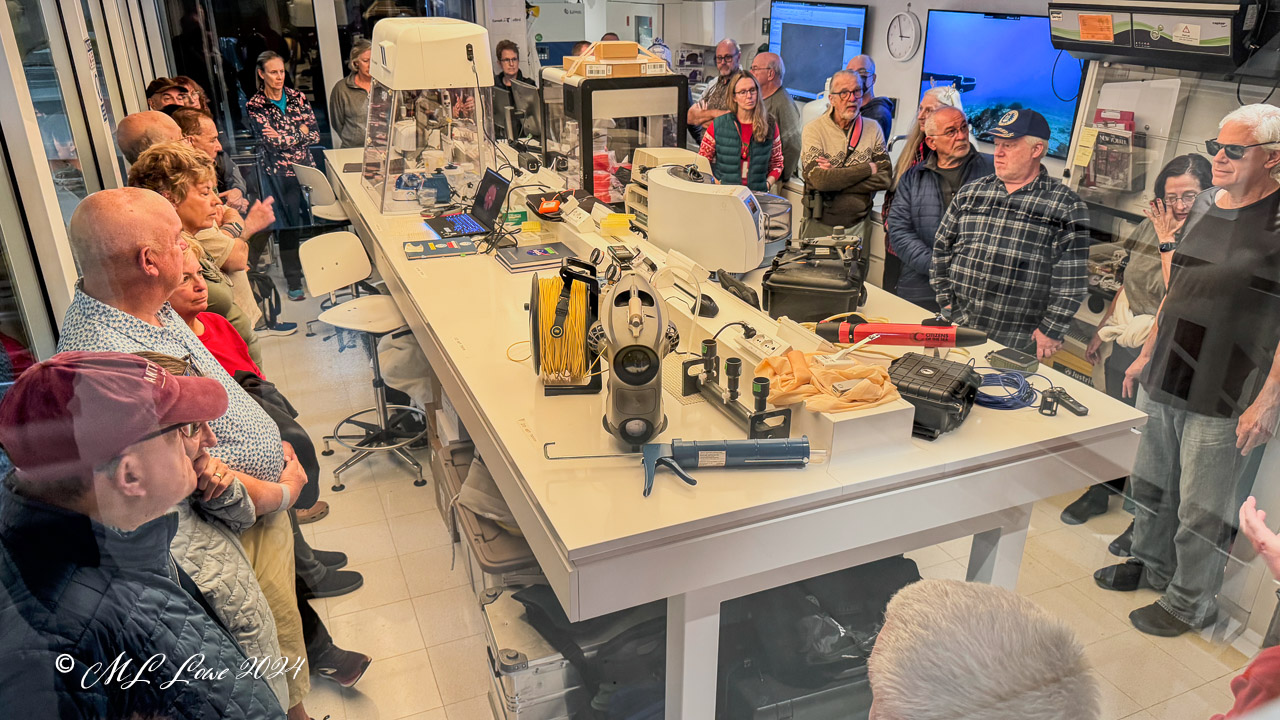
at the Science Lab on Deck A
Nordic Spa
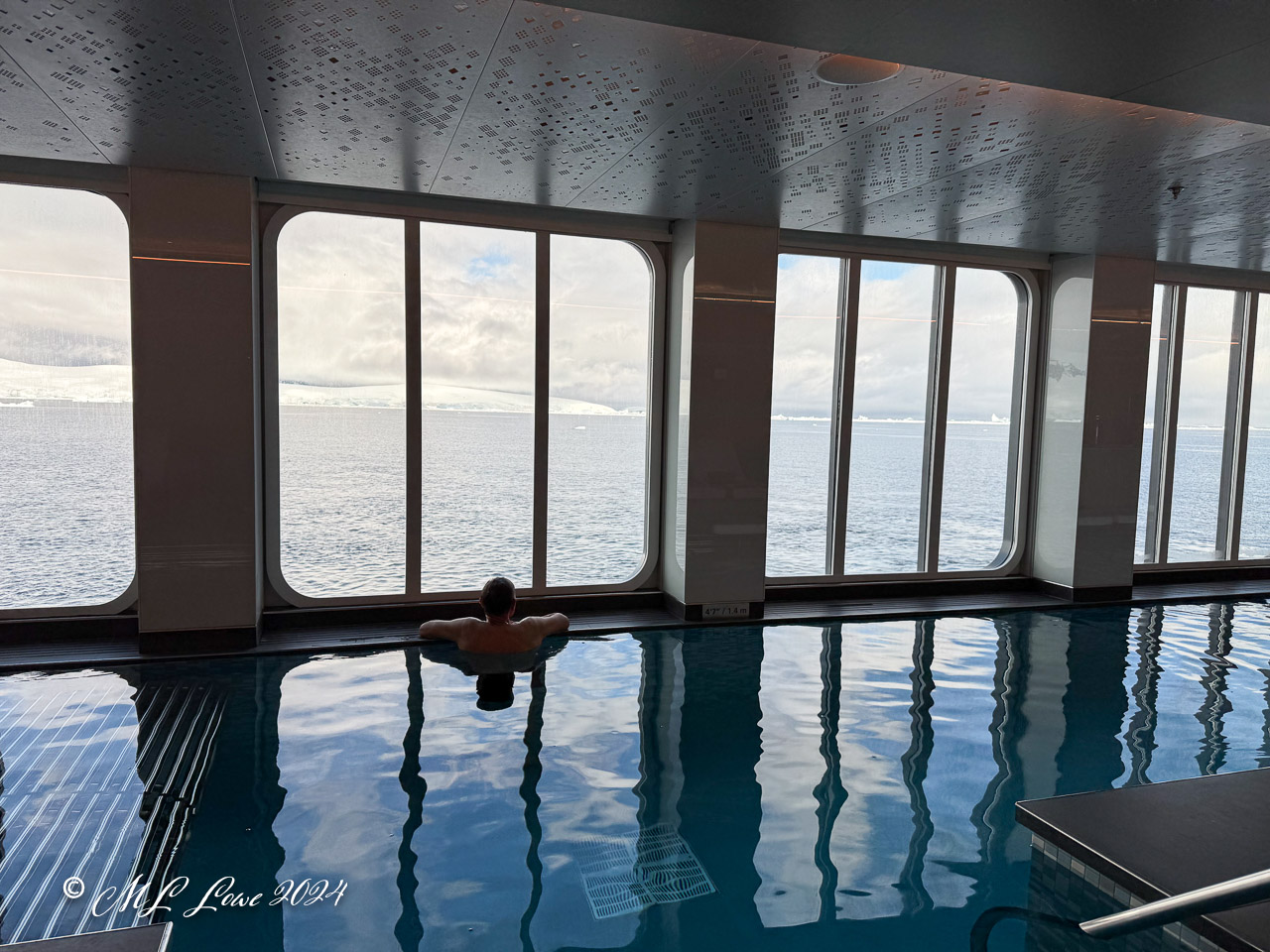
One of the amenities that we love about Viking ships are their Nordic Spas, a feature also available on their oceangoing ships. The Nordic Spa experience is the practice of contrasting hot and cold, meant to bring the body more in tune with nature. The spas include a steam room, dry sauna, snow grotto, ice bucket plunge and an “experience shower” (a mix and match of any combo of five shower options and temperatures). In addition to the standard spa and sauna experiences, the Octantis’ mineral pool faces the windows on the port side. On ocean ships, the pool doesn’t have this fantastic feature:

The Galley and the Bridge
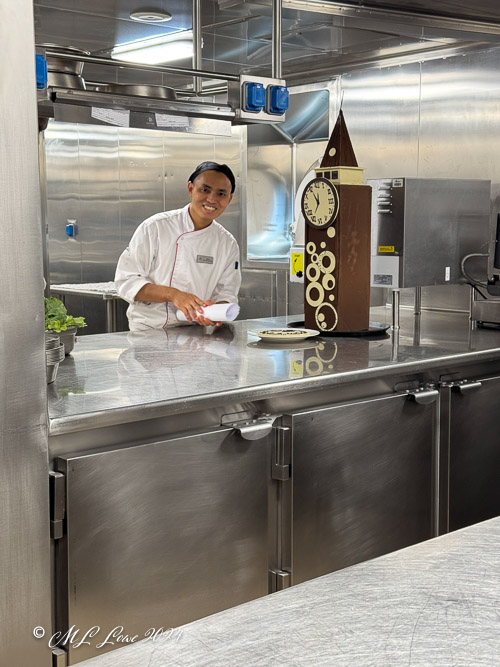
We also joined a tour of the galley where all of the delicious food was prepared in an all stainless steel kitchen. Steve said he had never seen so much stainless steel in one place! The guest galley and a separate crew galley that’s just as nice run 24×7 to feed everyone, a very impressive operation. We were thrilled to learn that a head waiter we had met on a previous ocean ship had been promoted to Restaurant Manager on this ship. He was happy to see us again and took excellent care of us!
We were very impressed with our tour of the bridge, where the Captain and his Second In Command provided informative insights about navigation and operations, particularly when sailing in challenging polar regions at night with thousands of icebergs floating around out there. Steve’s mouth was hanging open pretty much during this entire tour 😉

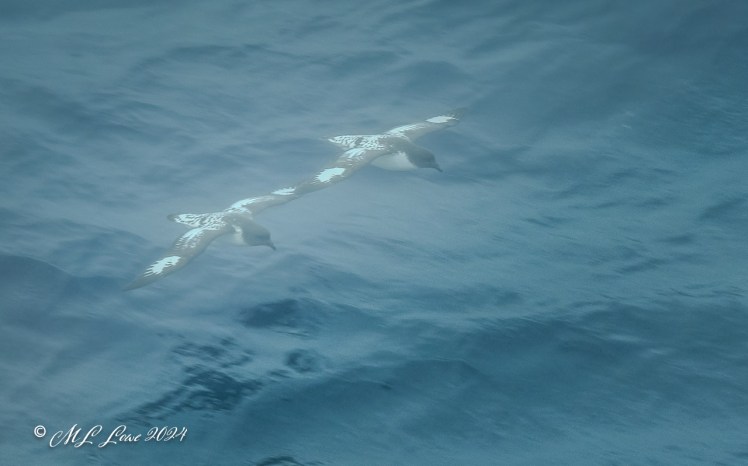
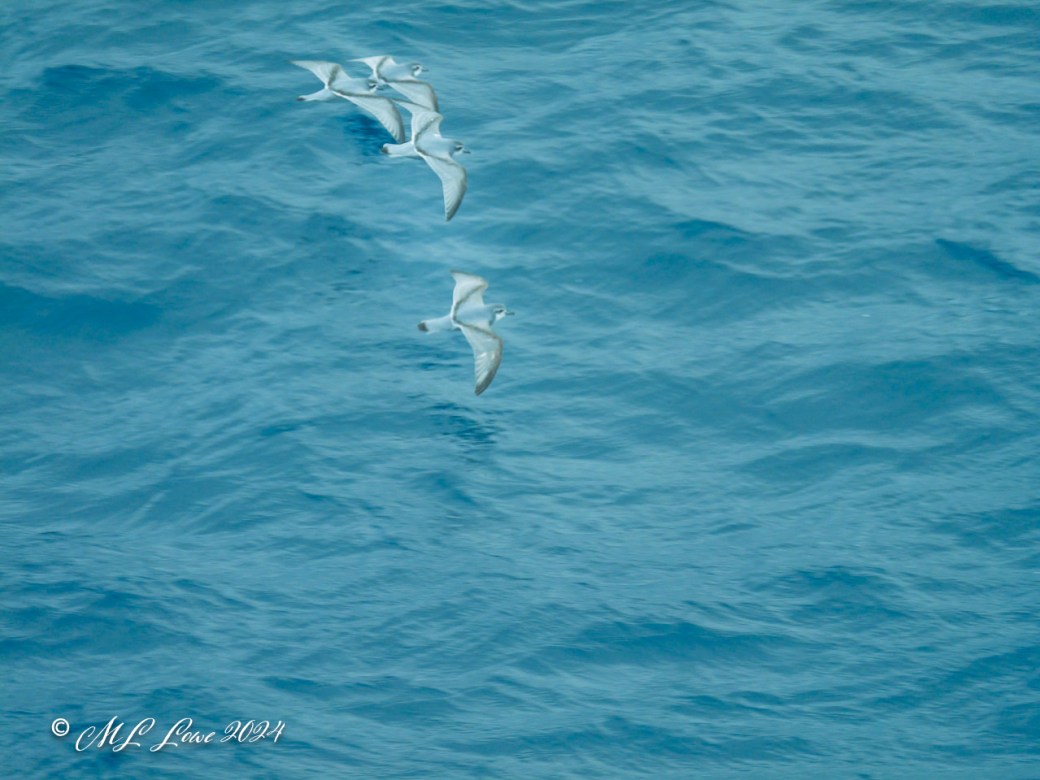
And since we were at sea on Christmas Day, the holiday buffet was so delicious and amazingly presented that even the penguins and birds were following the ship for takeout!
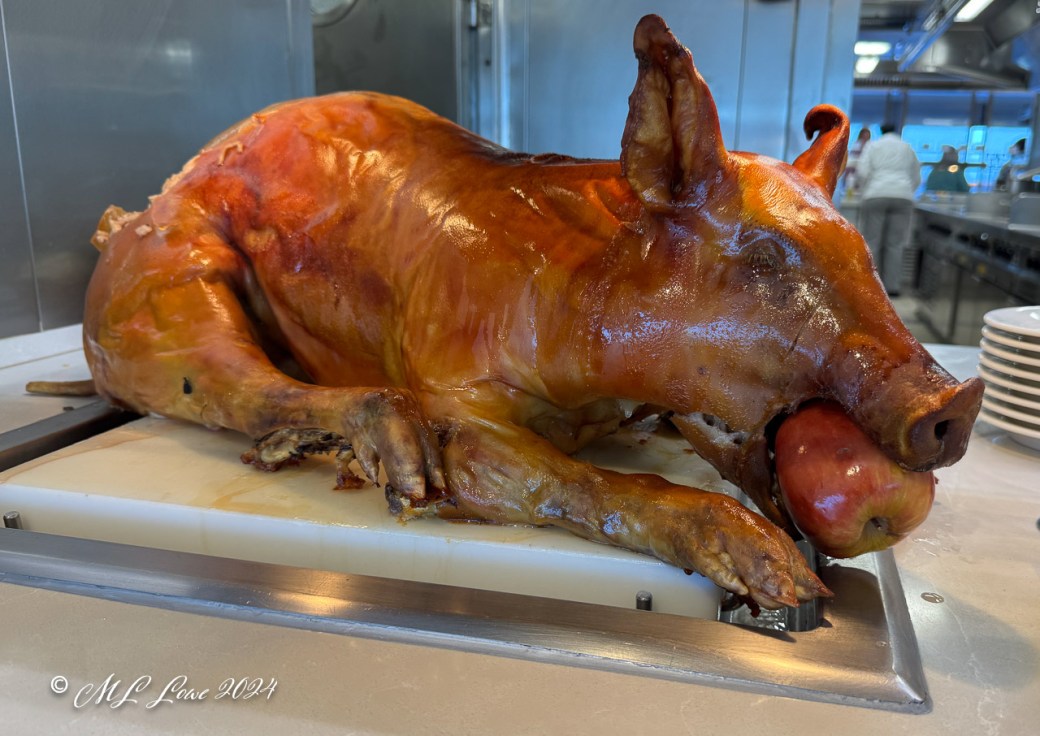
Just a sampling of our holiday feast:



Whenever we are aboard a Viking ship, be it on a river, ocean, or expedition cruise, we feel it is a comfortable and enriching way to learn more about the places we are visiting, and especially here in the Antarctic Region. There are many opportunities to learn about the environment and its challenges, and there is never a dull moment – even during sea days.
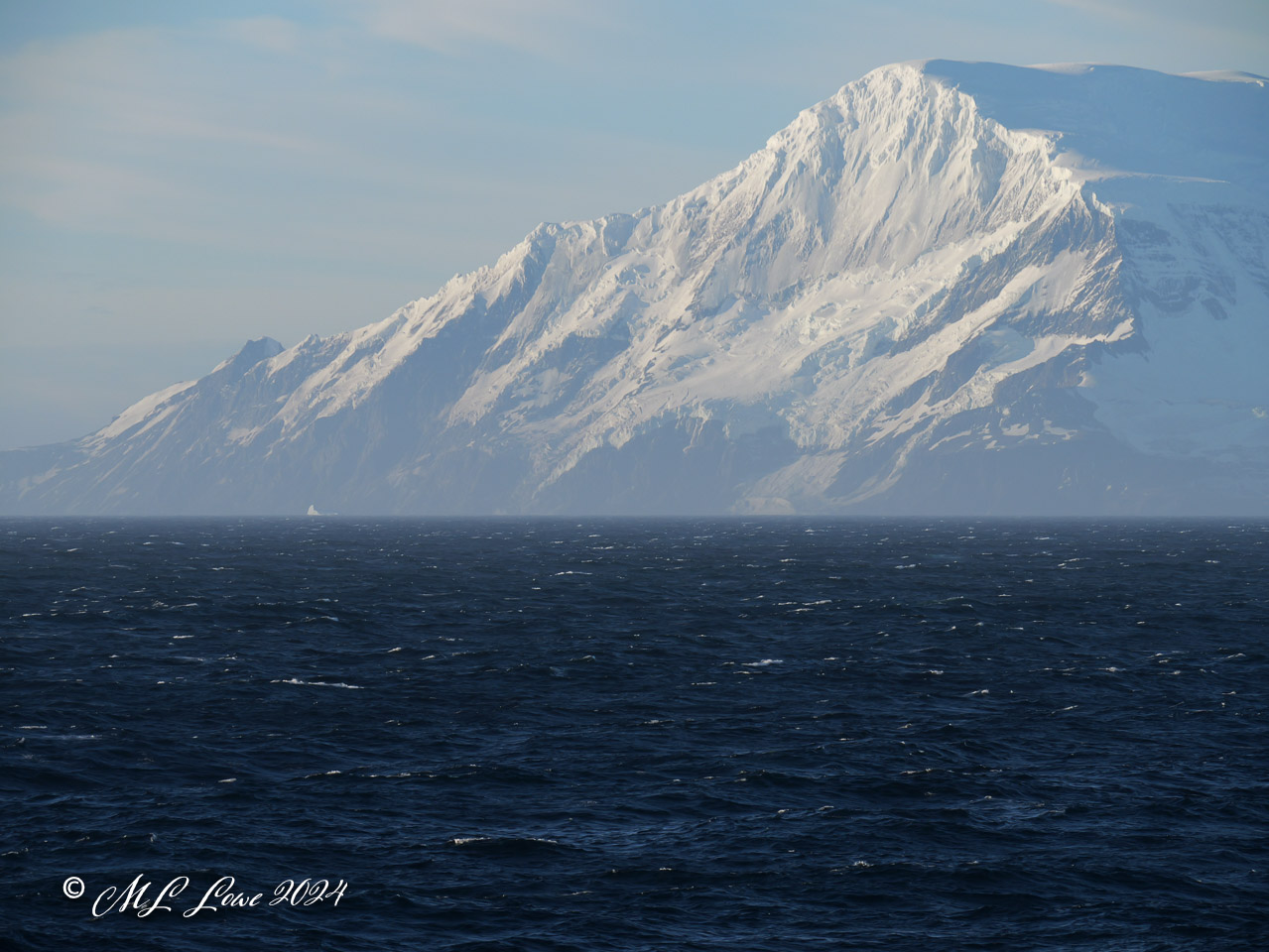
Then we came upon this…we must be nearing Antartica!
Next up:
Ahoy, Antartica!
Comments
14 responses to “A Massive Iceberg and Weather Balloons at Sea”
There was a French TV crew on our expedition who were traveling specifically to film A23a. They obviously didn’t do their due diligence, as our expedition was headed to the Remote Weddell Sea, and our route was nowhere near the route of that massive berg. (They changed their story and got some great footage of some of the ‘firsts’ we achieved, so not all was lost.)
One of the things I really enjoy about expedition cruising is all the lectures and presentations designed to educate the passengers so that we can better appreciate and understand what we are seeing. They make for busy days at sea.
I think the tours of the kitchen and bridge would be just as interesting to me as the lab and lectures! I am always flabbergasted by how these cruises do what they do – from feeding so many people to carefully sailing through areas full of icebergs in the middle of the night. Because… you know… (gulp). Lookin forward to the next installment!
I enjoy so much your tours of the ship and activities. The watermelon shark on the Christmas buffet cracked me up! I would love that spa and could spend hours soaking in the hot mineral pool with the spectacular views. The snow shower depends on how hot I got in the sauna, haha. As far as the submarine, I don’t care if they offered it for free, there is NO WAY you could get me on that expedition.
The picture of you in the snow shower was fun. I don’t think I would attempt such a thing! Great post and pictures as always!
Amazing! I would absolutely love this cruise, not just for the scenery but for the science.
I think you will love it, its a triple treat for you, scenery, wildlife and science.
I’ve been wanting to take a Viking cruise for years. These posts are going to make me take the plunge.
Take this expedition cruise, its a trip of a lifetime!
It does sound wonderful.
Your video really shows how HUGE the iceberg actually is! The mineral pool with windows looking out over the frigid waters and icebergs looks heavenly but…..that snow shower, not so much!
I’d be all over the food and any heated pool with a view like that. The snow shower after looking at huge blocks of ice all day? No ma’am! I am, as always, pleased as punch that you enjoyed those shivery delights!
The snow shower was only for less than a minute then we go to sauna!
What a wonderful, very descriptive post. Thank you! I enjoyed reading it. Amazing lechon too!
As always, your posts are a reading and pictorial highlight!
Thanks for this.